The ongoing geopolitical conflict in early 2026 has transformed one of the world’s most critical maritime chokepoints into a high-risk zone. The latest Strait of Hormuz freight disruptions have triggered an unprecedented logistics crisis, effectively halting the daily passage of roughly 20% of global seaborne oil and liquefied natural gas (LNG). For logistics and shipping experts, understanding the sheer scale of this bottleneck is essential for mitigating severe supply chain shocks.
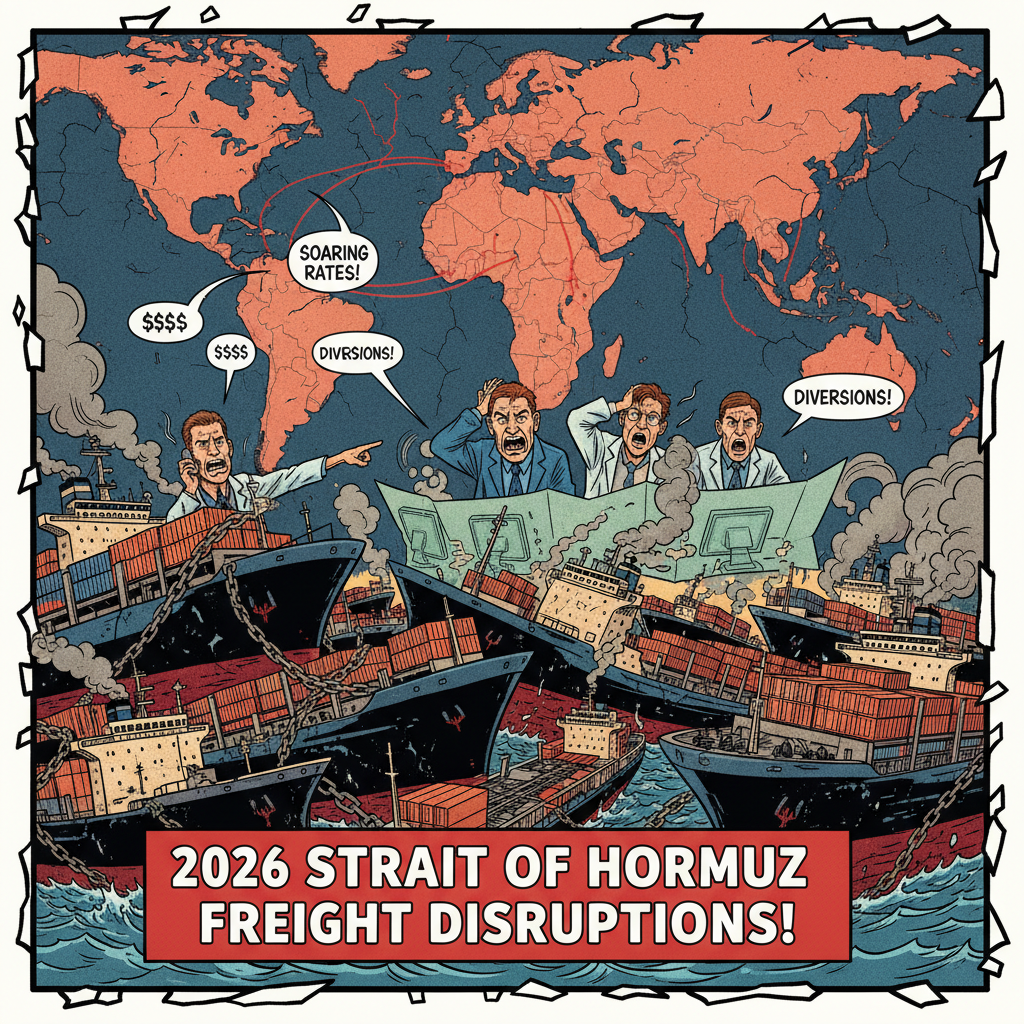
By late April 2026, maritime traffic plummeted from a baseline of over 100 transits per day to a mere fraction, creating a massive vessel backlog. Industry data reveals the stark reality of the situation for global freight networks:
- Over 470,000 TEUs of shipping capacity and 138 container ships were initially trapped in the Persian Gulf.
- Transpacific container freight rates to the U.S. West Coast surged by approximately 40%, accompanied by emergency surcharges.
- Global crude oil supply losses are projected to hit 700 million barrels by the end of April, with daily outages surpassing 13 million barrels.
- Major carriers have implemented sustained Cape of Good Hope diversions, adding 10 to 14 days to Asia-Europe voyages.
While temporary ceasefires and controlled reopening windows have allowed limited vessel movement, the corridor remains fundamentally unreliable for standard commercial routing. Logistics professionals must transition from crisis response to long-term structural adjustments. Relying on alternative logistics hubs in Oman and sustained Cape diversions will be critical as the Strait of Hormuz freight disruptions are expected to persist throughout 2026.
References
aljazeera.com
wikipedia.org
bertling.com
discoveryalert.com.au
seavantage.com
windward.ai
atlanticcouncil.org
tehrantimes.com