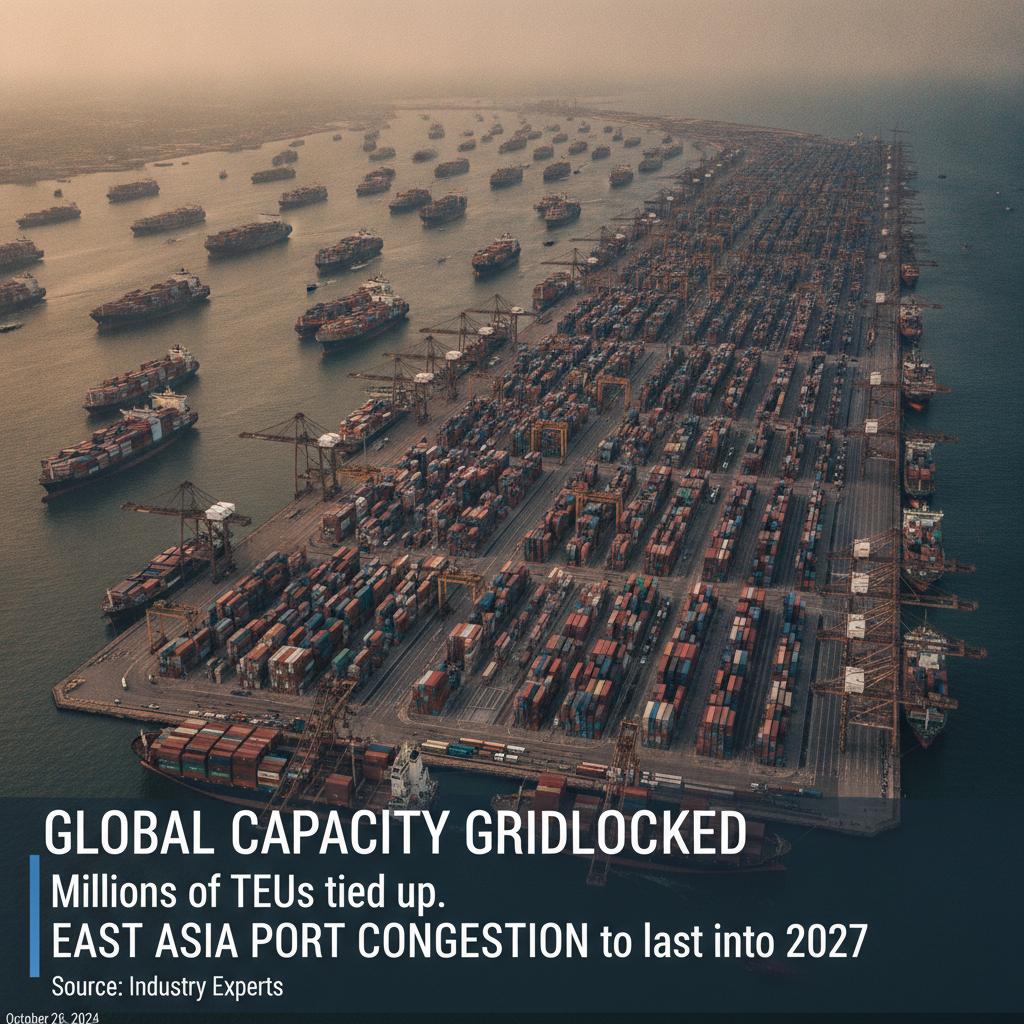
Why East Asia Port Congestion Recovery Will Extend Into 2027
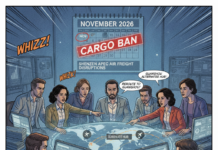
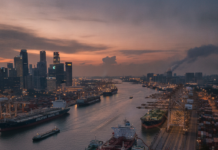
Despite recent signs of operational stabilization at key Chinese terminals, the timeline for a full East Asia port congestion recovery is projected to extend deep into 2027. Following a barrage of typhoons—including Bavi, Dolphin, and Saudel—that paralyzed critical maritime hubs in Q3 2026, the logistics sector is still reeling from severe capacity constraints.
Capacity Absorbed by Network Delays
According to recent industry analysis by Sea-Intelligence, approximately 8.5% of the global containership fleet is currently immobilized by congestion delays. This bottleneck effectively removes roughly 3 million TEUs of capacity from the market. Furthermore, global schedule reliability plummeted to below 50% in late Q3 2026, with delayed vessels arriving an average of 6.8 days behind schedule. While major carriers like Maersk have reported incremental stabilization across their East Asia networks, the structural backlog means true East Asia port congestion recovery remains months away.
Forecasts and Strategic Implications
Historical recovery models suggest it will take seven to ten months for port fluidity to return to the baseline levels observed in mid-2025. This prolonged timeline indicates that congestion will likely persist well past the pre-Lunar New Year cargo rush in February 2027. In response to restricted effective capacity, intra-Asia spot rates have surged, with lanes like Shanghai to Laem Chabang recently climbing 22%. Logistics experts advise shippers to factor in an additional 7 to 10 days of transit time and aggressively diversify their origin ports to navigate the ongoing volatility.
References
- Container News: Maersk reports further East Asia network recovery
- Automotive Logistics: Maersk orders 26 container ships as Asian port congestion disrupts global supply chains
- HighQ Logistics: Asia Port Congestion Is Not Clearing. It Is Getting Worse.
- YQN Logistics: Asian Port Congestion 2026: Why 3 Million TEUs Are Locked Up
- Walio: Shanghai port congestion drops ship reliability below 50%
- FreightWaves / Metro Global: Asian port congestion raises supply chain risks for 2027