The Urgency of Climate-Resilient Logistics
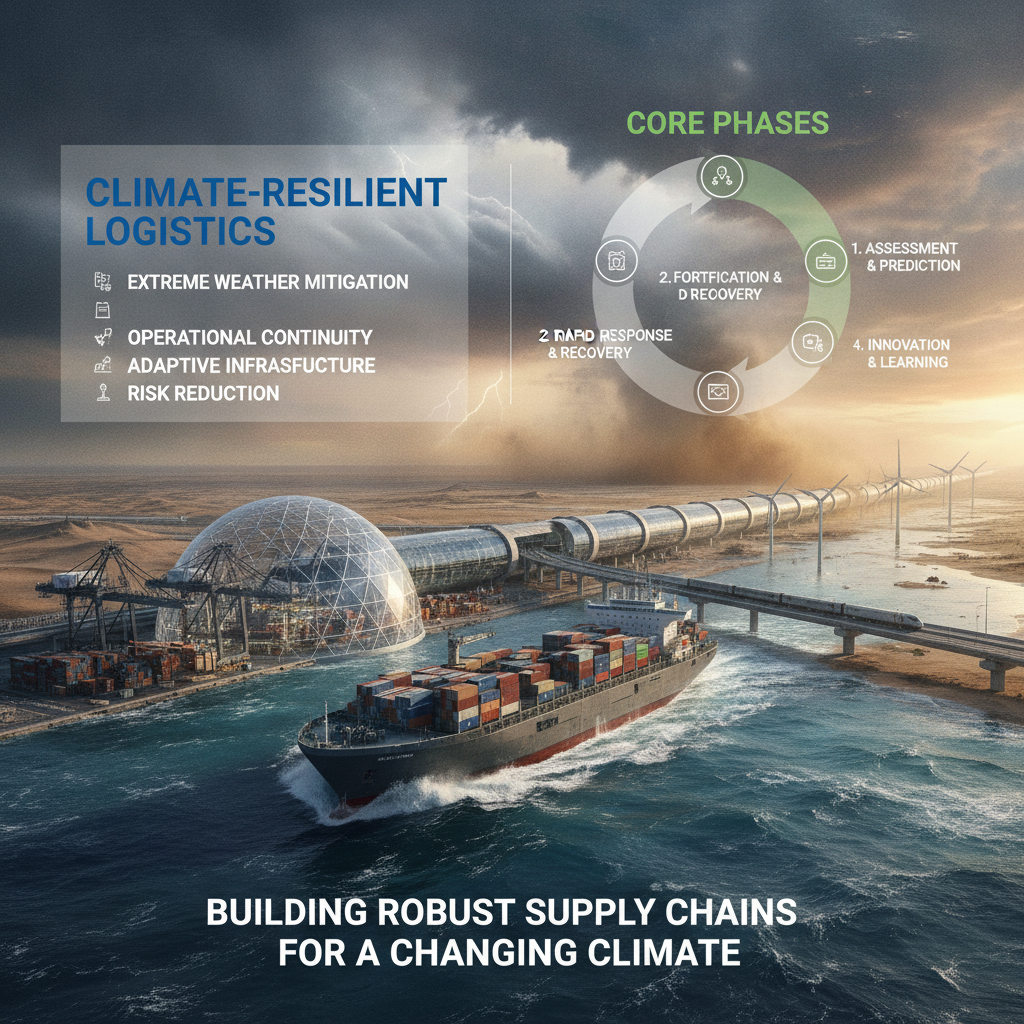
As extreme weather becomes a primary disruptor of global trade, transitioning to climate-resilient logistics is no longer optional for shipping experts. According to the 2025 outlook by Everstream Analytics, extreme weather holds a 100 percent risk score for causing supply chain disruptions, and over 99 percent of industry leaders acknowledge their operations are highly susceptible to these climate shifts. This reality has forced a paradigm shift from reactive crisis management to proactive resilience strategies.
Phases of Climate-Resilient Supply Chains
Industry consensus indicates that developing robust climate-resilient logistics requires roughly two years of focused structural transformation. A recent TT Club white paper outlines four critical phases for ports and waterways: comprehensive risk assessment, adaptation planning, deployment of practical solutions, and continuous monitoring. Operators must initially map vulnerabilities using AI-driven predictive modeling to anticipate disruptions. Subsequent phases require hardening infrastructure and leveraging digital twins to simulate stress scenarios before they physically manifest.
Regulatory and Economic Imperatives
Beyond operational continuity, regulatory pressures are rapidly accelerating this transition. The European Union’s climate adaptation mandates necessitate massive resilience upgrades for transport networks, demanding a share of the estimated 260 billion euros in annual climate-related investments required by 2030. Furthermore, the Food and Agriculture Organization notes that implementing climate-resilient logistics could drastically reduce the 14 percent global post-harvest loss rate by enabling more reliable transit for perishable goods during severe weather events.
References
- TT Club, How to build climate resilience into logistics, 2025.
- World Bank, Disaster and Climate-Resilient Transport Guidance Note, 2025.
- Logistics Business, Europe’s Supply Chains Under Pressure, 2025.
- Council Fire, Adapting Supply Chains to Climate Disruptions, 2025.