As logistics providers race to meet strict zero-emission regulations, mastering E-commerce EV fleet dispatch has become a critical operational priority. With California’s Advanced Clean Fleets mandate rolling out between 2025 and 2027, companies are completely overhauling their route management strategies. Transitioning away from traditional combustion engine logic requires an entirely different software approach.
The Complexities of E-commerce EV Fleet Dispatch
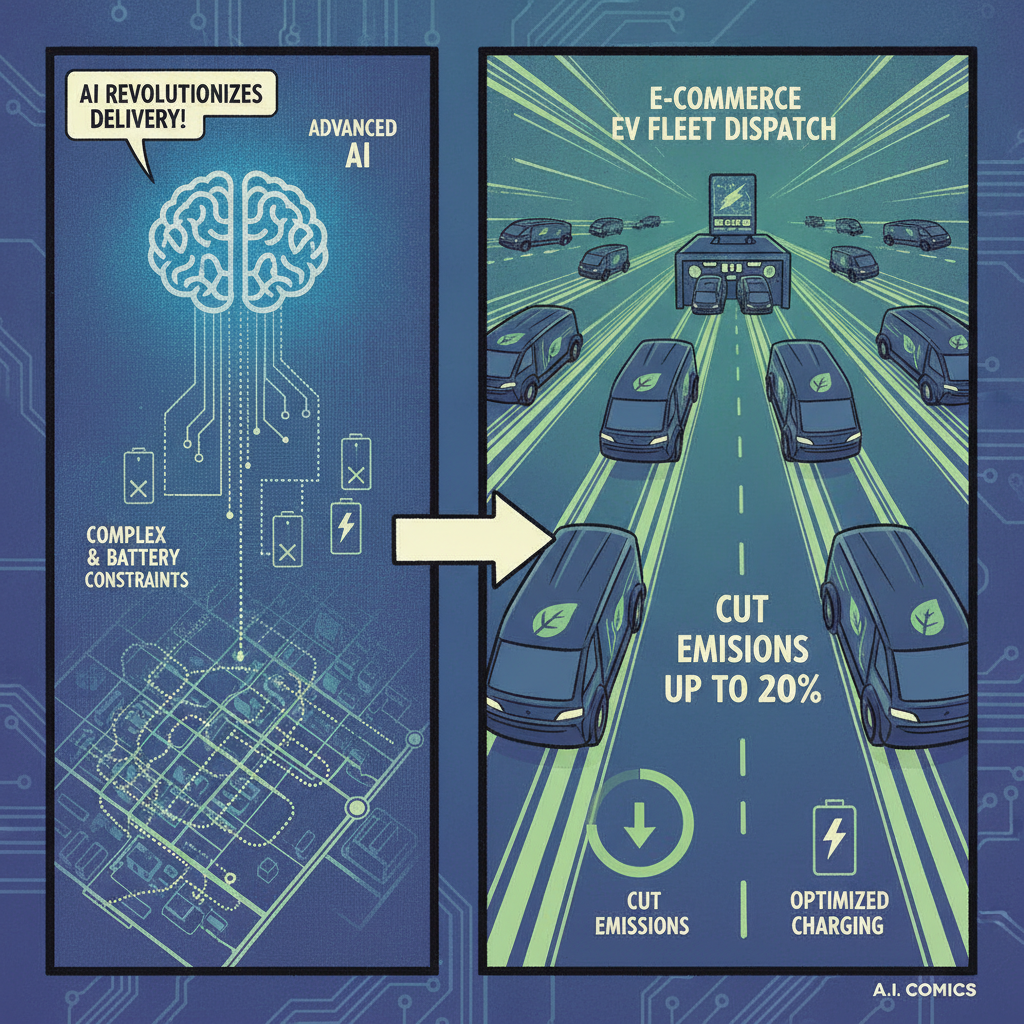
Unlike gas-powered route planning, effective E-commerce EV fleet dispatch must constantly analyze battery state, charging station availability, and exact range-per-route constraints. A route optimized for a standard van could easily strand an electric vehicle. To solve this, dispatchers are leveraging Agentic AI solutions that monitor charge and route risks simultaneously. These intelligent systems automatically flag routes trending toward insufficient charge before drivers begin shifts.
Key Benefits of AI-Driven E-commerce EV Fleet Dispatch
Integrating artificial intelligence into E-commerce EV fleet dispatch offers measurable advantages. Industry data indicates AI-driven route optimization yields a 15% to 20% reduction in per-delivery emissions on existing fleets. The technology ensures seamless execution through dynamic decisions.
- Intelligent reassignments: Shifts deliveries from electric to combustion vehicles if range becomes a constraint.
- Automated scheduling: Books charging slots precisely around committed delivery windows.
- Exception recovery: Handles cancellations without compromising remaining battery capacity.
Future of E-commerce EV Fleet Dispatch
For logistics experts navigating the 2026 regulatory landscape, investing in EV-aware routing engines is vital for resilience. Those adopting intelligent E-commerce EV fleet dispatch now avoid high transition costs later.
References
FleetRabbit AI: E-Commerce Logistics Trends 2026. FarEye: EVs in Last Mile Delivery. FleetRabbit AI: Electric Fleet Mandates.