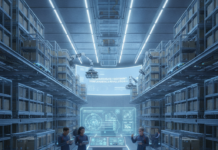

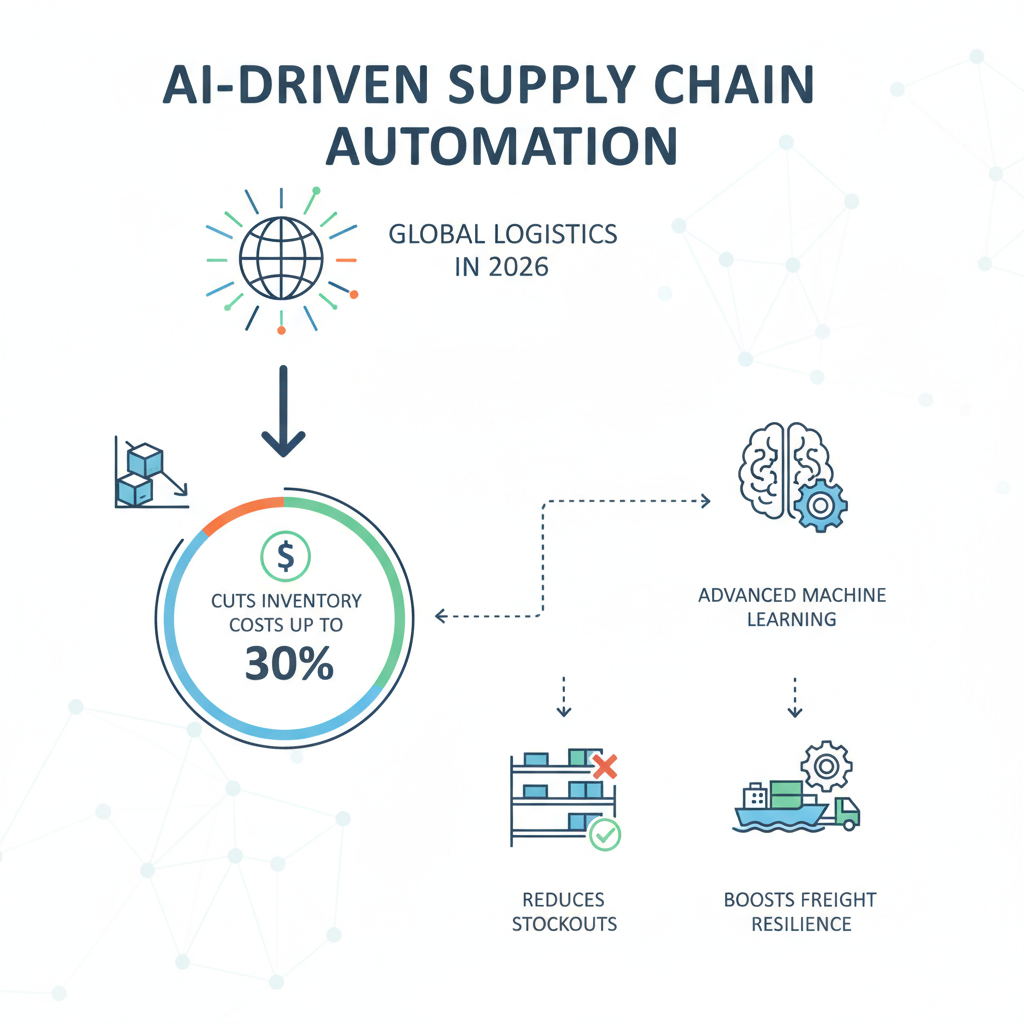
In 2026, the global logistics sector is experiencing a massive operational shift as organizations rapidly integrate advanced artificial intelligence. AI-driven supply chain automation has transitioned from a theoretical advantage to a fundamental requirement for maintaining agility and adaptability under severe market turbulence. By leveraging machine learning, predictive analytics, and robotics, shipping experts are successfully mitigating demand volatility and optimizing freight execution.
Financial Impact of AI-Driven Supply Chain Automation
Recent industry reports reveal the staggering economic benefits of this technological transition. Implementing AI-driven supply chain automation allows businesses to cut inventory levels by 20% to 30% while lowering overall logistics costs by up to 15%. Furthermore, organizations actively deploying these automated systems are reporting a 5% to 15% reduction in their total procurement spending. For enterprise-level manufacturers and global shipping firms, this translates to billions of dollars in industry-wide savings.
Efficiency Metrics for AI-Driven Supply Chain Automation
Beyond simple cost reduction, AI is revolutionizing warehouse operations and freight management through several critical performance improvements:
- Demand Forecasting: AI predictive forecasting models have achieved an average 65% reduction in stockouts for fast-moving consumer goods.
- Predictive Maintenance: AI-powered maintenance automation yields a 10x return on investment within 12 months for 78% of enterprise adopters.
- Downtime Reduction: Automated intelligent logistics systems reduce unplanned warehouse downtime by up to 50%.
The Future of Autonomous Shipping
Ultimately, automation replaces reactive crisis management with proactive network resilience. Logistics leaders must embrace digital twin simulations and algorithmic forecasting to remain competitive. References: The Role of AI-Driven Supply Chains in Shaping Agility, MDPI (2026). AI-Driven Supply Chain Optimization for FMCG (2026). Gitnux: AI In The Automation Industry (2026). InsightMark Research: AI In Business Trends (2026).