
Analyzing the Surge in Pacific MR Tanker Demand
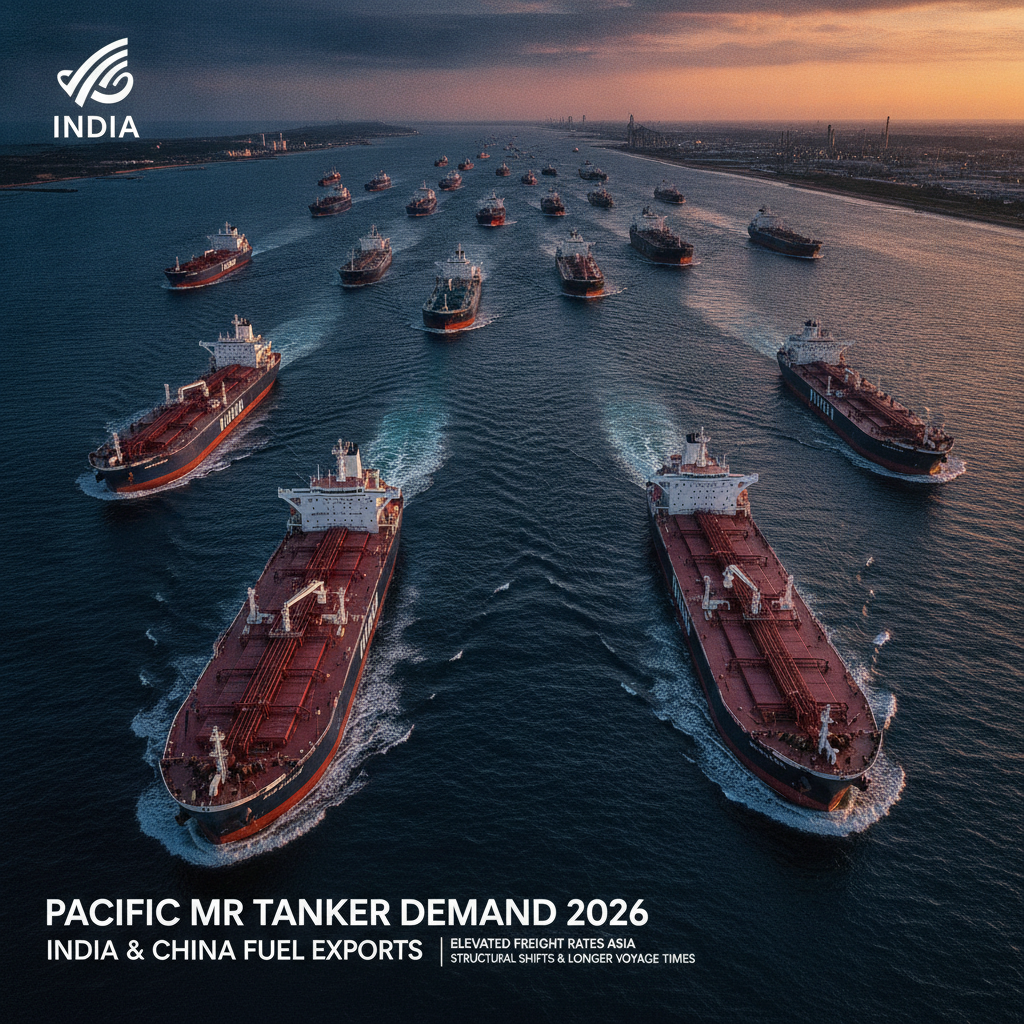
The global shipping landscape is witnessing a significant shift, with Pacific MR Tanker Demand emerging as a focal point for maritime logistics professionals in late 2026. Recent market data reveals that Pacific-origin Medium Range (MR) earnings have maintained a substantial premium over Atlantic routes throughout the year. By late 2026, the broader Baltic Pacific MR basket surged to approximately $67,318 per day, highlighting exceptional regional strength. This divergence is fundamentally reshaping how operators deploy their clean petroleum product fleets.
Key Drivers Behind Pacific MR Tanker Demand
Several geographic and macroeconomic factors are accelerating Pacific MR Tanker Demand. Trade pattern adjustments due to Middle East Gulf disruptions have regionalized MR vessel employment, heavily relying on key Asian export hubs. Major drivers include:
- Indian Export Resiliency: Robust throughput from India’s west coast refineries strengthened the India-Japan MR route to $41,349 per day, the highest since January 2024.
- Chinese Diesel Surges: China’s diesel exports hit a four-year high in September 2026, generating 29 MR voyages directed at Southeast Asia and Oceania.
- Oceanian Import Reliance: The Singapore-Australia MR benchmark climbed to $56,523 per day, driven by Australia’s structural dependence on imported refined products.
Future Outlook for Pacific MR Tanker Demand
As operators move toward 2027, Pacific MR Tanker Demand remains structurally supported by longer voyage distances and tight vessel availability. When vessels undertake extended voyages to Africa or South America, fewer ships remain available for subsequent regional cargoes. This dynamic increases overall tonne-mile requirements, ensuring elevated freight rates. Logistics experts must account for these prolonged transit times when optimizing their supply chains.
References
- ,, Tide Signal: Asia MR Tanker Rates Hit Multi-Year Highs as Diesel Exports Surge
- Vortexa: MR Freight Divergence: A Market Poised for Rebalancing