
The global logistics sector is undergoing a profound structural transformation, fueled largely by a massive surge in AI-Driven Airfreight Demand. As the buildout of artificial intelligence infrastructure accelerates globally in 2026, the transportation of high-value tech hardware has overtaken cross-border e-commerce as the primary engine for industry growth. Time-sensitive components like graphics processing units (GPUs), servers, and high-bandwidth memory modules are flooding cargo holds at an unprecedented rate.
The Economics of AI-Driven Airfreight Demand
While the physical dimensions of semiconductors are small, their economic impact on the aviation sector is monumental. According to the International Air Transport Association (IATA), AI logistics present a unique economic profile:
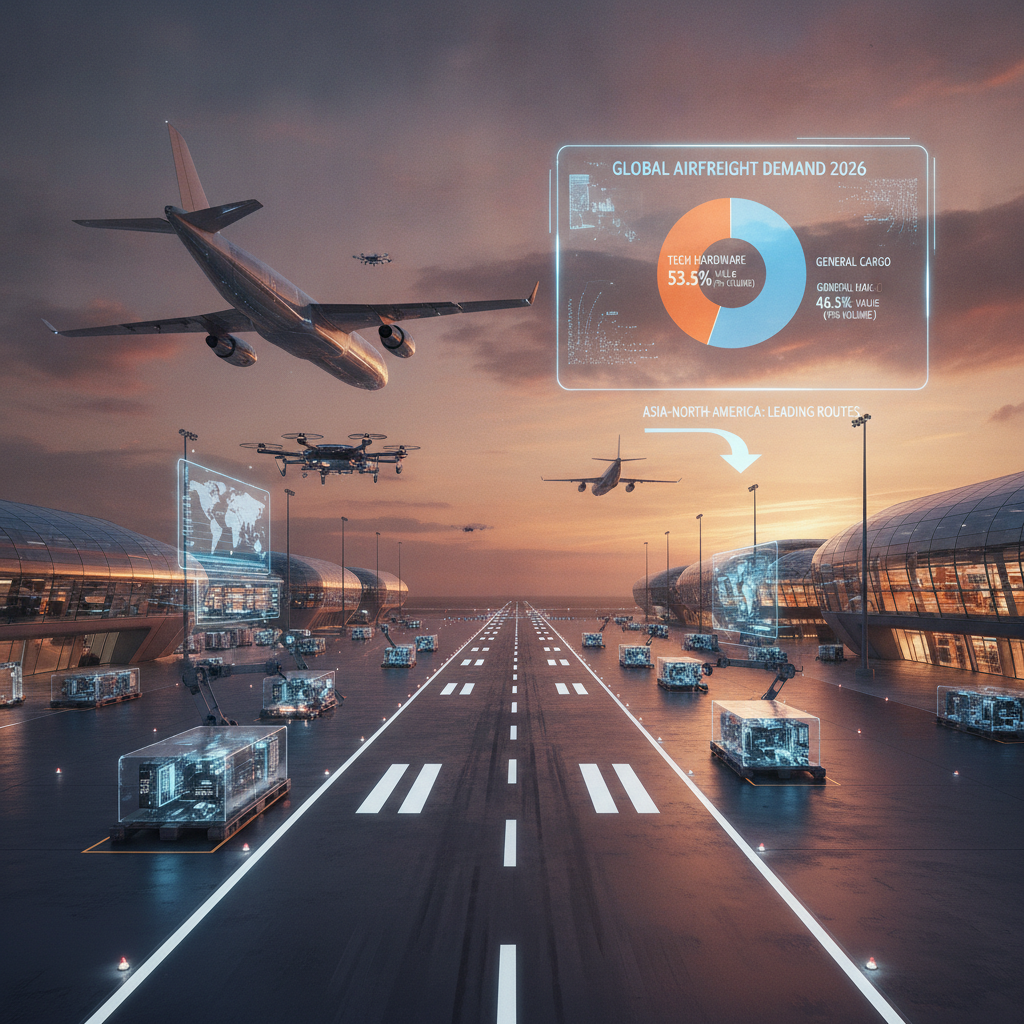
- AI-related goods accounted for only 7% of global air cargo volume in 2025.
- These same shipments represented a staggering 53.5% of total air cargo value.
- Consignments for critical AI hardware grew by 20% year-over-year.
Because these shipments are notoriously expensive and urgently required by hyperscaler data centers, tech giants are air-shipping them at a cost-is-no-object pace.
AI-Driven Airfreight Demand Across Global Routes
The most dramatic shifts in AI-Driven Airfreight Demand are highly concentrated along specific geographical corridors. The Asia-to-North America route, which links premier semiconductor manufacturing hubs in Asia to major data centers in the United States, has experienced exponential growth. In June 2026, air cargo demand on this specific corridor surged 14.7% year-over-year, marking its fifth consecutive month of double-digit expansion. Major carriers are subsequently reporting massive revenue boosts as a direct result.
The Software Side of Logistics
Beyond physical shipments, artificial intelligence is revolutionizing how carriers manage their complex operations. AI-powered supply chain management tools are rapidly replacing traditional logistics forecasting strategies. Deep learning models have demonstrated accuracy improvements of over 25%, allowing airlines to optimize load factors and dramatically reduce empty leg capacity.
References
- IATA – Air Cargo Enabled $157 Billion in Frontloaded Trade and Supported AI Growth in 2025
- Value Chain Asia – AI Cargo Is 7% of Air Freight Volume and Most of Its Growth
- Dataintelo – Air Cargo Optimization AI Market Size, Share & Forecast Report 2025 to 2034
- BigGo Finance – AI Hardware Sparks Air Cargo Rush: Asia-North America Demand Posts Double-Digit Growth