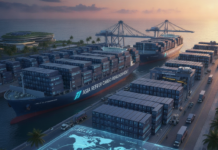


Will 2026 Golden Week Supply Chain Disruptions Derail Your Cargo?
As China concludes its annual National Day holiday spanning October 1 to October 7, global logistics professionals are already feeling the aftershocks. The 2026 Golden Week supply chain disruptions present a unique challenge for international freight operations. Because the Mid-Autumn Festival fell shortly beforehand in late September, global traders faced back-to-back factory closures that heavily compressed production and export handovers.
Analyzing the 2026 Golden Week Supply Chain Disruptions
The operational impacts of this year’s holiday extend far beyond a single week. To manage plummeting factory output, ocean carriers actively adjusted their schedules, blanking approximately 11% of scheduled sailings across major east-west trades between mid-September and mid-October. Consequently, logistics networks experienced severe bottlenecks, compounded by ongoing geopolitical shifts and regional port congestion.
- Airfreight spot rates from China to Western Europe surged by 10% month-over-month in September, reaching $4.26 per kilogram as shippers rushed to move cargo before factory shutdowns.
- Global container trade volumes remained high leading up to the holiday, with July 2026 seeing a record 17.3 million TEU moved worldwide, up 4.5% from 2025.
- According to industry analysts, resolving current Asian port congestion could take up to 10 months, meaning Golden Week backlogs could plague the industry into early 2027.
Mitigating Future Golden Week Supply Chain Disruptions
For supply chain experts, surviving these overlapping disruptions requires proactive capacity management and highly diversified transport strategies. Businesses must book ocean freight space at least three to four weeks prior to cargo readiness to avoid rollover risks. Additionally, considering rail or multimodal alternatives can help balance speed and cost when ocean alliances cut capacity.
As operations slowly normalize throughout November, continuous monitoring of supplier schedules will remain critical. Adopting flexible long-term carrier contracts and building robust contingency plans are essential strategies to navigate volatile peak seasons successfully.
References
U-Freight Group (2026). Plan ahead for China’s Golden Week disruption. UFL Group.
Freight & Logistics Planning (2026). China Golden Week 2026 Shipping Advisory.
SEKO Logistics (2026). China Golden Week 2026: Complete Supply Chain Disruption Guide.
Metro Global (2026). Asian port congestion could disrupt supply chains well into 2027.
IndexBox (2026). Air Cargo Demand Extends Gains as Shippers Favour Flexible Contracts.
Metro Global (2026). Container trade stays strong as disruption reshapes east-west markets.