Understanding 2026 Panama Canal Route Diversions
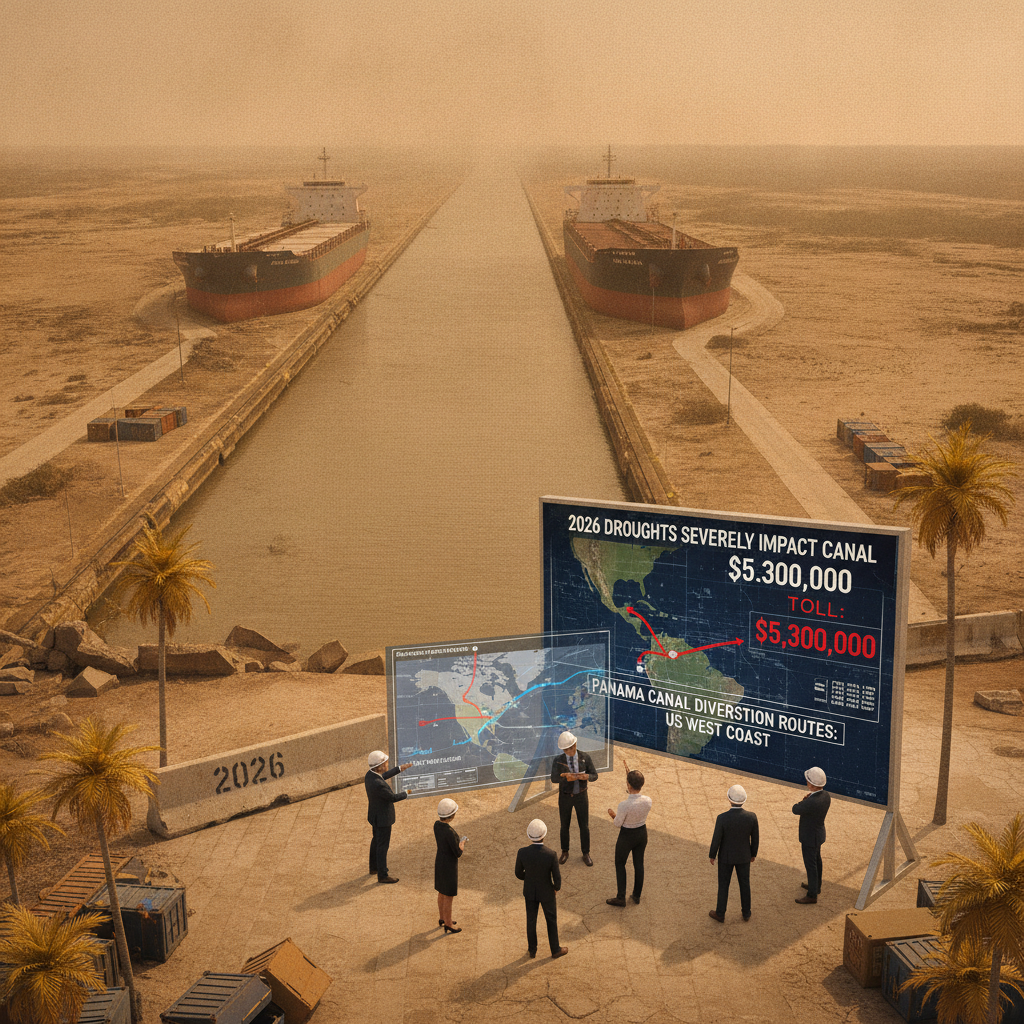
As late 2026 unfolds, severe El Niño-driven drought conditions have forced the Panama Canal Authority to sharply reduce daily vessel transits to just 32 slots [1]. This mounting chokepoint pressure has triggered a wave of Panama Canal Route Diversions, significantly altering global logistics networks. With fierce competition for limited passage, transit auction prices have skyrocketed, highlighted by a record-breaking $5.3 million fee paid by a single South Korean LPG carrier in September 2026 [2].
The Operational Impact of Panama Canal Route Diversions
The surge in operational costs and extended delays are pushing shipping alliances to rapidly reassess their supply chain strategies. Leading ocean carriers are increasingly executing Panama Canal Route Diversions by redirecting vessels around the Cape of Good Hope or utilizing the Suez Canal for select voyages [3].
- Transit Time Extensions: Rerouting bulk carriers and container ships around the Cape of Good Hope adds an average of 10 to 13 days to total transit times [3].
- Bulker Deficits: Dry bulk vessel transits through the Panama Canal plunged by 22% year-over-year in the third quarter of 2026 [4].
- Rate Premiums: The direct ocean rate differential between the US East and West Coasts has widened significantly, with East Coast spot rates from Asia maintaining a $2,300 premium per FEU over West Coast deliveries [5].
Strategic Shifts for Logistics Experts
To mitigate the fallout from these transit restrictions, importers are heavily executing a multi-coastal approach. The widening rate gap is driving a massive cargo shift back to US West Coast gateways, accelerating intermodal rail and drayage demand to reach inland Midwest markets [5]. Supply chain leaders must proactively balance ocean freight savings against potential overland transport delays, as West Coast ports absorb the influx of redirected cargo.
References:
- [1] Windward (Sept 2026): Panama Canal Restrictions
- [2] Al Jazeera (Sept 2026): Panama Canal restricts traffic
- [3] JOC (Sept 2026): Disruptions to U.S. East Coast Shipping
- [4] Maritime Logistics News (Sept 2026): Bulk Vessel Transits drop 22%
- [5] CZ app (Sept 2026): Freight Rate Gap Drives Cargo Shift