Harnessing the Future: The Economics of Wind-Assisted Propulsion
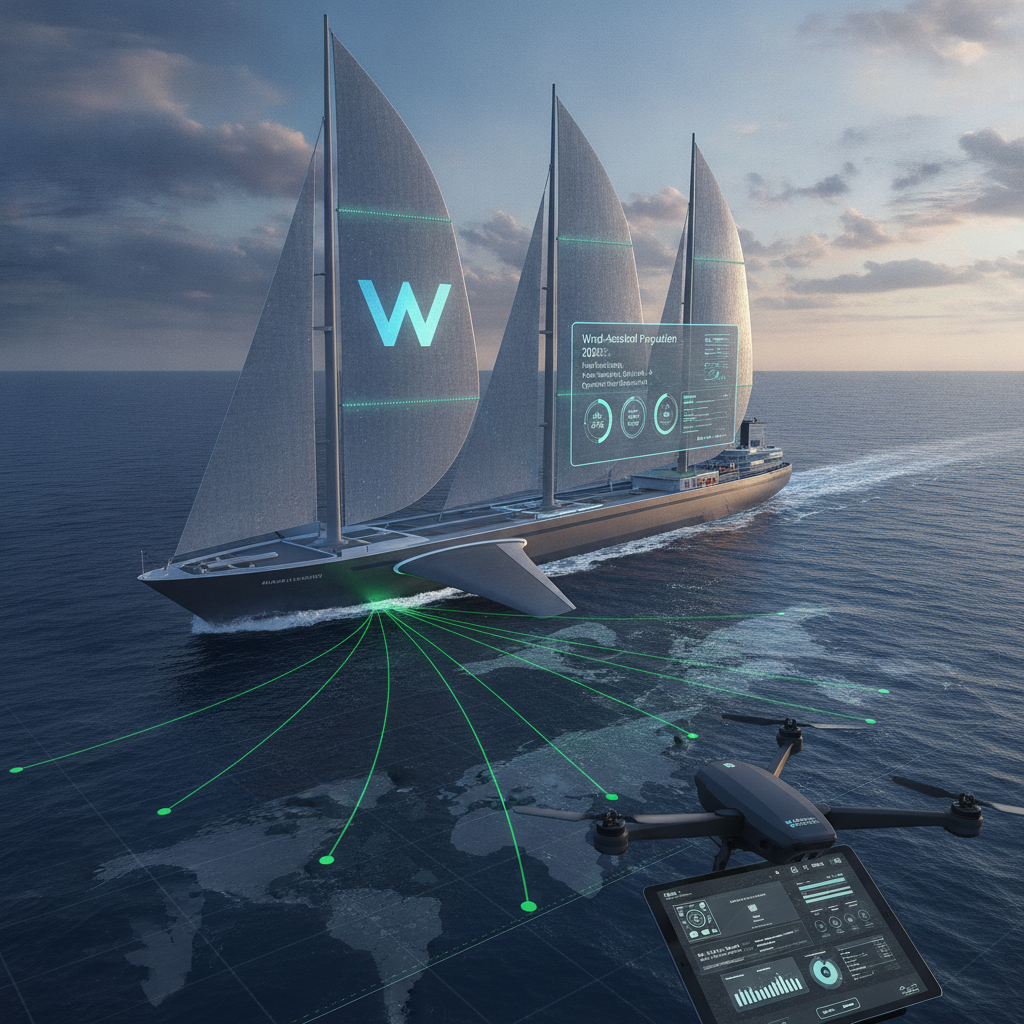
As the maritime industry faces intensifying regulatory pressures from the IMO’s GHG Strategy and FuelEU Maritime, Wind-Assisted Propulsion (WAP) has evolved from an experimental concept to a critical compliance tool. By 2026, the global fleet of commercial vessels equipped with wind-assisted propulsion systems surpassed 100 ships, featuring over 230 individual system installations. This rapid adoption signals a paradigm shift where wind is no longer viewed merely as resistance, but as a primary source of operational thrust and fuel efficiency.
Real-World Performance and Fuel Economics
Recent operational data validates the commercial viability of modern WAP technologies, which include Flettner rotors, rigid wing sails, and suction wings. Early adopters of retrofitted systems are consistently achieving fuel consumption reductions of 5% to 20% in real-world scenarios. This double-digit efficiency gain offers a compelling hedge against volatile alternative fuel prices while drastically lowering carbon intensity. The market reflects this optimism: the global Wind-Assisted Propulsion market is projected to expand at an astonishing CAGR of over 75%, reaching unprecedented valuations by the 2030s.
Strategic Implications for Voyage Planning
Integrating WAP hardware is only half the equation; realizing maximum ROI requires advanced digital integration. Key trends reshaping logistics include:
- Dynamic Route Optimization: Traditional weather routing minimizes resistance, but WAP-equipped vessels require specialized algorithms to maximize favorable wind angles and thrust.
- Digital Twin Simulations: Fleet managers increasingly rely on 3D digital twins to accurately forecast fuel savings and aerodynamic performance before committing capital.
- Hybrid Integration: Modern primary-wind designs are effectively coupling WAP with hybrid-electric architectures to ensure predictable transit times.
With EU researchers forecasting up to 10,700 wind propulsion installations by 2030, maritime executives must recognize that WAP is no longer a distant vision. It is an immediate, scalable strategy essential for maintaining competitiveness in a decarbonizing global supply chain.
References
Insightace Analytic: Wind Assisted Propulsion Market Deep Analysis Report 2025-2034. Navistrat Analytics: Wind-Assisted Propulsion Market Size Forecast 2025-32. Napa.fi: Wind-assisted propulsion is scaling (Sept 2026). Napa.fi: Five maritime trends that will define operations in 2026. Outship: 5+1 maritime trends that will shape 2026. ResearchGate: Engineering and AI Integration in WAPS (2026).