
Asian Port Congestion: Unprecedented Delays Reshape Global Logistics
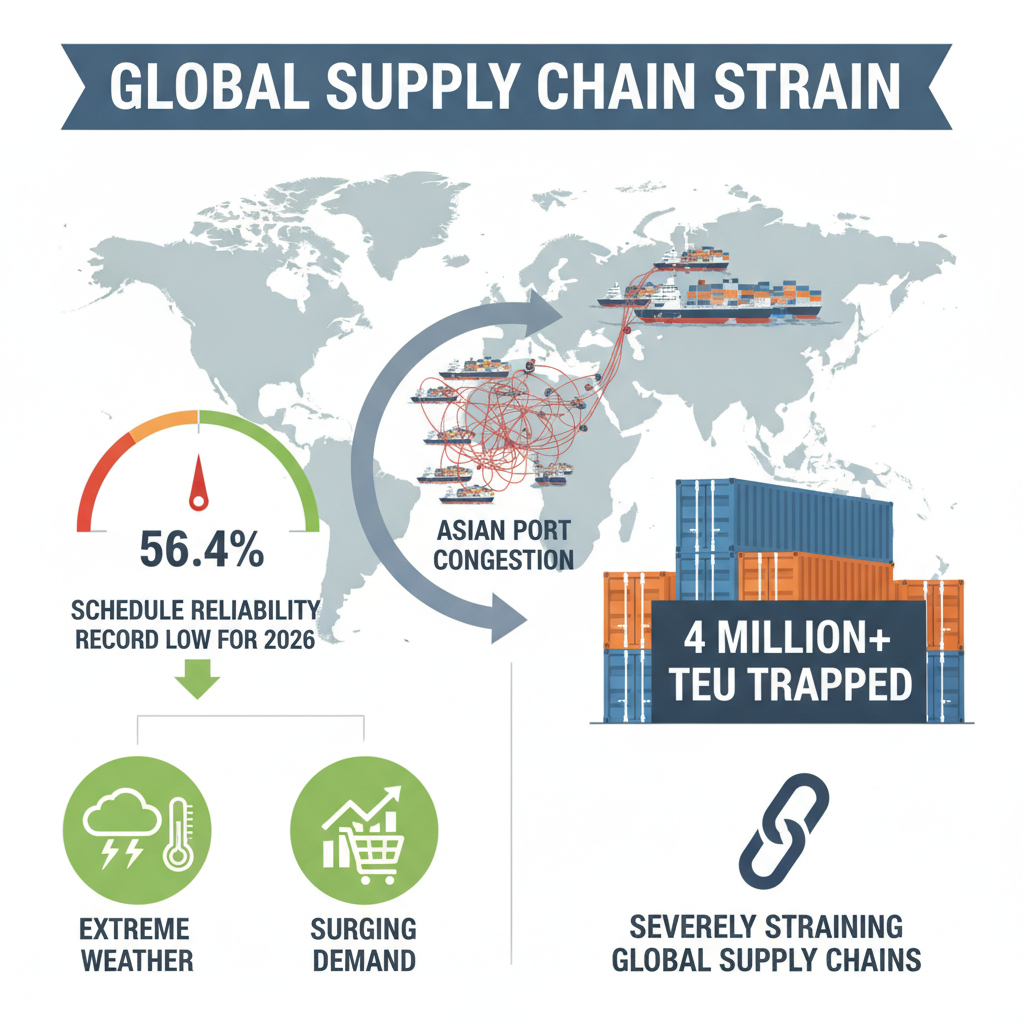
The global shipping industry is facing a severe crisis as Asian port congestion intensifies in late 2026. According to recent data, global container vessel schedule reliability plummeted to 56.4% in July 2026, marking the sharpest single-month decline since January 2021. Average delays for late arrivals have now surpassed six days, sending shockwaves through global supply chains.
The Epicenter: China and Southeast Asia
Major hubs are experiencing unprecedented bottlenecks driven by compounding factors. Consecutive typhoons, sustained early peak season demand, and vessels returning to the Red Sea routes have paralyzed operations. The reliability breakdown across critical ports is alarming:
- Shanghai: Reliability collapsed to just 21.0%, the lowest in 14 years outside of pandemic extremes.
- Yantian: Suffered a massive 23.5 percentage point drop, landing at 48.3%.
- Singapore: The world’s top transhipment hub saw on-time arrivals fall to 43.2%.
- Ningbo: Plummeted 20.1 points to 34.6% amidst severe weather disruptions.
Capacity Squeeze and Future Outlook
This acute Asian port congestion has trapped an estimated 4.3 million TEU in transit, surpassing the volume stranded during the peak of the 2022 pandemic disruptions. As backlogs cascade through the maritime network, logistics experts warn that head-haul trade lanes will face further delays entering the critical Q4 2026 season. Logistics managers must prioritize advanced booking and alternative routing to mitigate these ongoing supply chain bottlenecks.
References
Indian Transport & Logistics News
Logistics Manager
Seatrade Maritime News
Sea-Intelligence
Port Technology International