Typhoon Dolphin Cargo Backlogs: Impact on 2026 Global Shipping Chains
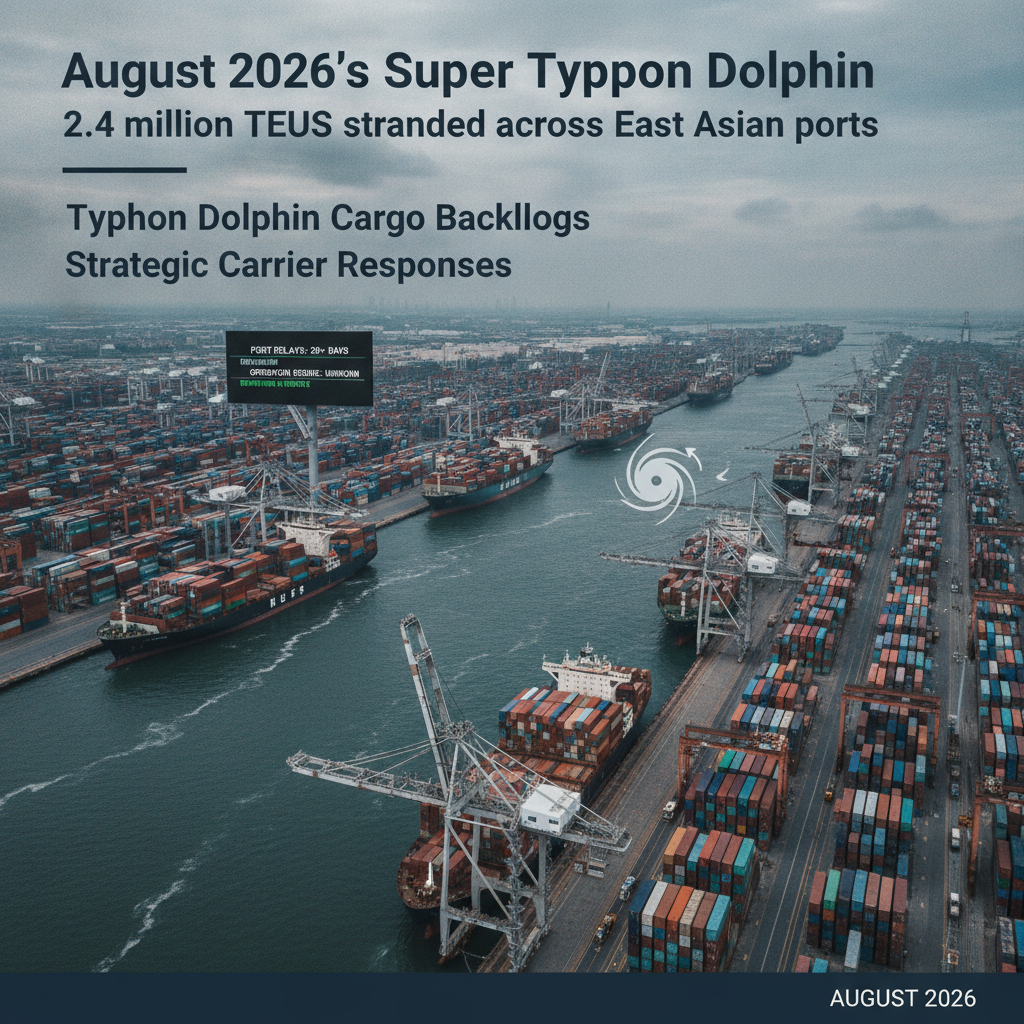
In August 2026, severe weather systems triggered monumental disruptions across East Asian ports, with Typhoon Dolphin Cargo Backlogs becoming the central focus for logistics professionals worldwide. Making landfall along the Zhejiang coast on August 9, Super Typhoon Dolphin forced multi-day operational halts at crucial maritime hubs, including Ningbo-Zhoushan and Shanghai. As terminal operations restart, supply chain analysts are assessing the unprecedented scale of stranded maritime freight and the subsequent ripple effects on global shipping capacities.
The Scale of Typhoon Dolphin Cargo Backlogs
The immediate operational suspension has resulted in staggering congestion metrics across Northern and Southern China. Shippers and forwarders must now contend with an immense bottleneck that severely constrains trans-Pacific and Asia-Europe trade lanes. Key statistics from the disruption include:
- Over 2.4 million TEUs of containership capacity effectively stranded at anchorage.
- Berth waiting times extending between 7 to 10 days for newly arriving vessels.
- A record-high queue-to-berth ratio of 3.5 across affected East China hubs.
- Yard utilization rates peaking between 75% and 90% at major Shanghai terminals.
Strategic Responses to Typhoon Dolphin Cargo Backlogs
To mitigate the escalating Typhoon Dolphin Cargo Backlogs, major ocean carriers are adjusting their network strategies. Some operators are unexpectedly reverting vessel loops to the Red Sea and Suez Canal to free up capacity and address critical equipment shortages. While ports like Shanghai have proven capable of clearing immense volumes—handling upwards of 200,000 TEUs in a single day—experts predict that fully resolving these cascading delays will take several weeks. Logistics planners are advised to build substantial buffer times into their Q3 2026 forecasting and proactively monitor real-time feeder service availability.