
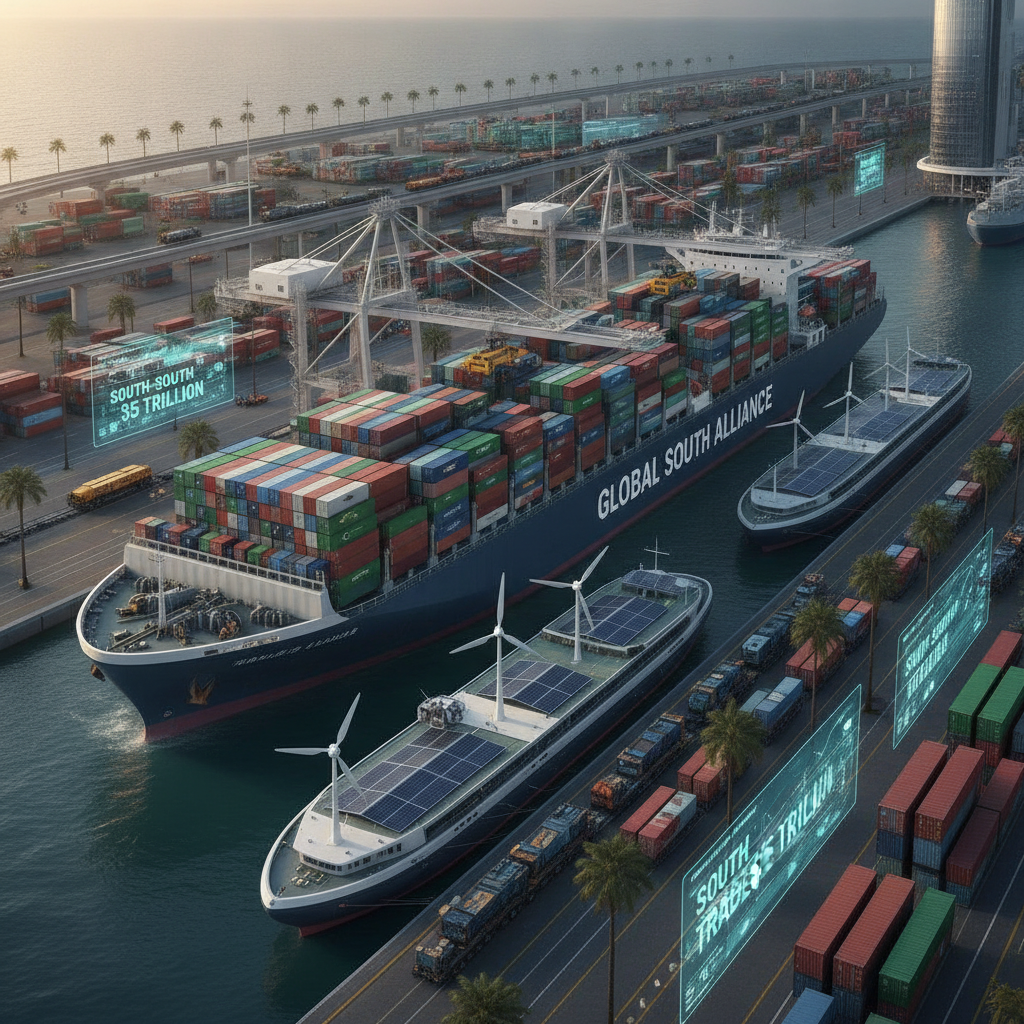
As traditional supply chains face geopolitical pressures, a remarkable transformation is underway across developing economies. Recent UN Trade and Development (UNCTAD) reports from late 2025 confirm that global trade exceeded $35 trillion, driven predominantly by East Asia, Africa, and expanding South-South trade corridors. Consequently, South-South trade logistics are rapidly evolving to support this surge, shifting away from classic long-haul intercontinental routes toward highly efficient, intra-regional networks.
By the end of 2025, South-South trade accounted for over $6.2 trillion, representing 26 percent of all global merchandise trade. To accommodate this massive volume shift, industry leaders are investing heavily in new trade facilitation frameworks. For instance, initiatives like the World Logistics Passport are actively reducing customs clearance times and optimizing direct trade routes linking Latin America, Africa, and Asia. These targeted logistics improvements yield substantial cost savings and boost overall supply chain resilience for developing nations.
Industry forecasts for 2026 suggest that shifting foreign direct investment will continue to birth new logistical hubs across the Global South. Emerging supply chain trends include:
- Shorter-Haul Networks: Logistics providers are pivoting to shorter, intra-regional shipping lanes.
- Infrastructure Investment: Surges in African and Asian manufacturing demand rapid upgrades to rail-sea intermodal transport.
- Volume Expansion: Developing economies are currently maintaining positive momentum despite cooling global economic forecasts.
Ultimately, modernizing South-South trade logistics is no longer just an emerging market priority; it is a critical pillar for stabilizing the global economy amid sustained uncertainty.
References
Dubai launches World Logistics Passport at Davos. Dubai World Logistics Passport Initiative. Anticipating Changes in Shipping Demand for 2026. Stronger Global South trade helps stabilize world economy. Shifting Investment Trends: Implications for Global Trade. Handbook of Statistics 2025. Global Trade Update (December 2025). UNCTAD Global Trade Update (December 2025).