The shipping industry has officially entered Phase 2 of the International Maritime Organization’s environmental strategy. The IMO 2026 Carbon Intensity Compliance regulations have transformed the Carbon Intensity Indicator (CII) from a simple metric into a crucial financial variable. Logistics experts and shipowners must now treat carbon efficiency as a core determinant of vessel employment and asset valuation.
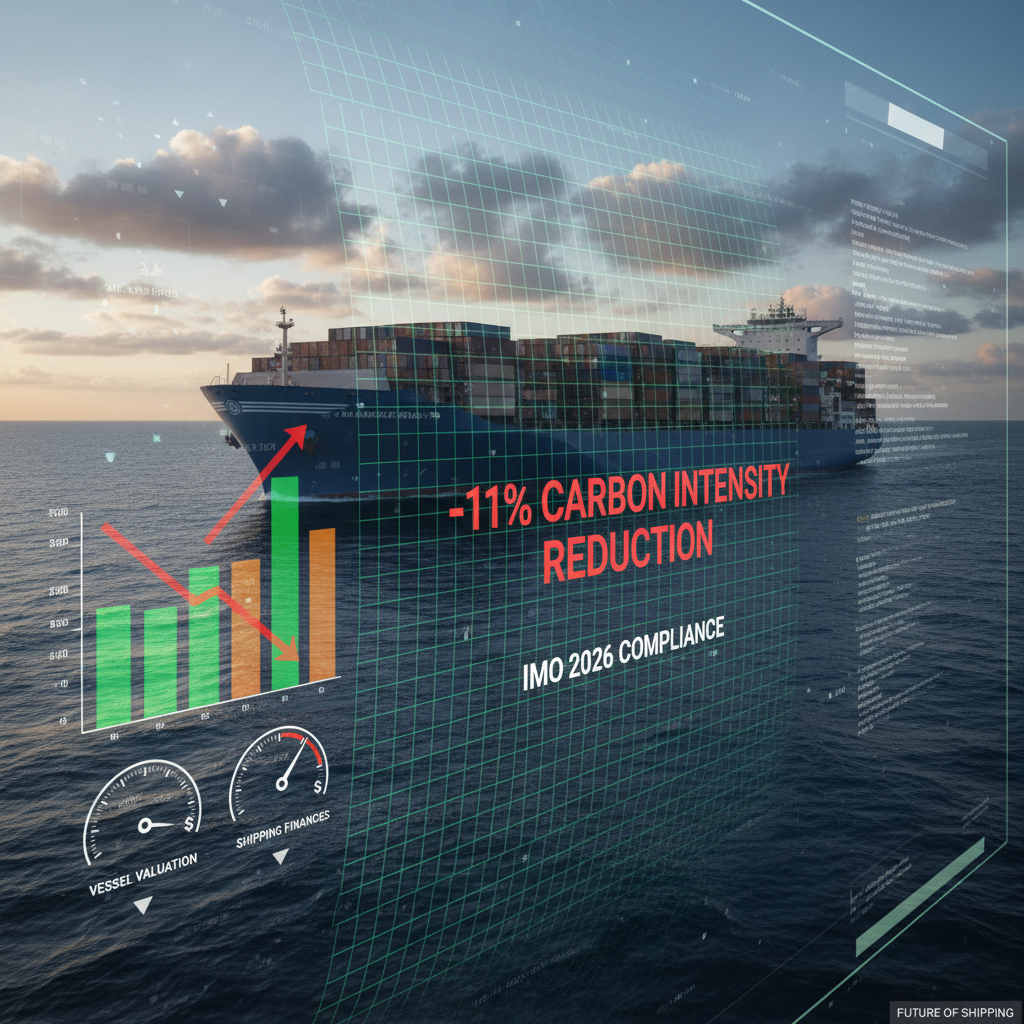
Under the new 2026 standards, the annual carbon intensity reduction factor has escalated to 11% relative to the 2019 baseline. This is more than double the initial 5% target established in 2023. Consequently, operators are facing significantly stricter oversight from Port State Control inspections.
Vessels failing to meet these thresholds face immediate commercial consequences. A ship that receives a rating of D for three consecutive years or an E rating in a single year must submit a mandatory Corrective Action Plan.
IMO 2026 Carbon Intensity Compliance directly influences commercial negotiations and financing frameworks. Charterers and major energy companies are now meticulously reviewing historical CII trajectories before securing contracts.
- Chartering Power: Vessels trending toward a D rating face reduced employment flexibility and increased technical scrutiny.
- Green Financing: Lenders utilizing the Poseidon Principles are linking loan margins directly to decarbonization trajectories.
- Asset Valuation: Buyers in the resale market are heavily discounting vessels with volatile rating histories.
To survive this regulatory shift, passive measures like Engine Power Limitation are no longer adequate. Shipowners must invest in physical enhancements to maintain viable ratings.
References
cse-net.org: CII in Shipping 2026: How It Impacts Vessel Earnings
esenyelpartners.com: 2026 Maritime Regulations: EEXI and CII Compliance Guide