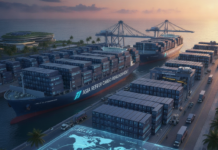
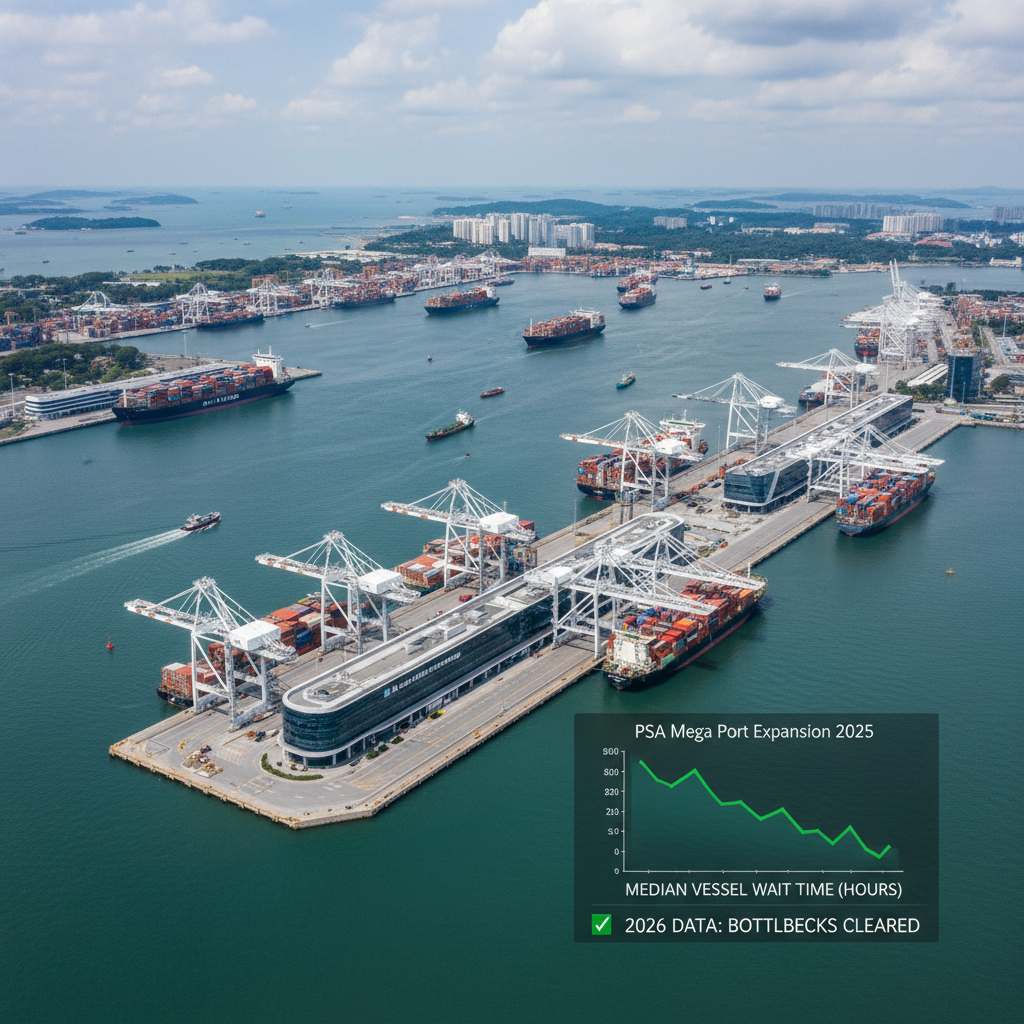
For logistics professionals, the severe Singapore Port Shipping Bottlenecks that dominated 2024 and 2025 served as a stark reminder of global supply chain fragility. Driven by Red Sea vessel diversions around the Cape of Good Hope and subsequent equipment shortages, port delays previously skyrocketed to seven days with over 450,000 TEU waiting to berth. However, recent data from early 2026 indicates a significant operational recovery.
As of April 2026, the situation has dramatically improved. Industry tracking metrics now report a low port congestion index, with median vessel waiting times dropping to just 0.08 days. This recovery stems from strategic capacity enhancements, including the Maritime and Port Authority of Singapore (MPA) reactivating older berths and expediting new terminal operations. Key factors driving this stabilization include:
- Re-calibration of global shipping schedules to accommodate longer African transit routes.
- Decreased transpacific container spot rates and normalized trade volumes following peak 2025 disruptions.
- Proactive manpower scaling and advanced yard utilization strategies deployed by PSA Singapore.
While the acute phase of Singapore Port Shipping Bottlenecks has subsided, maritime experts caution that structural vulnerabilities remain. High yard utilization periodically triggers minor delays, such as the 1.9-day wait times observed in late 2025. Shippers must continue leveraging predictive visibility tools and dynamic routing to navigate potential future disruptions in the Southeast Asian maritime corridor. Stakeholders are advised to maintain robust forecasting strategies as peak seasons approach.
References
FreightAmigo: Severe Congestion at Singapore’s Container Port Affects Global Shipping (https://www.freightamigo.com). Portcast: Port congestion at Singapore Live Delays (https://www.portcast.io). Haulio: Global Port Congestion Impact on Singapore (https://www.haulio.io). Everstream Analytics: Port Congestion Report (https://www.everstream.ai).