
As volatility becomes the new normal in global trade, the ASEAN Electronics Supply Chain Shift is accelerating at an unprecedented pace. Global manufacturers are transitioning from single-source reliance to a multi-country strategy, turning Southeast Asia into a critical manufacturing hub. For logistics professionals, this diversification presents massive volume opportunities and new operational complexities.
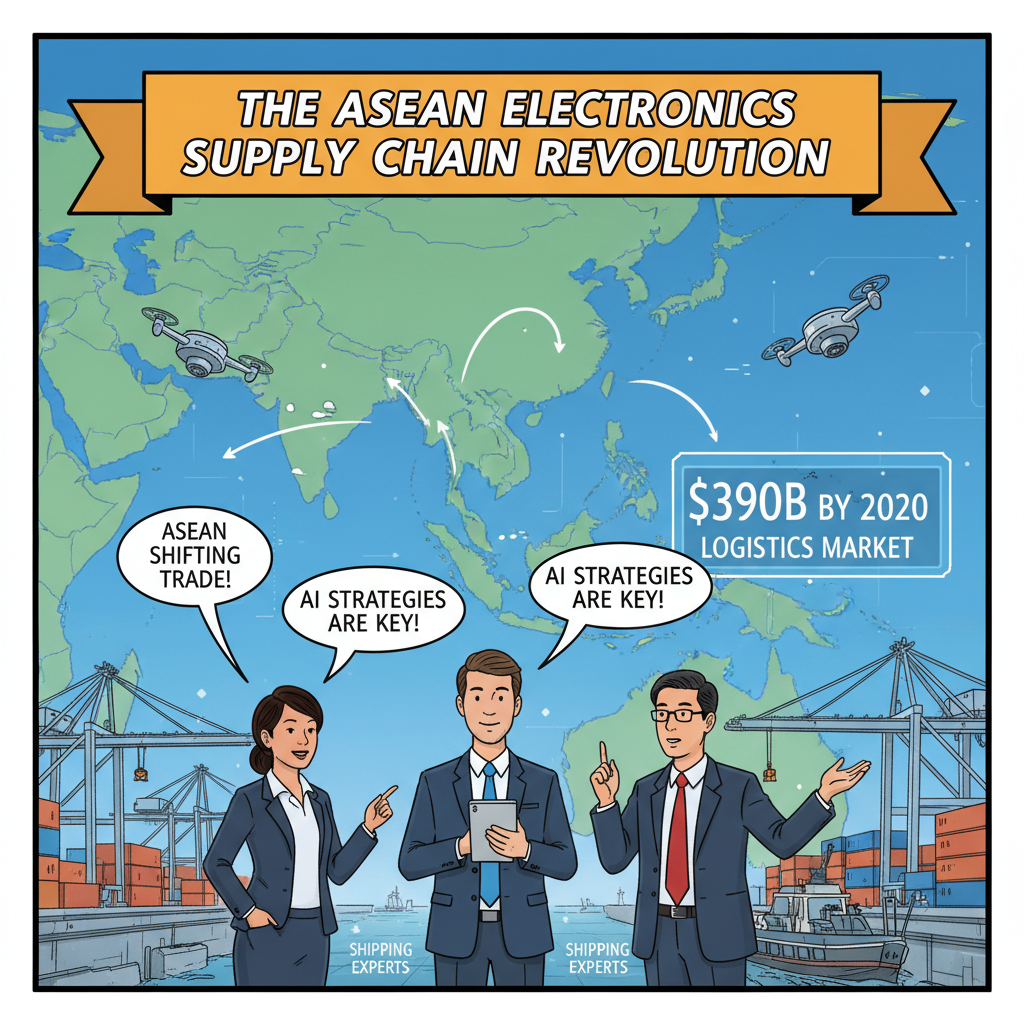
Driven by heavy foreign direct investment, countries like Vietnam, Malaysia, and Thailand are solidifying their positions as powerhouse exporters. Vietnam’s electronics exports alone rocketed past $126 billion as of 2024. Consequently, the total freight and logistics market in ASEAN is forecast to grow from $288.2 billion in 2025 to $390 billion by 2030, charting a 6.23% CAGR. This rapid expansion mandates major upgrades in cross-border trucking, multimodal transport, and bonded warehouse capacity.
To manage the friction of rapid expansion, forward-thinking shippers are redesigning their Asia-Pacific networks for 2026. The future of regional shipping relies heavily on technology-enabled flexibility:
- Elastic Logistics: Companies are abandoning rigid planning cycles for AI-driven capacity allocation that scales dynamically with real-time demand.
- Dual Sourcing Redundancy: Supplier vetting across multiple nations ensures quality control while mitigating localized disruptions.
- Smart Warehousing: Integration of IoT sensors and automated documentation is streamlining inventory management across free-trade zones.
Ultimately, shipping experts who capitalize on predictive analytics will be best positioned to dominate these burgeoning trade corridors.