
Analyzing 2026 Asia Port Congestion Trends
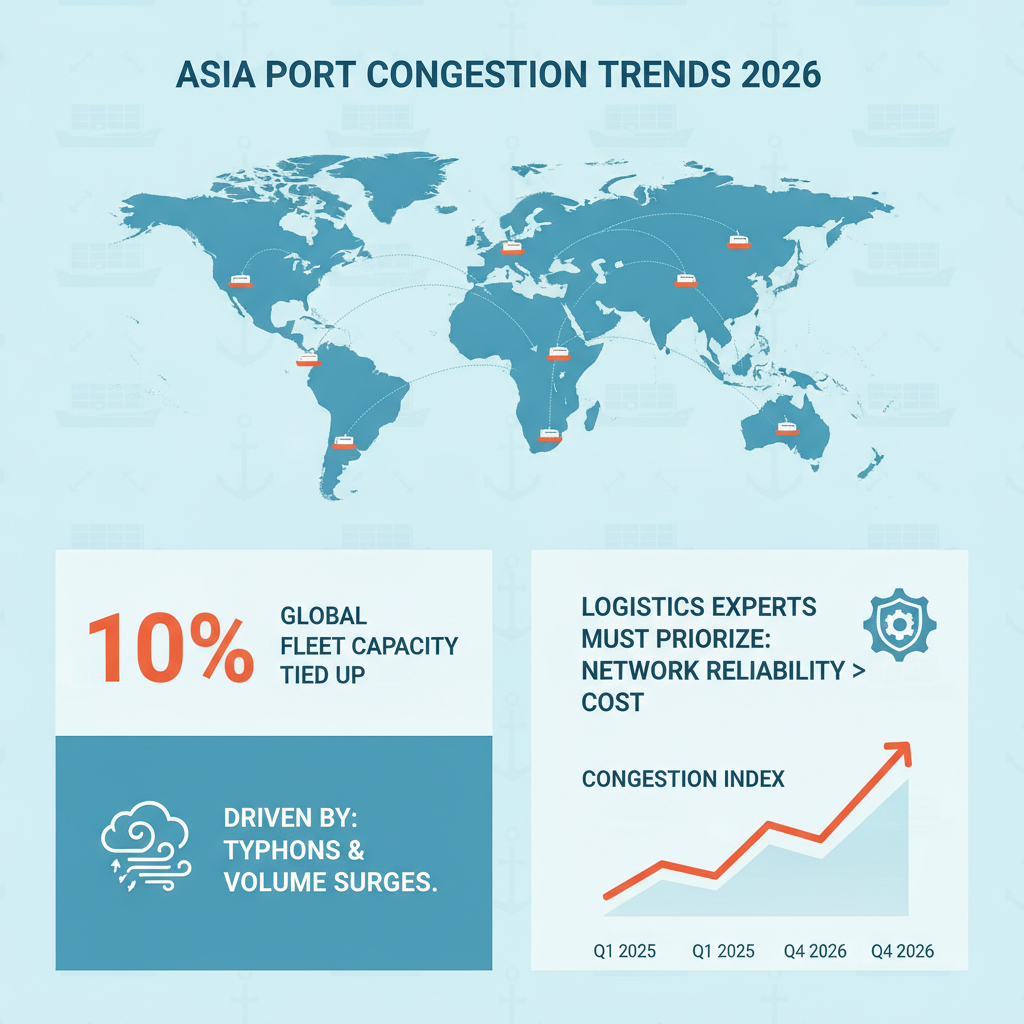
The maritime industry is grappling with severe operational bottlenecks, making Asia port congestion trends a critical focus for logistics professionals. As of November 2026, global congestion tied up approximately 3.57 million TEUs, representing 10.3% of the global containership fleet. North Asian ports account for roughly 40% of this constrained capacity. This unprecedented logjam has effectively removed massive vessel capacity from the active market.
Primary Drivers of Asia Port Congestion Trends
The current disruption stems from cascading logistical challenges rather than a single event. Core factors exacerbating the crisis include:
- Severe Weather: An active 2026 typhoon season severely disrupted berthing schedules across East Asia.
- Volume Surges: Shippers rushing to front-load cargo ahead of potential US tariffs created severe vessel bunching.
- Terminal Yard Density: Hubs like Busan reached nearly 100% container density in late 2026, while Shanghai faced multi-day waiting times.
Strategic Adjustments for Shipping Leaders
The fallout from these Asia port congestion trends has heavily impacted schedule reliability. Major transshipment hubs like Singapore saw performance drop to 43.2% earlier this year. While seasonal restocking pressure eased slightly in late October, baseline congestion remains highly disruptive. Moving forward, supply chain executives must shift their focus from securing freight discounts to utilizing advanced visibility tools and widening ETA buffers to guarantee network reliability.
References
HighQ Logistics Report on Asia Port Congestion. Logistics Great: 2026 Supply Chains at Breaking Point. Wisevoter: Asia Port Congestion Eases. SEKO Logistics: Asia Supply Chain Weather Center.