The Urgency of Sustainable Maritime Transport
International shipping generates roughly one billion tons of greenhouse gas emissions annually, representing three percent of global emissions. With global maritime trade projected to reach 12.9 billion tons in 2025, the push for sustainable maritime transport has never been more critical. Logistics and shipping experts are increasingly tasked with navigating this transition while maintaining operational efficiency.
Alternative Fuels in Sustainable Maritime Transport
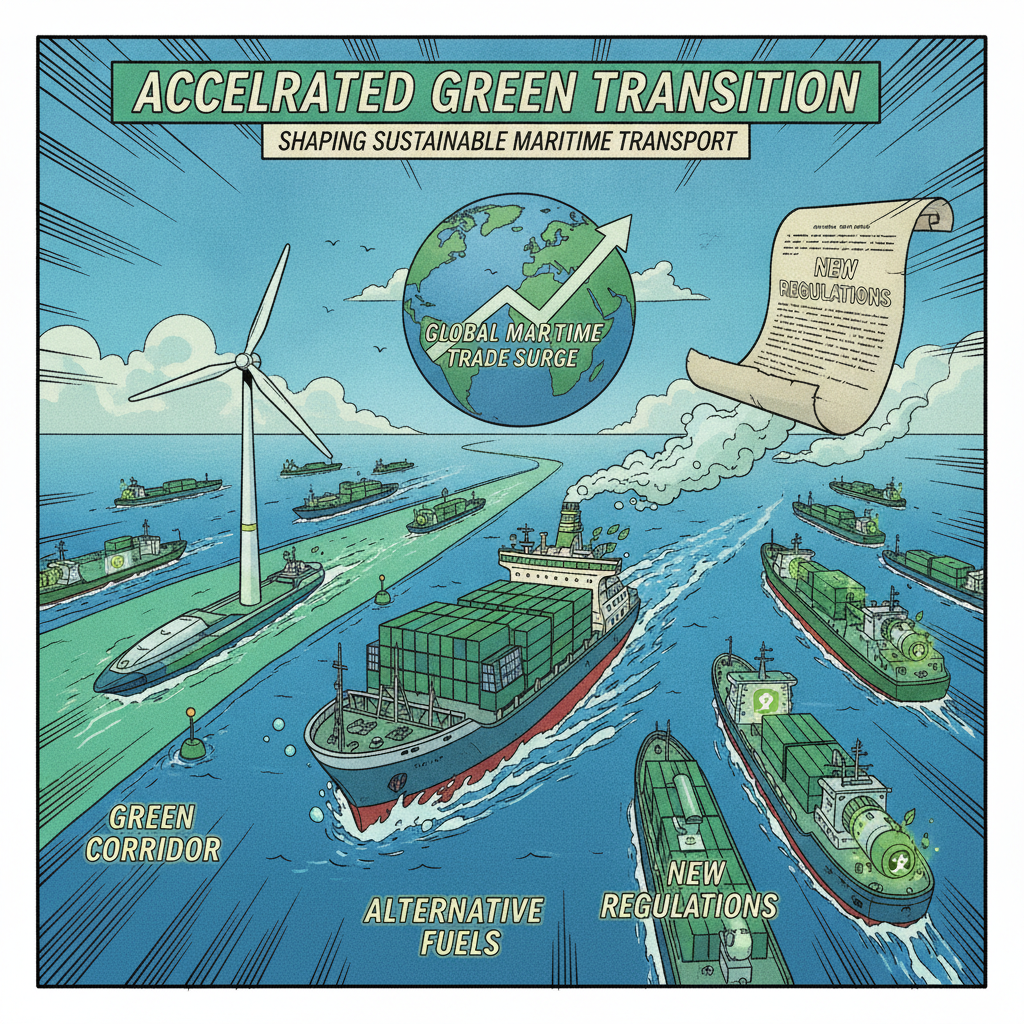
The transition away from heavy fuel oil relies on several emerging pathways. According to the 2026 Sustainable Maritime Transport Outlook, operators are focusing on three primary strategies:
- Adopting liquefied natural gas and biofuels for immediate, short-term emission reductions.
- Investing in synthetic fuels, such as green methanol and ammonia, to meet 2050 net-zero targets.
- Developing green corridors equipped with zero-emission infrastructure to test electrified port terminals.
Navigating the Regulatory Divide
A major challenge facing sustainable maritime transport is regulatory fragmentation. Europe drives decarbonization through binding measures like the Fit for 55 package, establishing strict emission caps. In contrast, the lack of cohesive global obligations creates investment uncertainty. Moving forward, cross-sector collaboration and alternative fuel investments will be paramount to realizing a green global supply chain.
References
Eni, Fincantieri, RINA (2026). Sustainable Maritime Transport Outlook. UNCTAD (2025). Maritime Trade Projections. European Maritime Transport Report 2025. EBRD/IMO (2026). Advancing Maritime Decarbonisation. Globalia (2025). Green shipping corridors. Sustainable Measures Analysis (2026).