The Logistics Real Estate Automation Imperative
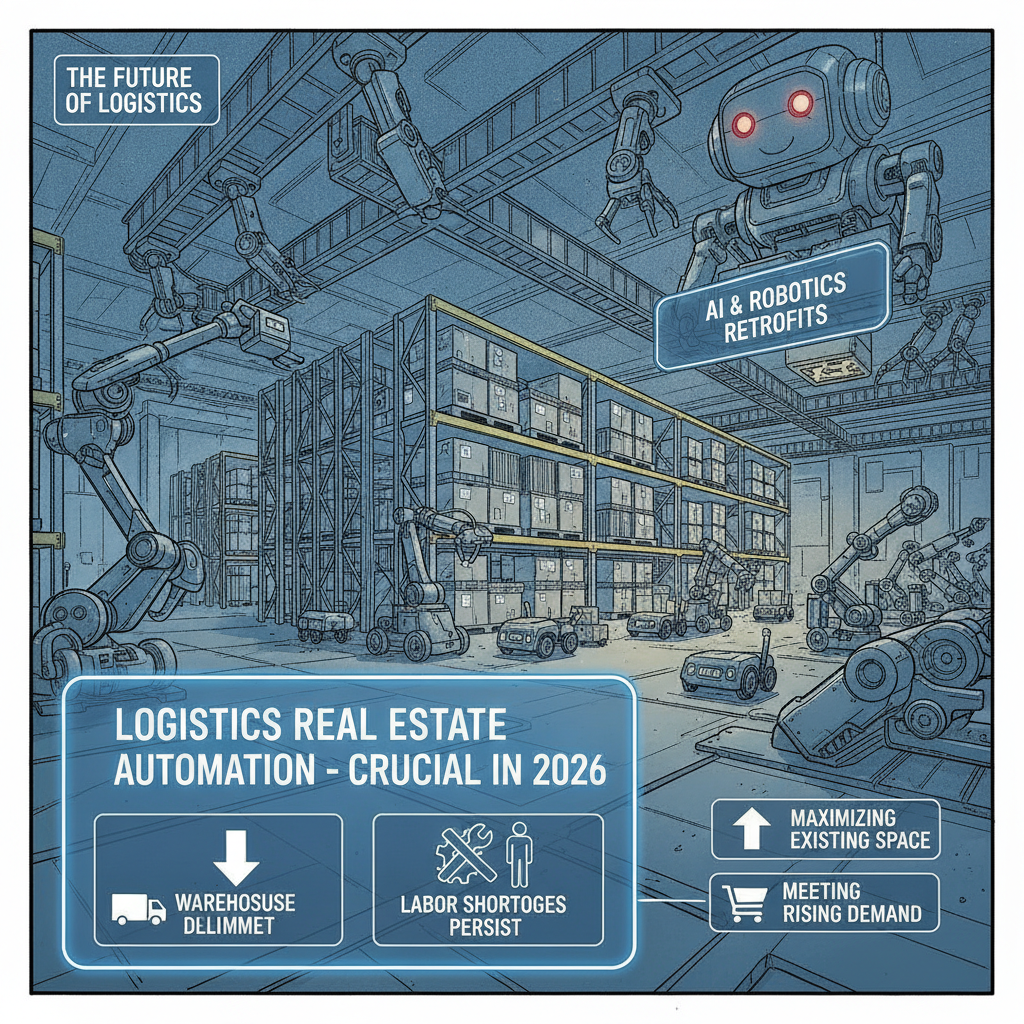
As the industrial sector faces a significant contraction in new facility development, Logistics Real Estate Automation has evolved from an operational luxury to a strategic necessity. With 2026 new warehouse deliveries projected to drop by 60% to 70% compared to pandemic peaks, operators are increasingly forced to maximize their existing footprints. Mark Brune, a managing director at Harris Williams, notes that operators are prioritizing strategic retrofits, utilizing advanced AI and flexible robotics to squeeze more efficiency out of their current assets.
Labor Shortages Accelerating Tech Adoption
The aggressive push for smart warehousing is heavily driven by chronic labor constraints and rising costs. The MHI 2025 Annual Industry Report reveals that up to 52% of companies rate retaining labor as extremely challenging. Furthermore, with warehouse worker turnover rates hovering around 36% and replacing an employee costing up to 150% of their salary, over half of operators now cite unfilled headcount as their primary catalyst for technological integration. Consequently, the global warehouse automation market is forecast to double, surging from approximately $23.9 billion in 2025 to over $47 billion by 2030.
Future Logistics Real Estate Automation Challenges
While the demand for Logistics Real Estate Automation is undeniably clear, implementation across the industry faces distinct infrastructural hurdles. Key trends shaping the 2026 warehouse landscape include:
- Power constraints: The increasing electrification of fleets and energy-intensive automated systems are severely straining utility grids, delaying new facility development by months or even years.
- Retrofitting over relocation: Because 80% of global warehouses still rely on manual operations, capital is swiftly shifting toward upgrading legacy facilities with autonomous mobile robots (AMRs) rather than building new sites.
- Flexible financing: Elevated interest rates are prompting companies to favor equipment leasing over traditional capital expenditures, preserving crucial financial agility.
References
- Harris Williams (Oct 2026): Warehouse Automation Report
- SellersCommerce (Jul 2026): Warehouse Automation Statistics
- Cart.com (Sep 2026): Warehouse automation trends to watch in 2026
- PwC & JLL Research (Aug 2026): Global real estate trends and perspectives