
Is Northern Sea Route Containerization Becoming Mainstream?
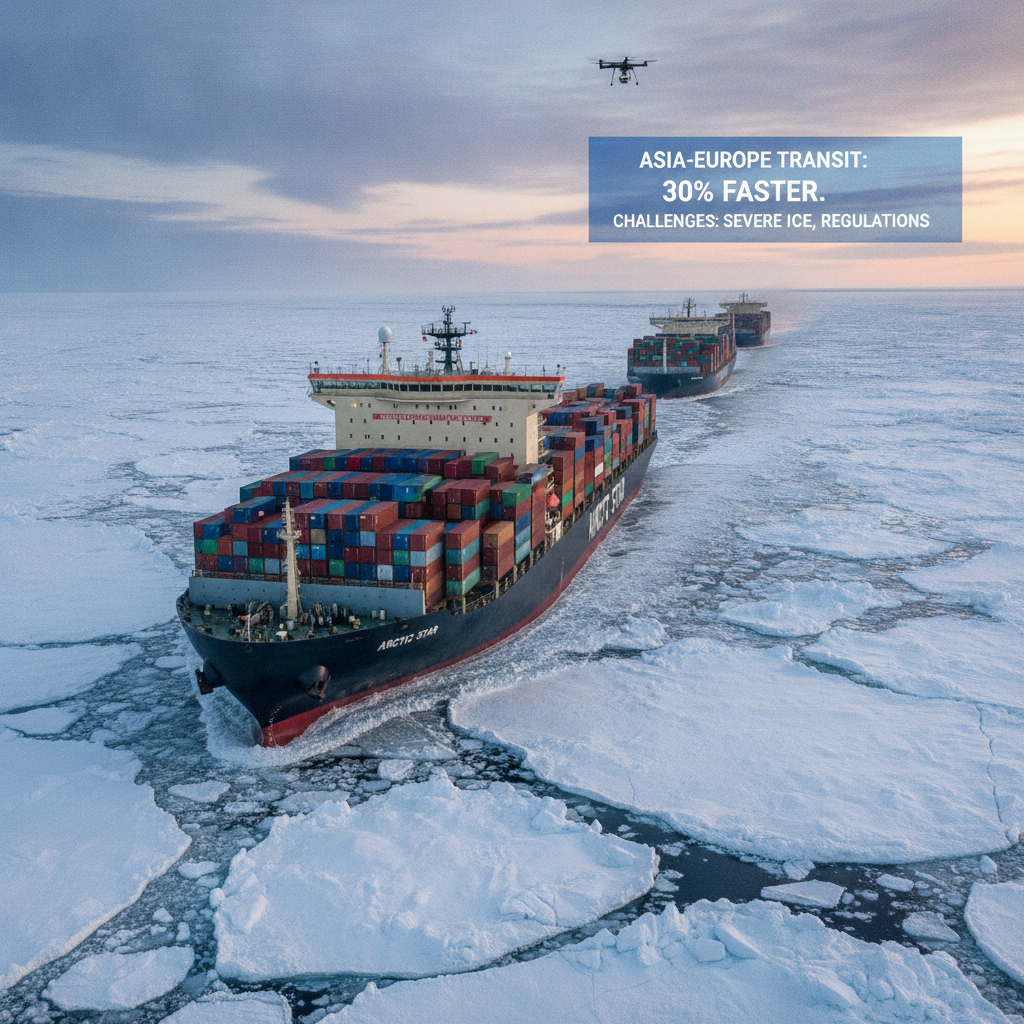
The global logistics landscape is rapidly evolving, and Northern Sea Route Containerization is transitioning from a theoretical concept to a viable seasonal alternative for maritime trade. The Arctic shipping corridor, which reduces the journey between Asia and Europe by up to 10 days compared to the Suez Canal, has witnessed unprecedented momentum in 2025 and 2026. Data from the Centre for High North Logistics reveals that the 2025 navigation season concluded with 103 transit voyages carrying an estimated 3.2 million tons of cargo. By September 2026, transit volumes already surpassed the previous year’s total, reaching 104 voyages and 3.7 million tons of transit cargo.
Northern Sea Route Containerization Trends
The most defining shift in recent years is the establishment of scheduled liner operations. In August 2026, Sea Legend Shipping inaugurated the China-Europe Arctic Express, introducing the route’s first fixed weekly container service with an advertised transit time of 20 to 22 days to northern Europe. This operational milestone was complemented by South Korean operator Panstar Group, which successfully completed a round-trip container trial with a 2,758 TEU vessel in October 2026.
- Volume Growth: Containerized transit cargo reached a record 400,000 tons in 2025, representing a 130% year-over-year increase.
- Fleet Adaptation: Container voyages climbed to 15 in 2025, up from 11 in 2024, demonstrating growing confidence among operators.
- Vessel Profile: Most deployed ships range from 1,700 to 4,800 TEU, functioning as seasonal parallel services rather than mainline replacements.
Challenges of Northern Sea Route Containerization
Despite impressive growth metrics, Northern Sea Route Containerization faces systemic headwinds. The operational window remains restricted to roughly 7 to 10 weeks, mandating complex supply chain adjustments when the season closes. Furthermore, strict environmental scrutiny imposes steep compliance costs. While the Arctic corridor provides undeniable transit advantages, its integration into global supply chains requires robust ice-class tonnage investments and careful risk management.
References
Rosatom Press Release, July 2026. S&P Global, October 2025. Supply Chain Digital, October 2026. GetTransport Blog, August 2026. CHNL Data, October 2026. Centre for High North Logistics, December 2025. Freight News, January 2026.