Understanding the Post-Hormuz Maritime Routing Shift
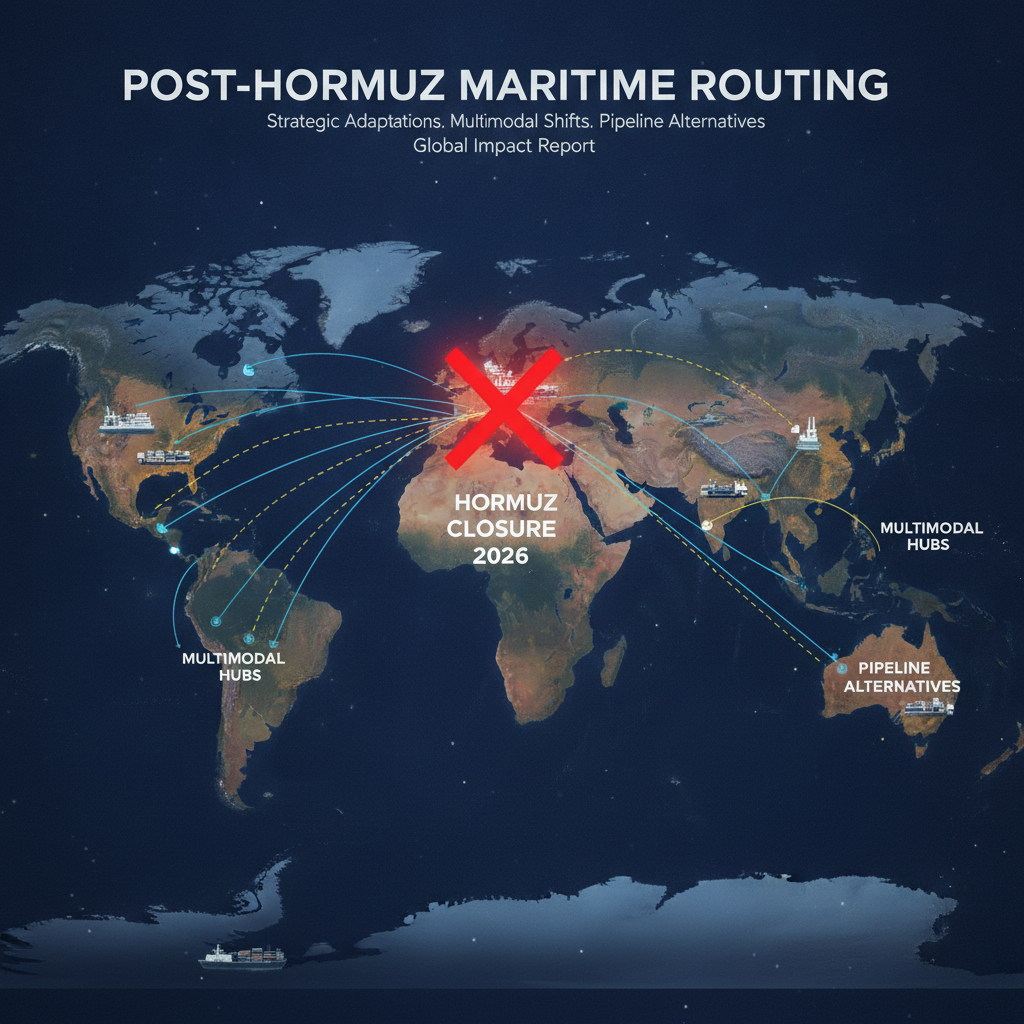
The unprecedented 2026 closure of the Strait of Hormuz has forced logistics experts to rapidly deploy alternative strategies. With commercial tanker traffic plummeting by nearly 90%, securing a viable Post-Hormuz Maritime Routing network is no longer optional for global supply chains. Roughly 20% of the world’s petroleum liquids consumption is now at risk, demanding immediate industry adaptation.
Key Post-Hormuz Maritime Routing Strategies
Shipping giants like Maersk and MSC have suspended traditional transits, opting for multimodal overland corridors to bypass the blockage. By shifting container freight through Saudi Arabian and Jordanian land routes to Red Sea ports like Yanbu, carriers can maintain crucial trade flows. To effectively navigate these disruptions, industry leaders are adopting several essential contingency measures:
- Expanding reliance on the East-West pipeline to Yanbu, which bypasses the strait entirely.
- Utilizing the UAE pipeline infrastructure connecting directly to Fujairah on the Gulf of Oman.
- Adopting heavy truck networks to move stranded cargo from Jebel Ali to accessible maritime ports.
The Future of Post-Hormuz Maritime Routing
Despite these adaptations, alternative routes currently cover only 45% of normal crude exports previously flowing through Hormuz. Global energy markets and commercial freight will experience sustained higher costs and extended transit times throughout 2026. Ultimately, diversifying physical supply lines will remain the paramount objective for international trade survival.
References
- The Strait of Hormuz: Critical Maritime Trade Route – University of Wisconsin Law School
- Strait of Hormuz Crisis 2026: How to Keep GCC Cargo Moving – Adnovs Global
- How route diversification could strengthen global energy security – EY India
- Replacing Hormuz: Shipping companies search for alternative routes – CGTN
- How War Is Choking Global Oil Tanker Traffic in the Strait of Hormuz and Beyond
- Strait of Hormuz Closure 2026: What It Means for Your Supply Chain