
The Q4 2026 Pricing Divide
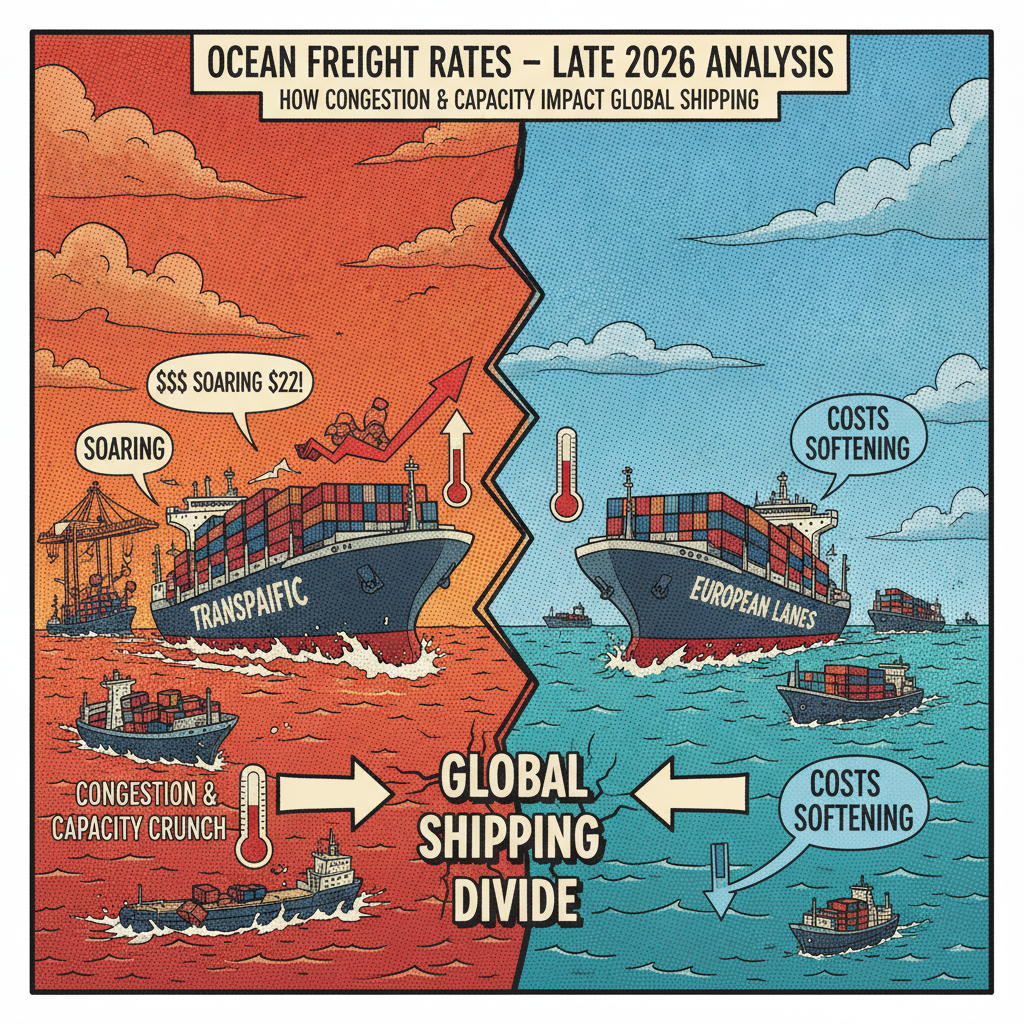
As the global logistics industry navigates the fourth quarter of 2026, Ocean Freight Rates are experiencing one of the most unusual pricing splits in recent memory. While Asia to North America spot rates are approaching pandemic-era highs due to robust US import demand, Asia to Europe routes are simultaneously softening. Industry data reveals that the rate gap between Asia-U.S. East Coast and Asia-North Europe lanes reached an astonishing $7,000 per FEU in early October.
Key Drivers of Market Volatility
Despite projections of a 5% increase in global fleet capacity for 2026, Ocean Freight Rates remain highly volatile. Carriers are actively managing supply through blank sailings, while external shocks continue to constrain usable capacity. Logistics experts point to several ongoing challenges:
- Severe Port Congestion: Approximately 12% of global container ship capacity is currently delayed, the highest level in four years.
- Weather Disruptions: Intense typhoon activity has created major backlogs, leaving over 860,000 TEUs stuck in queues outside Shanghai and Ningbo.
- Geopolitical Routing Risks: Ongoing Red Sea diversions continue to extend voyage times by 10 to 14 days, eating up global vessel capacity.
What Shippers Should Expect
In mid-October 2026, Drewry’s World Container Index stabilized around $4,351 to $4,485 per 40-foot container. Moving forward, shippers must abandon expectations of predictable cycles. While new vessel deliveries may introduce downward pressure, carrier discipline and localized congestion will likely keep Ocean Freight Rates elevated on high-demand transpacific routes.
References
Bofeng Logistics, Why are 2026 shipping rates rising. Suaid Global, Ocean Freight Rates 2026. SeaVantage, 4 Ocean Freight Trends That Will Define 2026. Rising Freight Rates on the Global Container Market in Q4 2026. Freight news, Drewry: The World Container Index increased. Post-Golden Week Container Market. The Loadstar, Strong US import demand. Freightos, Container Shipping Overcapacity Outlook 2026.