Is Landside Terminal Congestion the True Bottleneck of 2026 Shipping?
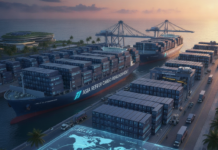
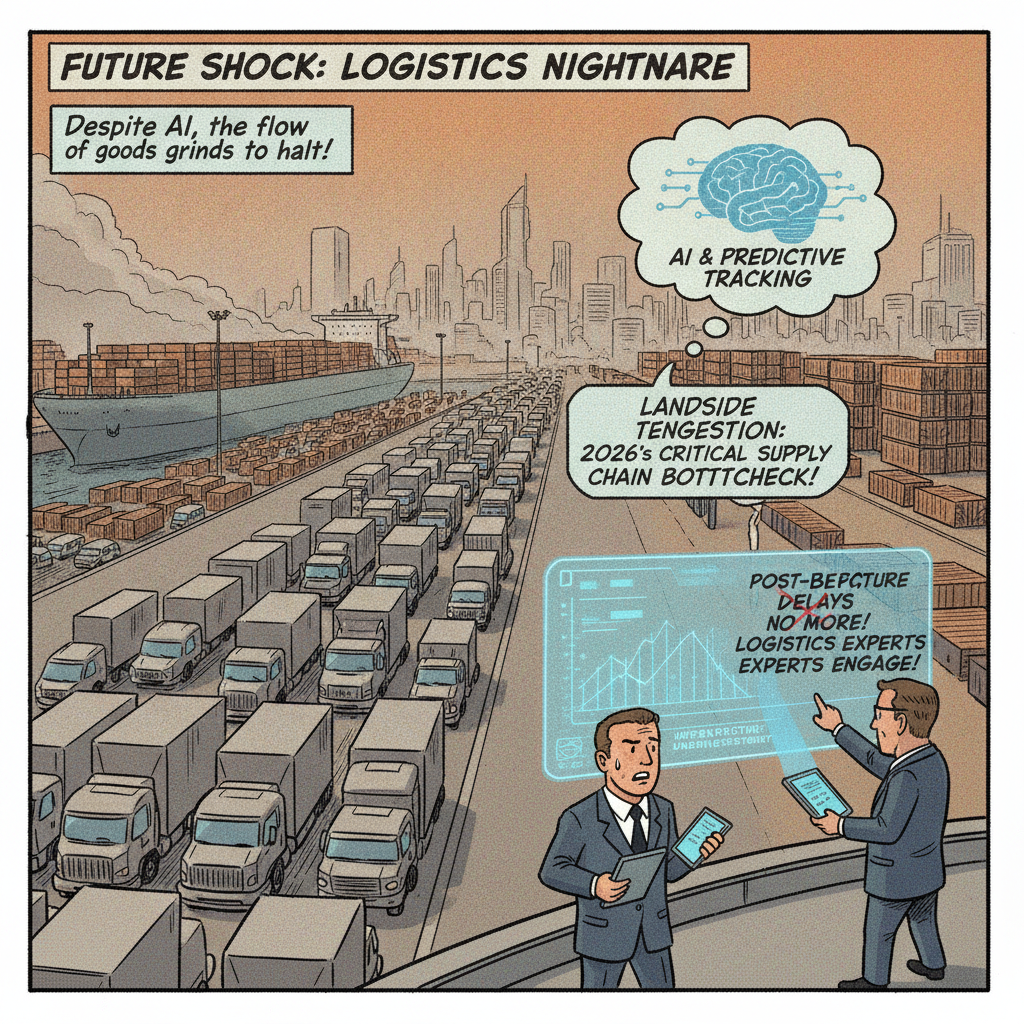
While maritime queues often dominate supply chain headlines, landside terminal congestion has emerged as the critical vulnerability for global logistics networks in 2026. Top container carrier executives report that post-discharge bottlenecks now fundamentally dictate a port’s efficiency and international reliability. The current crisis is largely attributed to over a decade of underinvestment in off-dock infrastructure, which has failed to keep pace with robust cargo demands and larger vessel discharges.
2025-2026 Statistical Realities
Current operational metrics reveal a global strain on landside execution. In North America, rail dwell times have recently stretched to 7-9 days in Vancouver and 9-10 days in Houston, severely bottlenecking inland distributions. Similarly, ports in regions like West Africa are experiencing severe landside congestion with vessel waiting times averaging over 6 days due to yard pressure, empty container imbalances, and truck access challenges.
Key factors exacerbating landside congestion include:
- Persistent rail capacity constraints and severe chassis shortages.
- Fluctuating truck turnaround times (TAT) due to rigid yard and crane configurations.
- Limited warehouse availability near port zones preventing rapid cargo evacuation.
Strategic Orchestration and Mitigation
To combat landside terminal congestion, industry leaders are shifting from capacity expansion to system agility. Terminals are beginning to adopt predictive AI models to forecast truck turnaround times, utilizing transfer learning to adapt to constrained operational data. Additionally, modern supply chains are heavily investing in real-time maritime visibility tools that flag barge queue insights and dwell-time indicators before delays cascade. Logistics experts stress that treating a secured berth slot as proof of smooth execution is no longer viable; tighter communication regarding downstream connections and immediate off-dock orchestration is essential to maintain fluidity.
References
The Substack Shipping News (2026)
Kuehne+Nagel Updates (2026)
Everstream Analytics (2025)
Freight Truck Turnaround Time Prediction (2026)
Logward, Tackling Port Congestion (2025)