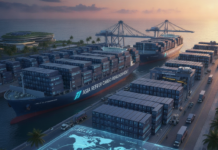
The Strategic Push for GCC Logistics Hub Integration
The Gulf Cooperation Council (GCC) is transforming into a unified trade bridge, prioritizing GCC Logistics Hub Integration to counteract global supply chain volatility. With the regional freight market projected to surge from $83.24 billion in 2025 to $120.21 billion by 2031, member states are shifting from internal competition to creating a resilient, multimodal network.
2026 Milestones in Customs and Infrastructure
Recent 2026 developments underscore a leap in regional harmonization. In March 2026, Saudi Arabia introduced initiatives to establish dedicated GCC storage zones at King Abdulaziz Port, providing up to 60 days of storage fee exemptions for intra-GCC trade. Furthermore, GCC Customs Union Harmonization is leveraging digital data exchange to reduce redundant border inspections. Key infrastructural catalysts driving this integration include:
- The GCC Railway: A 2,117-kilometer integrated rail system expected to move 95 million tonnes of freight by 2045, supported by links like the King Hamad Causeway.
- Multimodal Corridors: Enhanced air-land and sea-land routes linking the UAE, Qatar, and Saudi Arabia to maintain trade continuity.
- Foreign Investment: ESR announced a $10 billion pipeline for logistics infrastructure across the region in October 2026.
The Future of Unified Gulf Supply Chains
For shipping experts, advanced GCC Logistics Hub Integration signals a paradigm shift. Synchronized regulatory frameworks and AI-powered smart ports ensure the Gulf functions as a cohesive transshipment ecosystem, radically lowering dwell costs for 3PL providers.
References
- Mordor Intelligence, Sept 2026
- IMARC Group, July 2026
- GCC Logistics Growth, April 2026
- GWC Group Expansion, Sept 2026
- SPA GCC Initiatives, March 2026
- IPE Real Assets ESR, Oct 2026
- GCC Regional Integration, Feb 2026