How Southeast Asia Shipping Hubs Are Transforming Global Trade
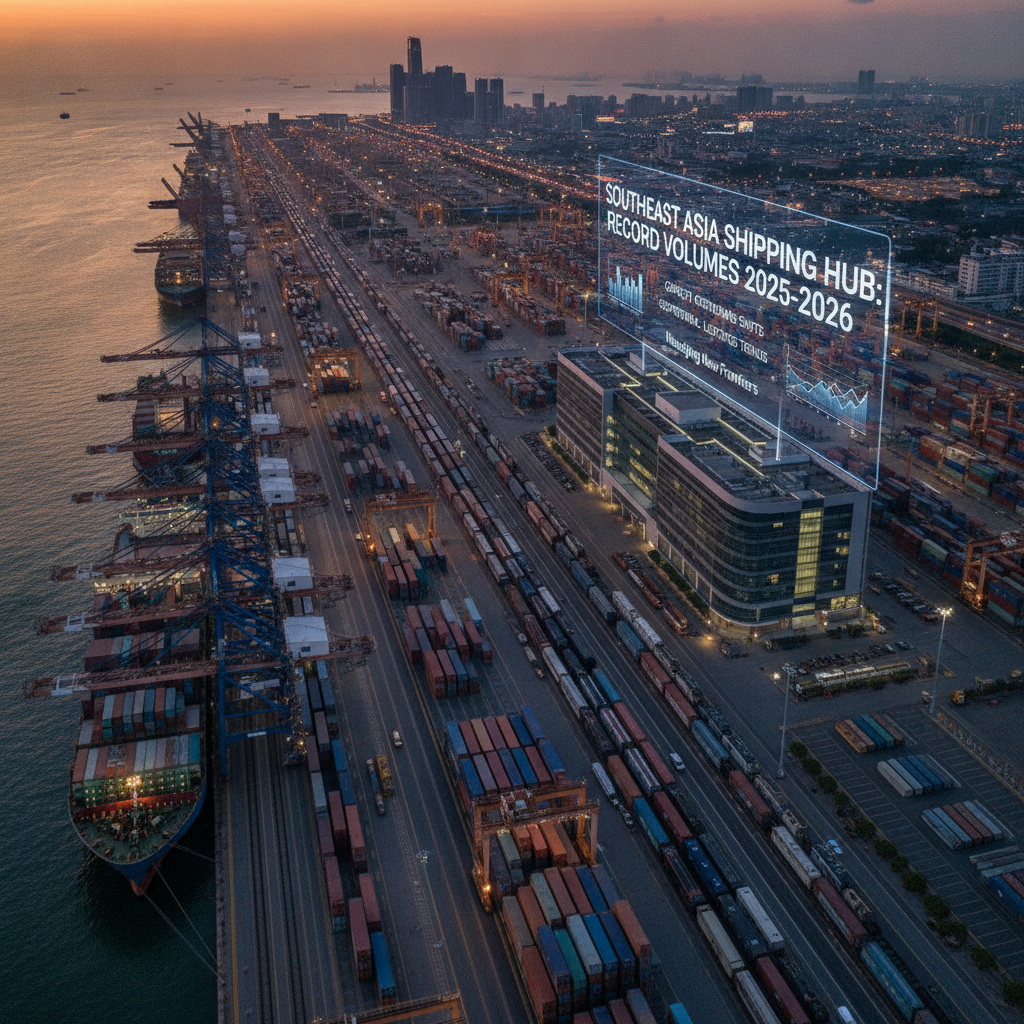
In the wake of ongoing geopolitical uncertainties and supply chain reconfigurations, Southeast Asia Shipping Hubs have emerged as resilient safe havens for global trade in 2025 and 2026. Logistics and shipping experts are witnessing unprecedented container handling volumes across the region as major carriers seek stable transshipment routes. This structural shift presents both opportunities and operational challenges for terminal operators aiming to capture the surging demand.
Unprecedented Growth in Southeast Asia Shipping Hubs
Recent statistics from 2025 underscore the massive scale of regional expansion. The Port of Singapore achieved a record-breaking 44.66 million Twenty-Foot Equivalent Units (TEUs), marking an 8.6% increase from the previous year. Concurrently, Malaysia’s Port of Tanjung Pelepas (PTP) recorded a staggering 14% year-over-year growth, handling 14.03 million TEUs. This remarkable growth at PTP was heavily catalyzed by realignments in global shipping networks, most notably the Gemini Cooperation between Maersk and Hapag-Lloyd.
Key Drivers Expanding Southeast Asia Shipping Hubs
The transformation of these crucial maritime nodes is not merely a byproduct of redirected traffic. It reflects strategic investments in capacity and technological integration. Terminal operators are focusing on several core pillars to sustain this momentum:
- Automated Yard Optimization: Implementing advanced robotics to mitigate labor constraints and increase container throughput.
- Alternative Fuel Infrastructure: Singapore’s marine fuel sales reached 56.77 million tonnes in 2025, with alternative marine fuels like LNG and ammonia surging to 1.95 million tonnes.
- Capacity Expansion: Port Klang, which handled 15.14 million TEUs in 2025, is eyeing long-term mega-port developments like the proposed Pulau Carey Port.
As supply chains continue to pivot, the resilience and modernization of these ports will dictate the future efficiency of global maritime logistics.
References
CNA (2026). With competitors hot on its heels, how can Singapore’s port stay the course?
Singapore Maritime Foundation (2026). Singapore Posts Record Port Performance in 2025.
The Star (2026). Local ports thrive as hubs.
FMT (2026). Tanjung Pelepas port targets 16 million TEUs a year throughput by 2029.