Global Port Congestion has surged to alarming levels in late 2026, driven by a perfect storm of severe weather, geopolitical rerouting, and structural vessel bunching. Shipping schedule reliability has plummeted, sending shockwaves through the international logistics industry.
The Data Behind 2026 Global Port Congestion
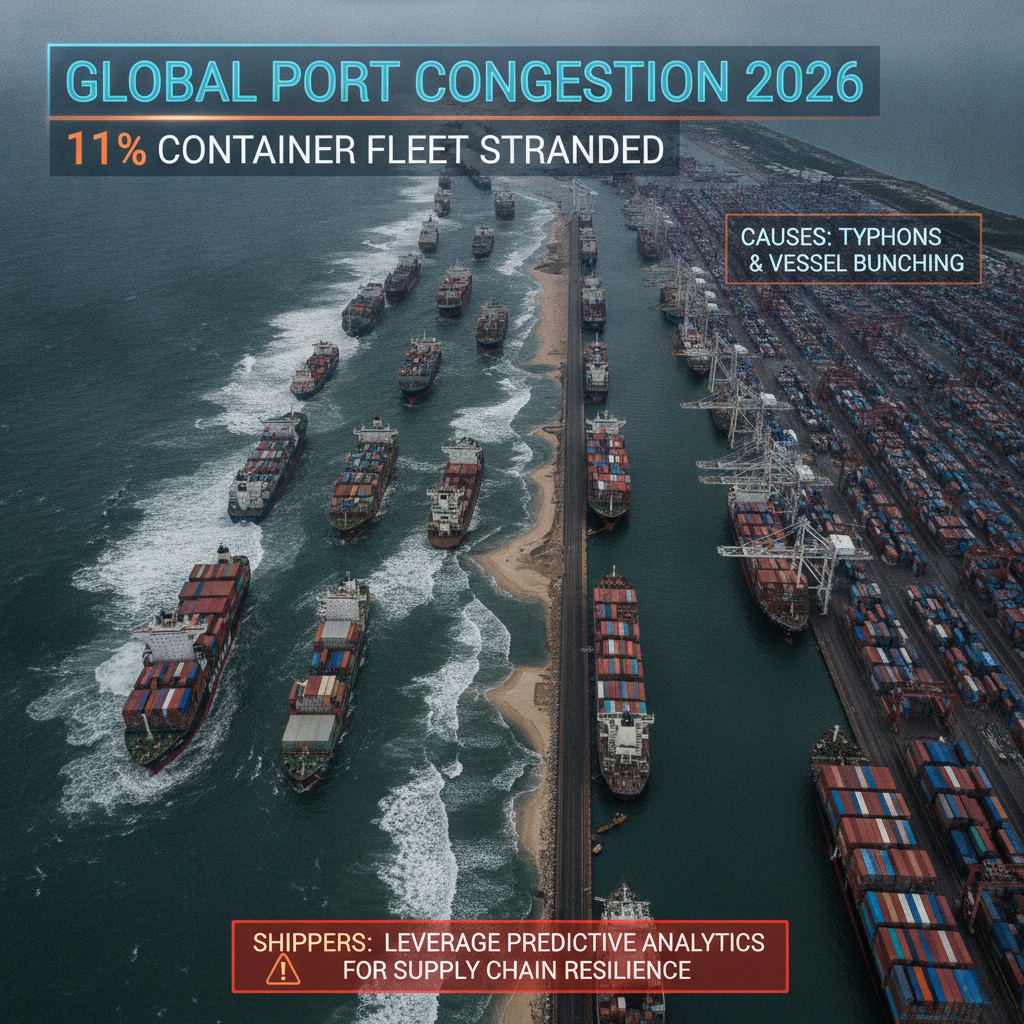
According to late 2026 industry data, global port congestion absorbed 11% of the worldwide container fleet, stranding nearly 3.92 million TEUs at anchor. Global container schedule reliability hit a staggering low of 29% in August 2026, with average delays stretching to 5.1 days. Unrelenting typhoons have battered North Asia, concentrating up to 54% of global port congestion in hubs like Shanghai and Ningbo, where berthing delays reached 10 days.
Key Drivers of the Logistics Crisis
The current bottleneck is characterized by severe vessel bunching. Primary causes include:
- Cape of Good Hope Diversions: Geopolitics forced ships onto longer routes, adding 10-14 days to transit times and disrupting synchronized arrivals.
- Extreme Weather Protocols: Pre-emptive typhoon defenses in Asia forced earlier port closures, impacting throughput.
- Regional Shifts: Southeast Asia now accounts for 11% of congestion, exacerbating delays across intra-Asia trade lanes.
Navigating Global Port Congestion Risks
Logistics experts warn that ripple effects are reaching downstream gateways in Europe and North America. To mitigate disruptions, shippers must leverage real-time port congestion analytics—a market projected to hit $1.96 billion in 2026. Transitioning urgent inventory to air express and optimizing predictive routing will be vital to surviving this cycle.
References
apllogistics.com | dhl.com | xindemarinenews.com | einpresswire.com | Linerlytica | theloadstar.com | freightwaves.com