Navigating Bunker Fuel Price Volatility in 2026
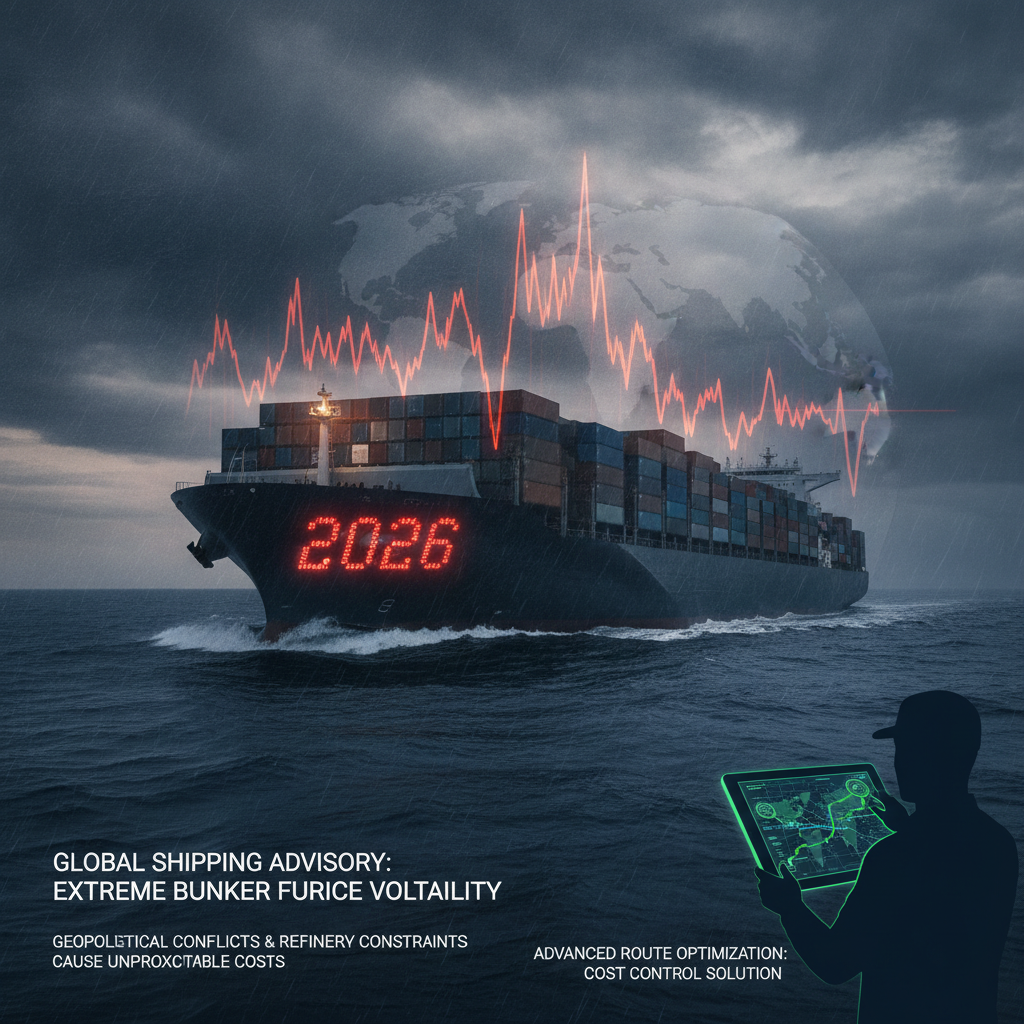
The global shipping industry is currently navigating a period of unprecedented bunker fuel price volatility, transforming standard operational expenses into critical strategic variables. In early 2026, the maritime sector witnessed drastic price fluctuations, with Singapore Very Low Sulphur Fuel Oil (VLSFO) surging from $778 to $862 per metric ton in a single week. This 10.8% price spike across major Asian hubs has marked 2026 as the most volatile bunker market in a decade. Logistics experts warn that carriers absorbing these costs risk major financial losses unless they utilize structured Bunker Adjustment Factors.
Key Drivers of Bunker Fuel Price Volatility
Several interlocking global forces are fueling this intense bunker fuel price volatility. Market analysts attribute the erratic cost movements to three primary supply chain shocks:
- Geopolitical Supply Disruptions: Blockades and disruptions in the Strait of Hormuz and the Red Sea have forced vessels to sail an extra 3,500 miles around the Cape of Good Hope, massively increasing fuel consumption.
- Refinery Constraints: A squeeze on global refinery throughput has created severe compatibility and availability issues for VLSFO blends across different bunker hubs.
- Regulatory Pressures: The advancement of the EU Emissions Trading System (ETS) and local carbon schemes has elevated greenhouse gas abatement costs, fundamentally shifting regional fuel demand.
Managing Bunker Fuel Price Volatility Strategically
To mitigate the impacts of bunker fuel price volatility, fleet operators are increasingly prioritizing tank segregation and advanced route optimization. While the International Maritime Organization (IMO) delayed its global carbon tax vote in late 2025, regional environmental mandates continue to require expensive compliance-grade fuels. Leading logistics providers are leveraging digital procurement platforms and shifting toward alternative marine fuels like LNG and biofuels to hedge against conventional price risk. Moving forward, securing reliable supply networks and mastering multi-fuel readiness will be essential for maintaining competitive freight rates.
References
Fairway ETA, “Why Bunker Prices Move”. VesselBot, “Bunker Adjustment Factor Explained”. DataM Intelligence, “Bunker Fuel Market Size”. MyDello, “Fuel Prices and Shipping”. Fairway ETA, “VLSFO Price Volatility in 2026”. Argus Media, “European VLSFO demand to fall in 2026”. OPIS, “2026 Preview: IMO Carbon Tax Delay”. Fairway ETA, “Why Bunker Prices Move”.