
Are Shoppers Driving Parcel Network Fragmentation?
In 2026, the logistics landscape is undergoing a profound transformation driven entirely by the end consumer. Parcel network fragmentation has become a defining challenge for supply chain directors as shoppers demand an unprecedented variety of delivery options.
The Mandate for Parcel Network Fragmentation
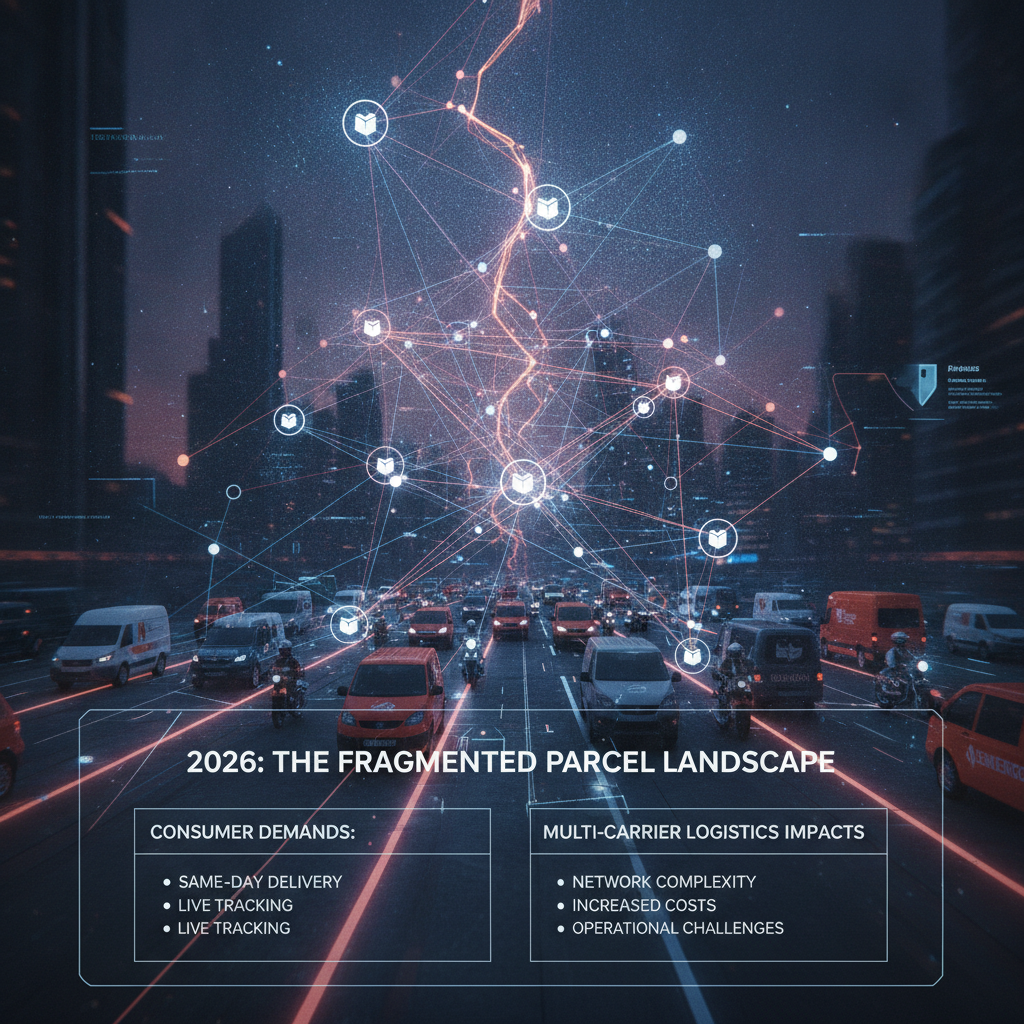
Recent insights from the September 2026 PARCEL Forum highlight a critical shift in fulfillment expectations. According to Margot Juros, Research Director at IDC, 60 percent of shoppers will abandon merchants failing to offer same-day delivery, free returns, or specific time slots. Furthermore, North American consumers prioritize live tracking above all other factors.
This evolving mandate forces retailers to implement multi-carrier strategies. Consequently, parcel network fragmentation accelerates as delivery volumes spread across numerous specialized carriers and regional nodes.
The Costs of Parcel Network Fragmentation
While diversifying carriers meets modern demands, it introduces severe operational complexities. The primary challenges facing logistics experts include:
- Integration Bottlenecks: Operators report that new carrier integrations routinely take three to six months each.
- Visibility Gaps: As network nodes increase, tracking systems struggle to maintain seamless visibility.
- Consolidation Losses: Relying on multiple carriers dilutes purchasing power and complicates escalation paths during delivery failures.
Ultimately, logistics leaders must rebuild their technical infrastructure to handle parcel network fragmentation. Without unified visibility, investments in AI and advanced routing will fail to deliver returns.
References
[1.3.1 – 1.3.5] GN TEQ, Parcel Network Fragmentation and the AI Business Case, September 16, 2026. URL: https://gnteq.com/