
Is US-Japan Semiconductor Logistics Ready for 2026 AI Demands?
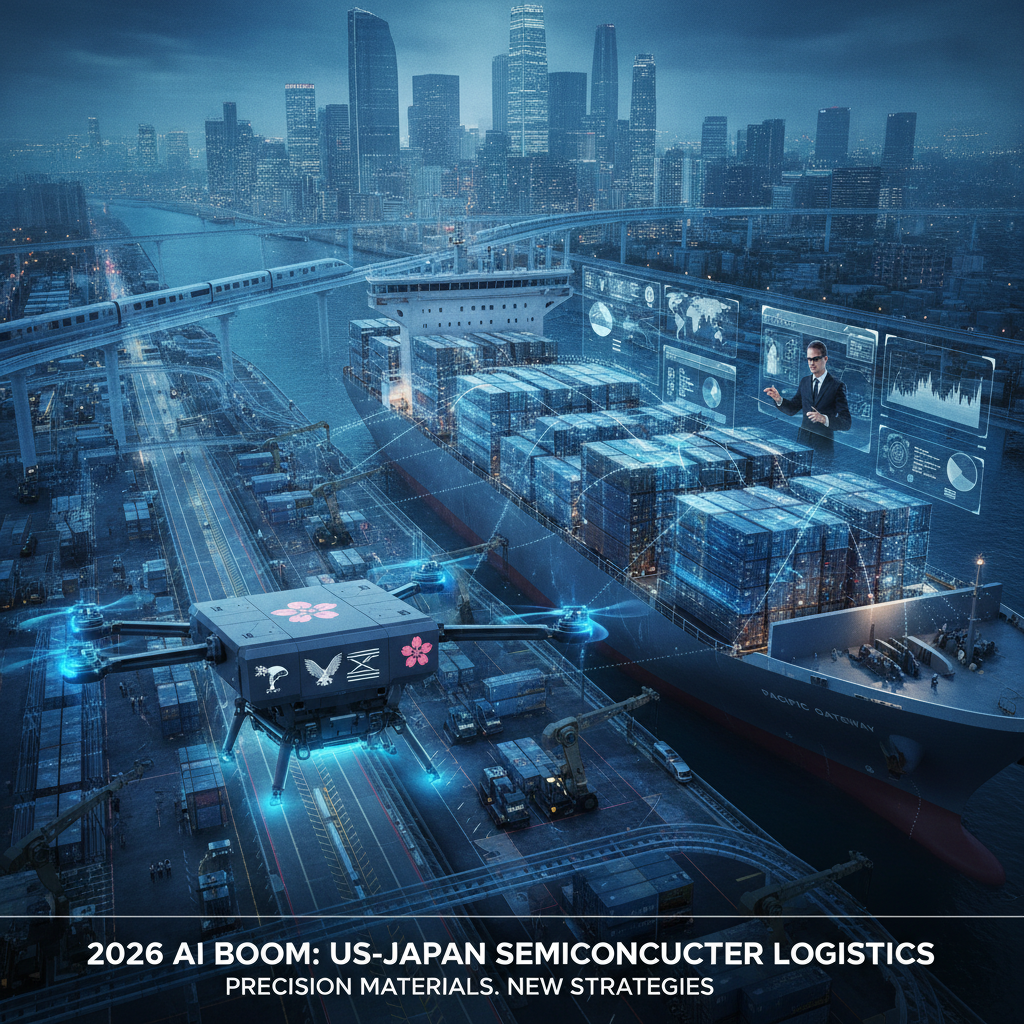
In 2026, the framework of US-Japan Semiconductor Logistics is undergoing a profound transformation driven by artificial intelligence infrastructure and advanced packaging demands. As the global tech industry shifts focus toward chiplet technology and 3D packaging, supply chain professionals are urgently recalibrating trans-Pacific shipping strategies.
US-Japan Semiconductor Logistics: Surging Equipment Demand
The interdependence between American hyperscale data centers and Japanese manufacturing ecosystems has reached historic levels. The Semiconductor Equipment Association of Japan recently revised its sales forecast for Japanese-made equipment in fiscal year 2026 to 6.55 trillion yen, representing a 26% year-over-year increase. This massive surge in capital expenditure directly strains capacity, as American fabrication plants require enormous imports of ultra-precision processing equipment, photoresists, and silicon wafers.
Navigating Pressures in US-Japan Semiconductor Logistics
Shipping logisticians are currently grappling with high energy costs and capacity consolidation affecting major maritime and airfreight lanes. To build resilience, industry leaders are adopting new operational models. Regional clusters like Japan’s “Silicon Island” in Kyushu are driving localized consolidation before trans-Pacific export. Critical logistics strategies for 2026 include:
- Strategic Stockpiling: Pre-positioning critical polymer materials to counter supply shocks.
- Advanced Freight Handling: Increased reliance on temperature-controlled, shock-resistant shipping for sensitive chemical slurries.
- Diversified Routing: Moving away from single-gateway reliance to multi-hub networks across the US West Coast and Japan’s tier-2 ports.
Ultimately, as AI chip revenues surge past the $150 billion mark, mastering US-Japan Semiconductor Logistics will be the defining competitive advantage for global tech manufacturers.
References
SEMICON Japan 2026: Strategic Approach to the Japanese Market Driving the Restructuring of the Global Semiconductor Supply Chain.
HCLTech: Semiconductor Trends 2026: Inside the next growth frontier.
Rhenus Logistics: Seven Global Supply Chain Trends Shaping 2026.
SEAJ: Market Forecast Report Semiconductor and FPD Manufacturing Equipment Released in July 2026.
SEMICON Japan 2026: A Strategic Approach to the Japanese Market.
Japan’s Semiconductor Industry for Professionals and Job Seekers.