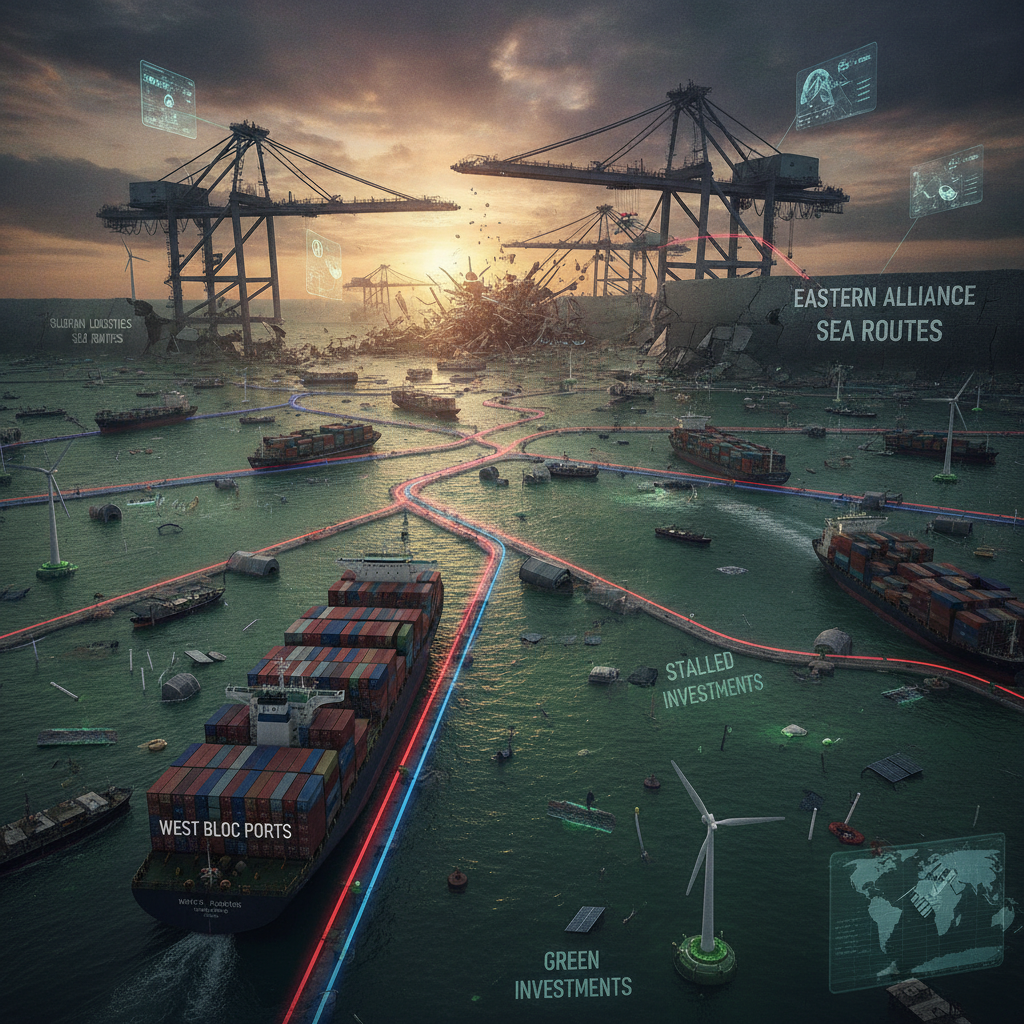
The era of predictable ocean logistics has officially ended. In 2026, Maritime Trade Fragmentation has emerged as the dominant variable reshaping global supply chains, fueled by mounting geopolitical friction, rising protectionism, and structural shifts in global alliances. According to UNCTAD, global merchandise trade growth is projected to slow to between 1.5% and 2.5% in 2026, largely due to this intensifying geoeconomic division.
Chokepoints and Rerouted Realities
Physical supply chain routes are actively being redrawn. Persistent security threats have severely impacted traditional maritime corridors, with ship tonnage transiting the Suez Canal plummeting by 70% by mid-2025. Vessels are continually forced around the Cape of Good Hope, adding weeks to transit times and fundamentally altering operational cost structures. These prolonged disruptions disproportionately affect developing economies, driving up consumer prices and delaying critical commodity shipments.
Regulatory Divides and Market Impacts
Beyond physical rerouting, fragmented policies are undermining industry-wide progress. The Lloyd’s Register Global Maritime Trends 2025 Barometer warns that a lack of cohesive, global regulation is deterring investments required for fleet decarbonization. Meanwhile, tariffs have surged, with approximately 18% of global maritime trade subject to tariffs by mid-2025. However, this fragmentation has also sparked the rise of new connector economies bridging the divide between major trading blocs. Logistics leaders agree that maintaining resilience requires highly agile networks capable of navigating an increasingly divided world.
References
- UNCTAD: Geopolitical Fragmentation and the Rewiring of Global Trade (https://unctad.org)
- Lloyd’s Register: Global Maritime Trends 2025 Barometer
- ResearchGate: The Future of the Global Maritime Sector and Logistics