How Silk Road Maritime Is Reshaping Global Shipping: 2026 Analysis
The Silk Road Maritime initiative has emerged as a stabilizing force in international logistics amid global supply chain challenges. Launched as a flagship project of China’s Belt and Road Initiative, this maritime logistics platform rapidly expands its global footprint. For shipping experts, understanding this evolution is critical for strategic capacity management.
Growth of the Silk Road Maritime Network
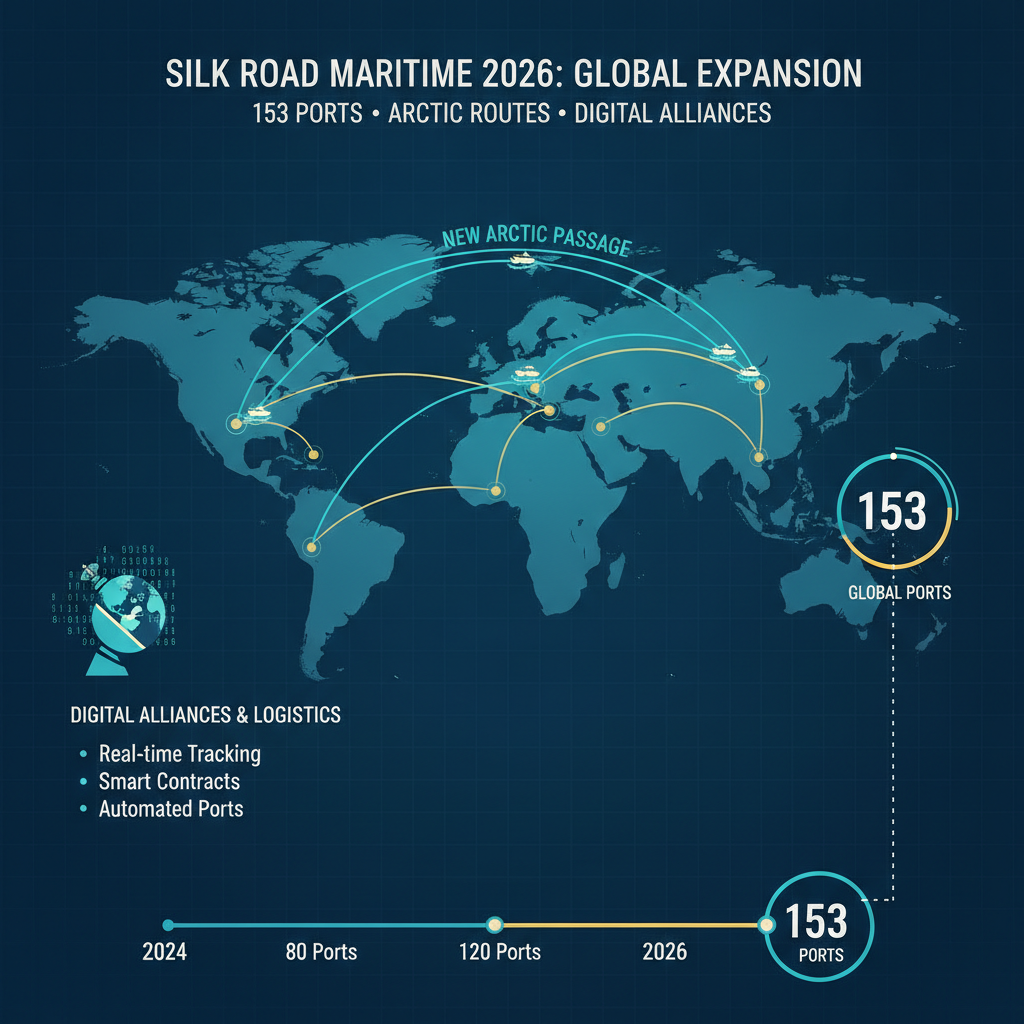
Recent data from the September 2026 Silk Road Maritime International Cooperation Forum highlights robust growth. With 12 new maritime routes added, the network now totals 160 named routes worldwide. This connects 153 ports across 50 countries. Container throughput exceeded 5.4 million TEUs in 2025, a 9.11 percent year-over-year increase. Cumulative container volume has reached nearly 30 million TEUs across more than 25,000 sailings since inception.
Silk Road Maritime Innovations and Alliances
The initiative broadens its ecosystem through partnerships and technology. The Silk Road Maritime Alliance recently reached 393 global member organizations. This collaboration drives digital integration across port logistics.
- Arctic Navigation: A new weather-routing service for Arctic voyages launched in late 2026, utilizing AI and satellites.
- Efficiency Gains: Goods shipped to Southeast Asia now arrive in just two days, reducing transit times significantly.
Future of the Silk Road Maritime
By expanding into Arctic routes and enhancing digital connectivity, the Silk Road Maritime platform is becoming a comprehensive global logistics ecosystem. Freight forwarders must adapt to this integrated model. The initiative offers a resilient framework for the future of global freight transport.
References
- Global Times: Silk Road Maritime shipping routes span 153 ports
- CGTN: Silk Road Maritime network ships over 26 million TEUs
- Fuootech: Cumulative Container Throughput
- Portnews: Platform launches Arctic weather routing