
The Resurgence of Sail: Wind-Assisted Maritime Propulsion
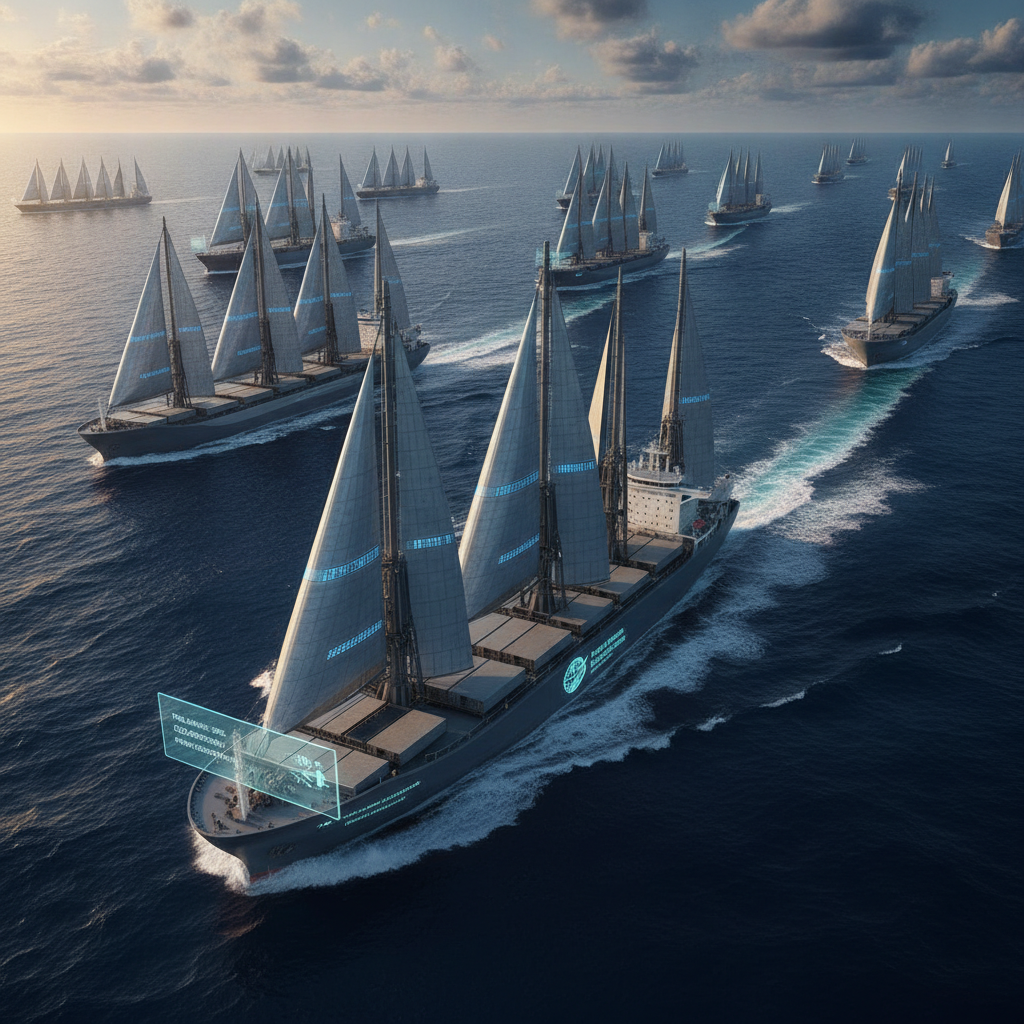
As shipping faces pressure to decarbonize, Wind-Assisted Maritime Propulsion has shifted from novelty to necessity. Recent data highlights rapid market acceleration. By August 2026, the International Windship Association (IWSA) reported over 100 commercial vessels operating with wind technology, covering six million DWT of cargo capacity [1]. This signals a major shift toward fleet-wide investments.
Quantifying Fuel and Emission Reductions
The core driver is economic and environmental efficiency. Modern wind systems, including rotor and suction sails, deliver verified results across trade routes.
- MOL’s Shofu Maru recorded up to 17% daily fuel consumption reductions [2].
- Econowind’s VentoFoils consistently show around 10% fuel savings [3].
- Scaled-up wind technologies can yield up to 40% fuel savings in optimal conditions [4].
These savings cut greenhouse gas emissions, aiding compliance with regulations like the Carbon Intensity Indicator (CII).
Scaling Wind-Assisted Maritime Propulsion
This technology is rapidly becoming standard for retrofits and newbuilds. The IWSA projects up to 10,700 system installations by 2030 [5]. Integrating weather-routing software with real-time wind data maximizes efficiency. Ultimately, harnessing wind offers a zero-carbon strategy to future-proof global logistics.
References
- [1] IWSA (Aug 2026) – wind-ship.org
- [2] MOL Wind Challenger – mol-service.com
- [3] Leonhardt & Blumberg VentoFoil – econowind.nl
- [4] Wind4Shipping (Aug 2026) – keep.eu
- [5] Vaisala Wind Optimization – vaisala.com