The logistics and shipping sectors are currently navigating a complex regulatory and technological landscape. While ambitious targets have been set, Maritime Decarbonisation is experiencing significant growing pains in 2026. Experts agree that bridging the gap between legislative goals and practical implementation is more critical than ever.
The 2026 Maritime Decarbonisation Reality Check
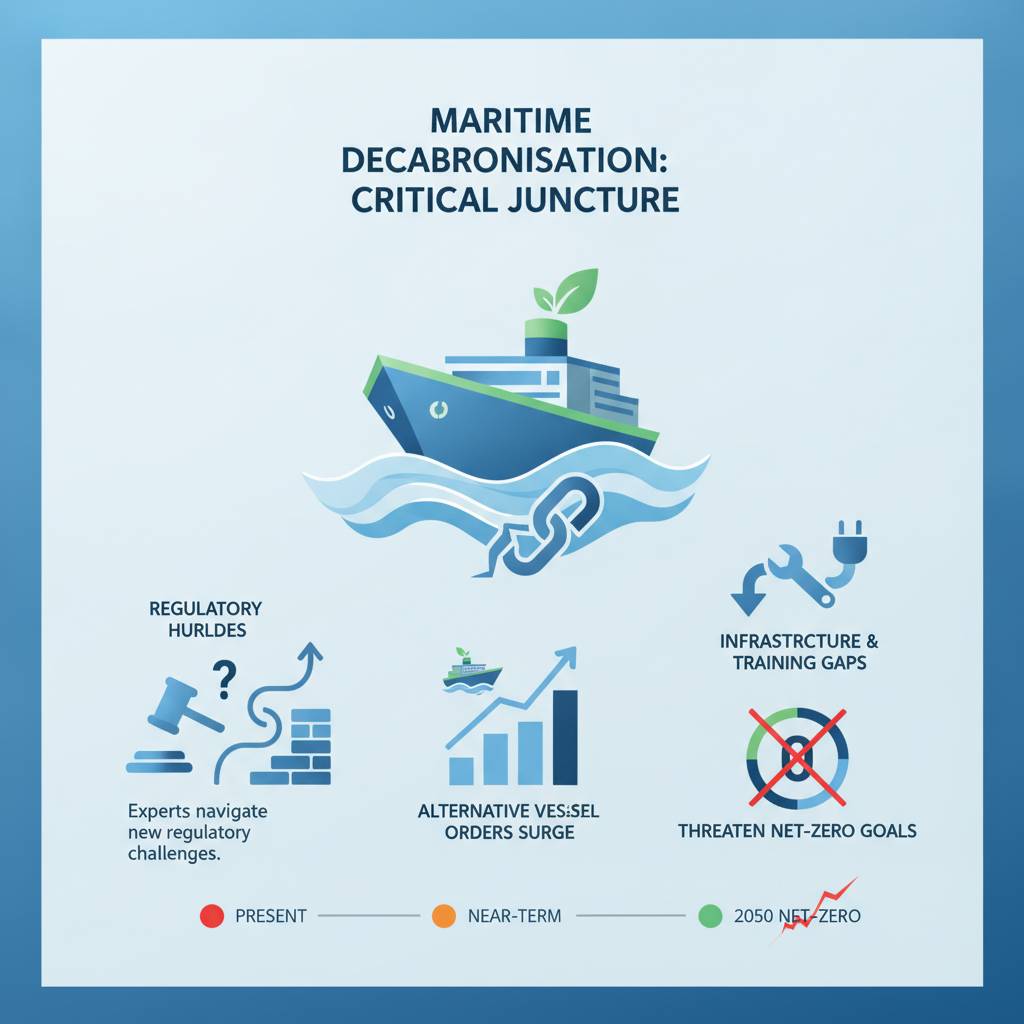
Despite increased investments, the industry is struggling to meet interim climate goals. The 2025 Global Maritime Trends Barometer by Lloyd’s Register revealed that energy transition alignment ranges from just 24% to 30% against 2030 targets. While the orderbook for alternative-fuelled vessels surged by over 50%, global marine energy production remains overwhelmingly dependent on fossil fuels.
Key Challenges in Maritime Decarbonisation
Logistics professionals must account for several structural hurdles slowing the transition. Industry reports highlight the following primary barriers:
- Regulatory Fragmentation: The alignment between the IMO Net Zero Framework and regional rules like FuelEU Maritime continues to create compliance bottlenecks.
- Infrastructure Deficits: A recent UK Department for Transport summary highlighted an urgent need for at-berth emissions infrastructure and expanded port refuelling capabilities.
- Workforce Readiness: Substantial underinvestment in workforce training threatens the deployment of advanced decarbonisation technologies.
Financial Implications of Delayed Action
Procrastination carries a severe financial penalty for fleet operators. Analytical models indicate that delaying the start of aggressive emission reductions to 2030 will add an estimated $100 billion to the total transition cost. To avoid these inflated costs, operators must act immediately.
- Adopt bridging technologies and optimize operational efficiency on existing voyages.
- Invest in workforce training for handling low-carbon fuels like ammonia and methanol.
- Standardize emissions reporting to comply with expanding international regulatory frameworks.
References
Lloyd’s Register, Global Maritime Trends Barometer 2025.
UK Government, Net Zero Ports Call for Evidence Summary 2026.
Siglar Carbon, IMO Net Zero Framework Analysis 2026.
ERM and UCL, International Shipping Decarbonisation Report 2025.