

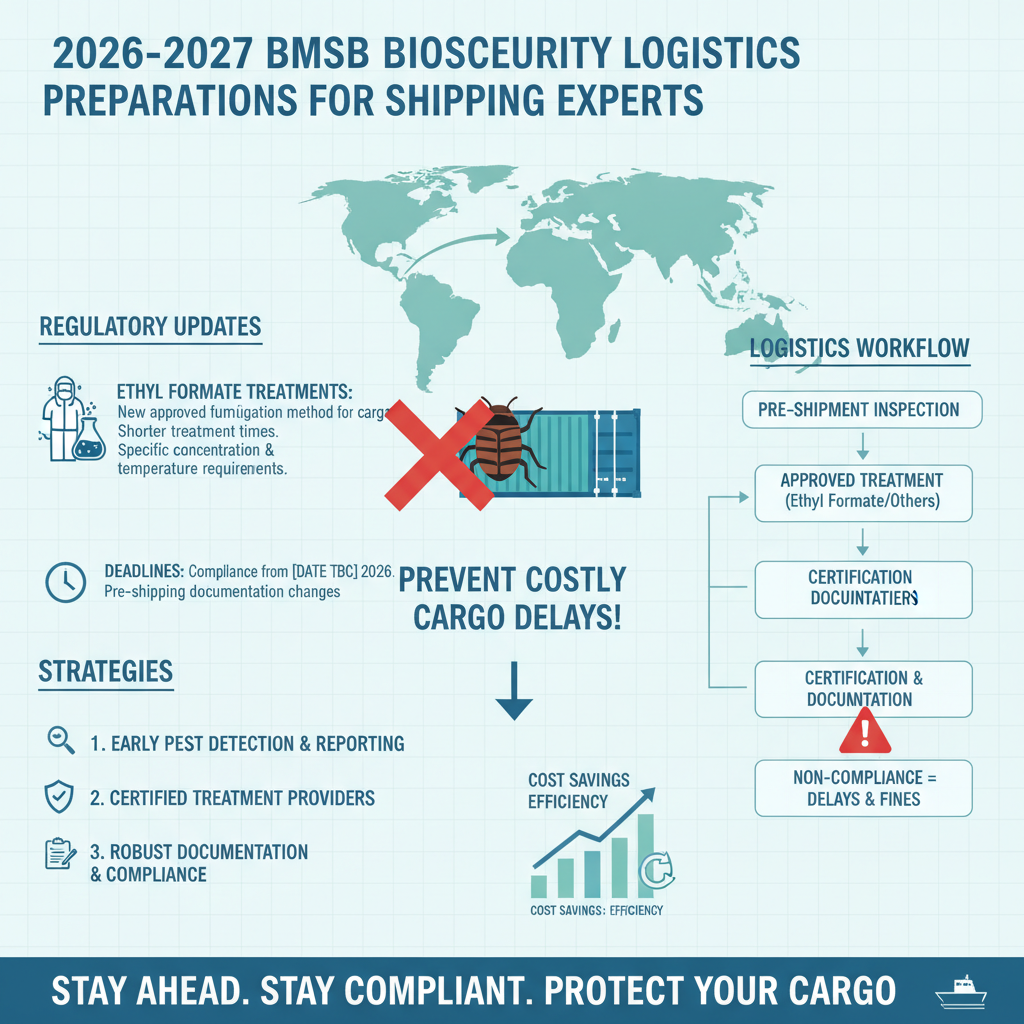
2026-2027 BMSB Biosecurity Logistics Preparations: Navigating New Compliance Realities
As global trade volumes surge, the Australian Department of Agriculture, Fisheries and Forestry (DAFF) and New Zealand’s Ministry for Primary Industries have finalized their strict 2026-2027 Brown Marmorated Stink Bug (BMSB) seasonal measures. Running from September 1, 2026, to April 30, 2027, these regulations are critical for protecting local agriculture from this highly invasive pest, which feeds on over 300 plant species and can cause billions in crop damages. For logistics and shipping experts, proactive BMSB Biosecurity Logistics Preparations are non-negotiable to prevent costly delays or cargo destruction.
Key Regulatory Updates for 2026-2027
While the core framework remains robust, DAFF has introduced vital updates to treatment optionality. Notably, Ethyl Formate has now been officially approved as an additional onshore and offshore treatment method for eligible cargo, providing greater flexibility alongside traditional Sulfuryl Fluoride and Methyl Bromide fumigation. Furthermore, authorities maintain heightened vigilance on emerging risk countries, with targeted high-risk goods arriving via airfreight from the United States and China remaining subject to random inspections. Logistics managers must ensure all target high-risk goods from the 40-plus risk countries are treated appropriately, noting that any non-compliance often results in immediate cargo re-exportation.
Strategic BMSB Biosecurity Logistics Preparations
Effective BMSB Biosecurity Logistics Preparations require early engagement with overseas suppliers and approved treatment providers. Industry experts strongly urge shippers to utilize offshore treatments to mitigate port congestion and streamline customs clearance. Importers handling complex cargo, such as vehicles, machinery, and open-top flat-rack containers, must implement rigorous documentation reviews, as even minor typos on fumigation certificates can lead to shipments being turned away. By prioritizing these biosecurity measures, forward-thinking logistics professionals can build resilient supply chains that withstand stringent seasonal enforcement.