

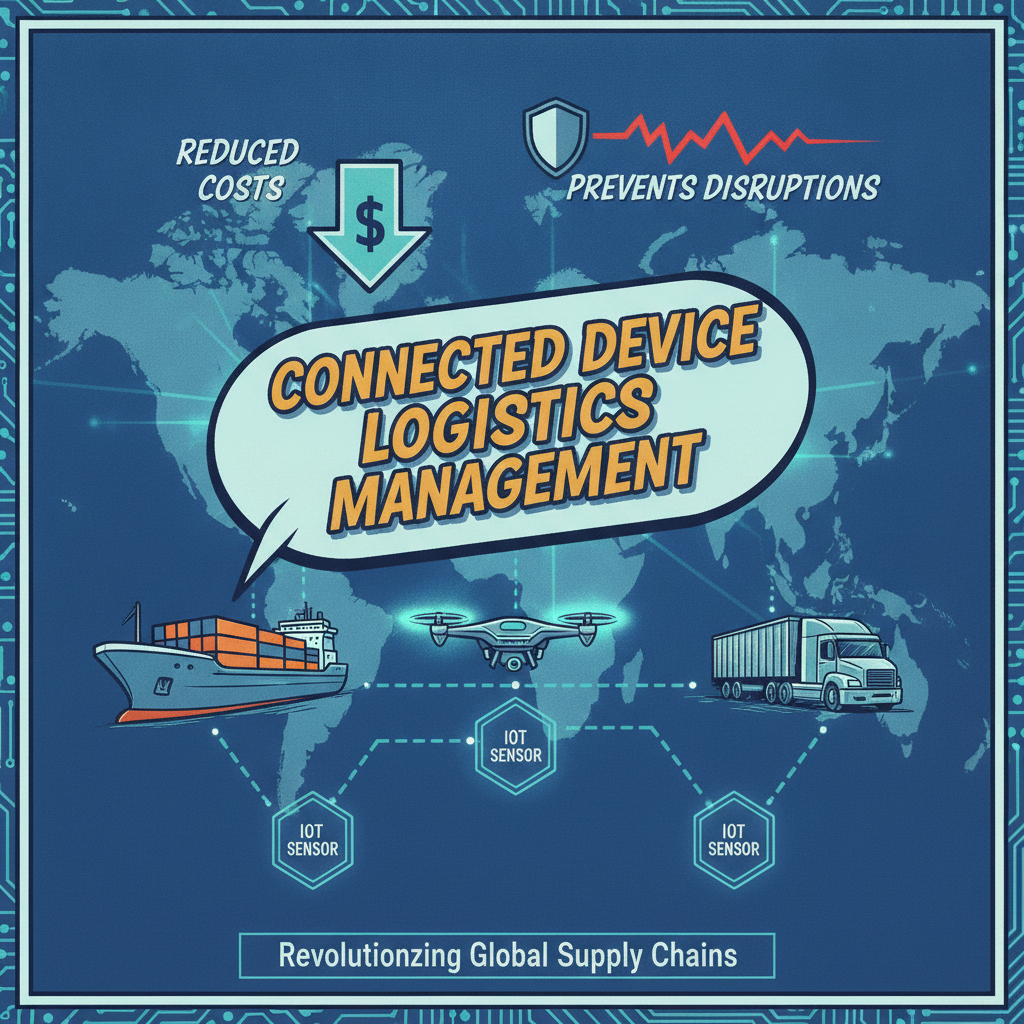
The Rise of Connected Device Logistics Management
Global supply chains are undergoing a profound technological transformation, driven by unprecedented advancements in tracking and telematics. At the heart of this shift is Connected Device Logistics Management, a strategic framework integrating smart sensors, RFID tags, and cellular networks to provide end-to-end operational visibility. Recent industry data reveals that the number of connected IoT devices globally reached 21.1 billion by the end of 2025. This explosive growth is pushing logistics decision-makers to rapidly adopt connected infrastructures to remain competitive in a volatile market.
How Connected Device Logistics Management Reduces Costs
Implementing an advanced Connected Device Logistics Management strategy yields immediate and measurable financial benefits for fleet operators. Modern deployments allow organizations to shift from reactive tracking to highly accurate predictive analytics. According to mid-2025 market analyses, the adoption of IoT-driven logistics solutions has led to a 20% to 30% reduction in overall logistics costs and a 23% decrease in lost shipments. Furthermore, predictive analytics enabled by these real-time data streams have successfully prevented up to 75% of anticipated supply chain disruptions.
Core Technologies in Connected Device Logistics Management
The success of these modern logistics frameworks relies heavily on several emerging connectivity standards and hardware upgrades.
- Advanced Cellular IoT: Technologies like LTE Cat-1 bis are rapidly replacing legacy 2G and 3G networks, providing cost-effective, high-volume options for remote asset tracking.
- LPWAN and 5G: The integration of Low Power Wide Area Networks and 5G private networks is expanding the capabilities of port telemetry and cross-border transparency.
- AI-Driven Edge Analytics: Artificial intelligence is increasingly being pushed onto edge devices, reducing latency and enabling instantaneous decision-making across the logistics ecosystem.