The Impact of Typhoon Dolphin Logistics Disruptions
In August 2026, severe weather events caused major supply chain bottlenecks across East Asia. The recent Typhoon Dolphin logistics disruptions have temporarily paralyzed critical port and air operations in East China, heavily affecting major global trade hubs like Shanghai and Ningbo. As the strongest tropical cyclone to hit China this year, the storm made landfall in Zhejiang on August 9, forcing immediate suspensions of maritime and inland transport activities.
Evaluating the Scope of Typhoon Dolphin Logistics Disruptions
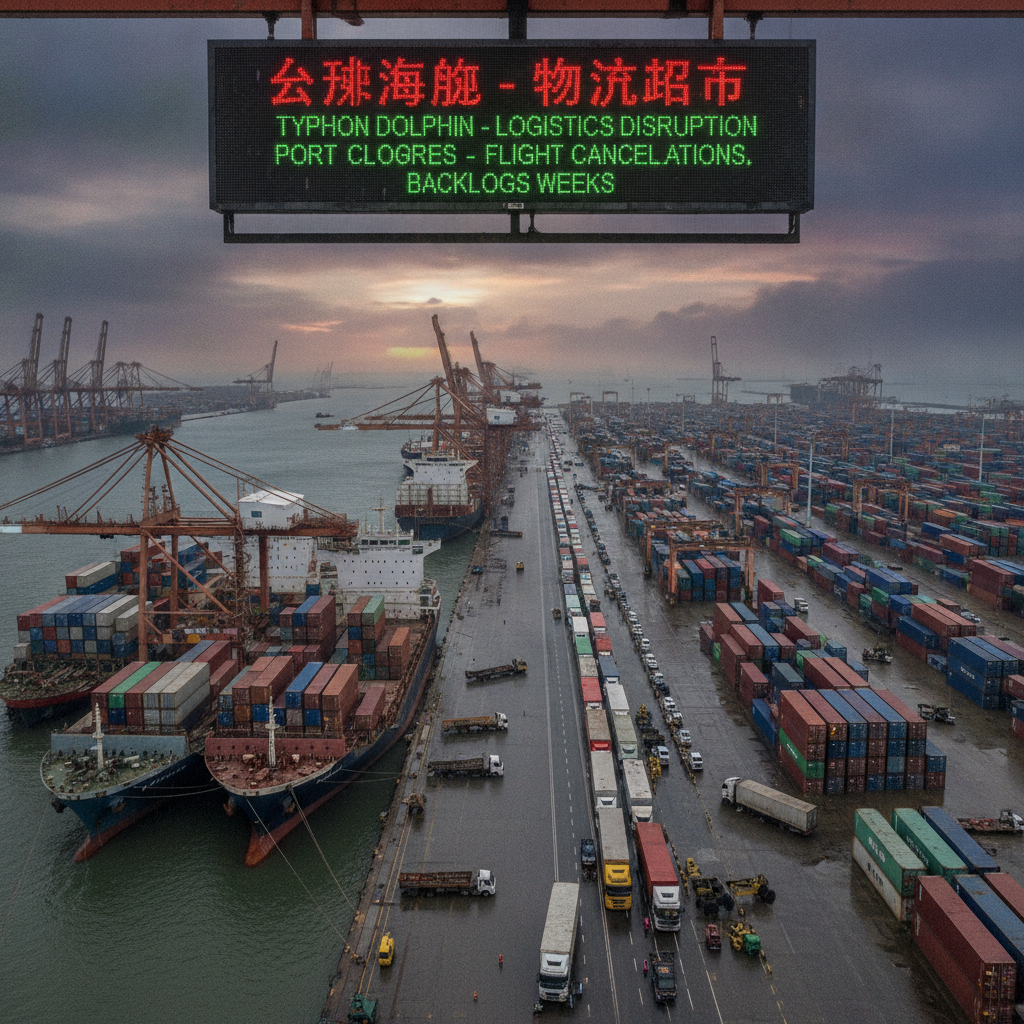
The operational freeze at key terminals has exacerbated pre-existing congestion levels. According to insights from C.H. Robinson, berth waiting times at Shanghai stretched to five to eight days, while Ningbo experienced vessel delays of up to five days. The suspension of empty container pick-ups and loaded container gate-ins at Shanghai’s Waigaoqiao and Yangshan terminals created immediate and severe cargo backlogs.
- Air Freight Cancellations: Over 1,384 flights were canceled at Shanghai’s Pudong and Hongqiao airports during the storm’s peak.
- Port Closures: Full port-wide closures were implemented at Ningbo-Zhoushan, severely delaying vital feeder and barge traffic.
- Inland Transport Delays: Major commercial routes, including the Donghai Bridge, were closed, delaying rail and trucking services by two to four days.
Navigating Future Typhoon Dolphin Logistics Disruptions
While operations are gradually resuming as the storm weakens, the cascading effects of Typhoon Dolphin logistics disruptions are expected to persist for several weeks. Equipment rebalancing, disrupted carrier schedules, and the clearance of accumulated cargo remain significant hurdles for global shippers. Supply chain professionals are advised to adjust transit time assumptions, monitor real-time port statuses, and factor in extensive buffers for Asia-originated shipments during this volatile peak season.