The maritime industry is undergoing a monumental shift as Green Shipping Decarbonization transitions from an abstract goal to an immediate operational necessity. Following the critical outcomes of the International Maritime Organization’s MEPC 83 session in 2025, shipowners now face stricter global fuel standards and potential carbon levies. Furthermore, in July 2026, the European Commission proposed a targeted revision of the EU Emissions Trading System (ETS) to strengthen incentives for maritime transport decarbonization and align with the 2040 climate target. These aggressive regulatory measures mean that logistics experts must urgently recalibrate their fleet strategies.
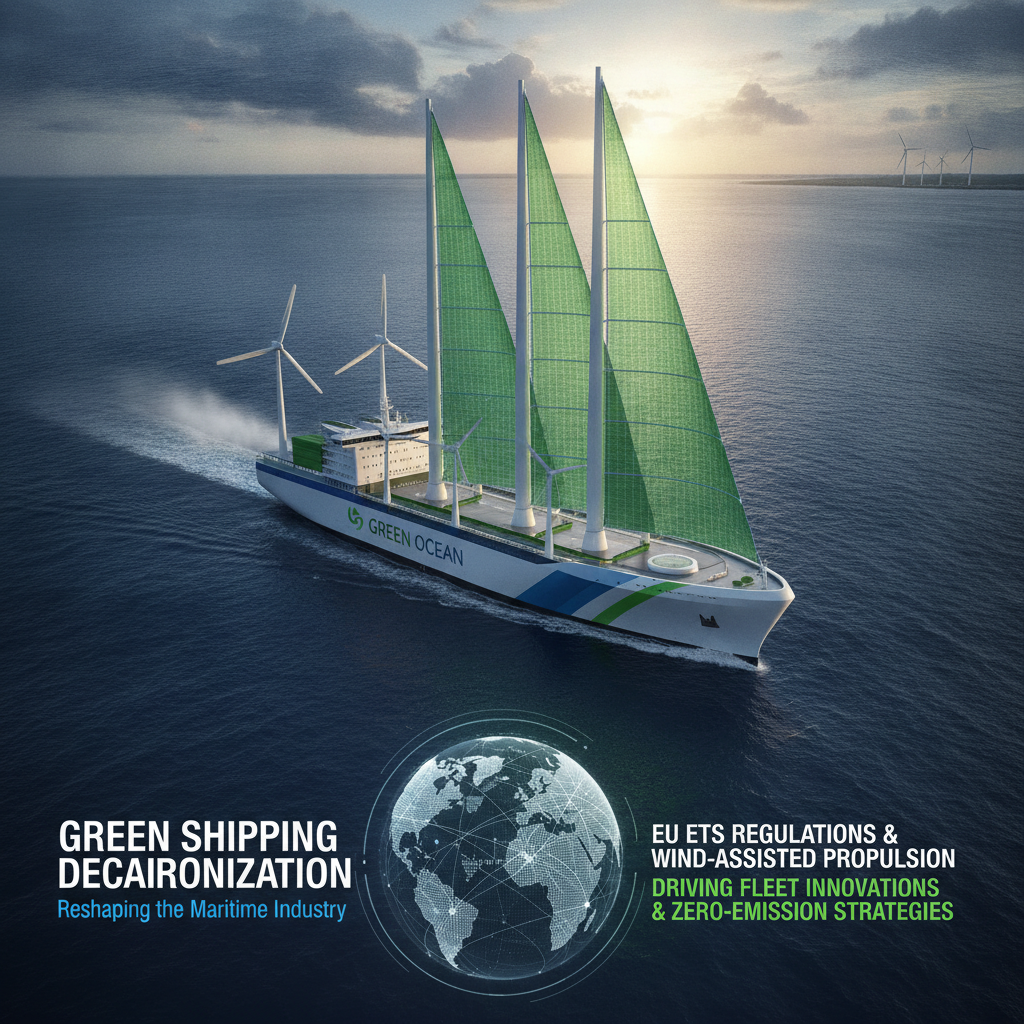
To bridge the operational cost gap, the industry is aggressively investing in innovative propulsion and alternative marine fuels. According to DNV’s recent Maritime Forecast to 2050, the next phase of the energy transition relies heavily on green ammonia, e-methanol, and onboard carbon capture. In particular, the global methanol market is experiencing robust growth, driven largely by marine fuel applications under the new decarbonization mandates. Additionally, Wind-Assisted Propulsion Systems (WAPS) are gaining unprecedented traction as a cost-effective method to reduce fuel consumption immediately.
For shipping operators, waiting for complete regulatory certainty is no longer a viable option. Key strategies for 2026 include:
- Investing in energy-saving devices and retrofitting existing vessels with WAPS.
- Securing long-term supply contracts for alternative low-carbon fuels.
- Enhancing compliance management systems to navigate the updated EU ETS requirements.
Embracing Green Shipping Decarbonization requires massive capital investment, but early adopters will secure a vital competitive advantage in the volatile global supply chain.
References
- Persistence Market Research: Methanol Market Trends (https://www.persistencemarketresearch.com)
- Dataintelo: DCSA Standards Implementation (https://dataintelo.com)
- SciOpen: Wind-assisted propulsion systems (https://www.sciopen.com)
- Ocean: Techno-economic review (https://www.researchgate.net)
- DNV: Maritime Forecast to 2050 (https://www.dnv.com)
- BCG: Next for Decarbonization (https://www.bcg.com)
- Protea Ltd: 2025 MEPC 83 (https://www.protea.ltd.uk)
- EU Climate Action (https://climate.ec.europa.eu)