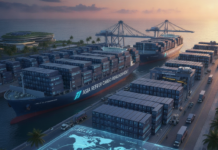


As systemic water volatility and extreme weather disrupt global trade, establishing Climate-Resilient Logistics Networks has evolved from a theoretical concept to an urgent operational baseline in 2026. Industry leaders are now shifting capital to address compound environmental risks, such as simultaneous flooding and droughts that neutralize traditional inland waterways. Instead of static emergency response models, modern supply chains are mandating dynamic network designs to preserve their freedom of action.
The economic stakes of neglecting environmental readiness are escalating rapidly. Recent adaptation data indicates that unmitigated climate hazards could drive physical asset risks to between $398 million and $537 million annually for major port infrastructures [1]. To combat this, organizations are adopting strategic frameworks centered on redundancy and real-time monitoring.
- Modal Elasticity: Carrier contracts now integrate flexible terms, allowing rapid capacity shifts between barge, rail, and road networks [2].
- Targeted Adaptation: Infrastructure investments in alternative ports and resilient transit corridors can reduce climate-related financial and operational risks by up to 70% [1].
- Predictive Analytics: Leading shippers are integrating AI-driven control towers to anticipate regional labor constraints and incorporate climate parameters into facility-selection models [2].
A successful transition requires balancing investments between immediate technology upgrades and long-term infrastructure. The 2025 mobility initiatives by the European Institute of Innovation and Technology advocate for designing flood-resistant warehouses and deploying predictive early-warning systems to safeguard urban freight [3]. As geopolitical uncertainty compounds ecological threats, organizations that build adaptable networks capable of absorbing shocks will ultimately outperform those focused strictly on efficiency.
References
[1] Global Center on Adaptation, Adaptation Insights 01 Report. [2] Supply Chain and Logistics News Round Up (July 2026). [3] EIT Urban Mobility Main Innovation Open Call (2025).