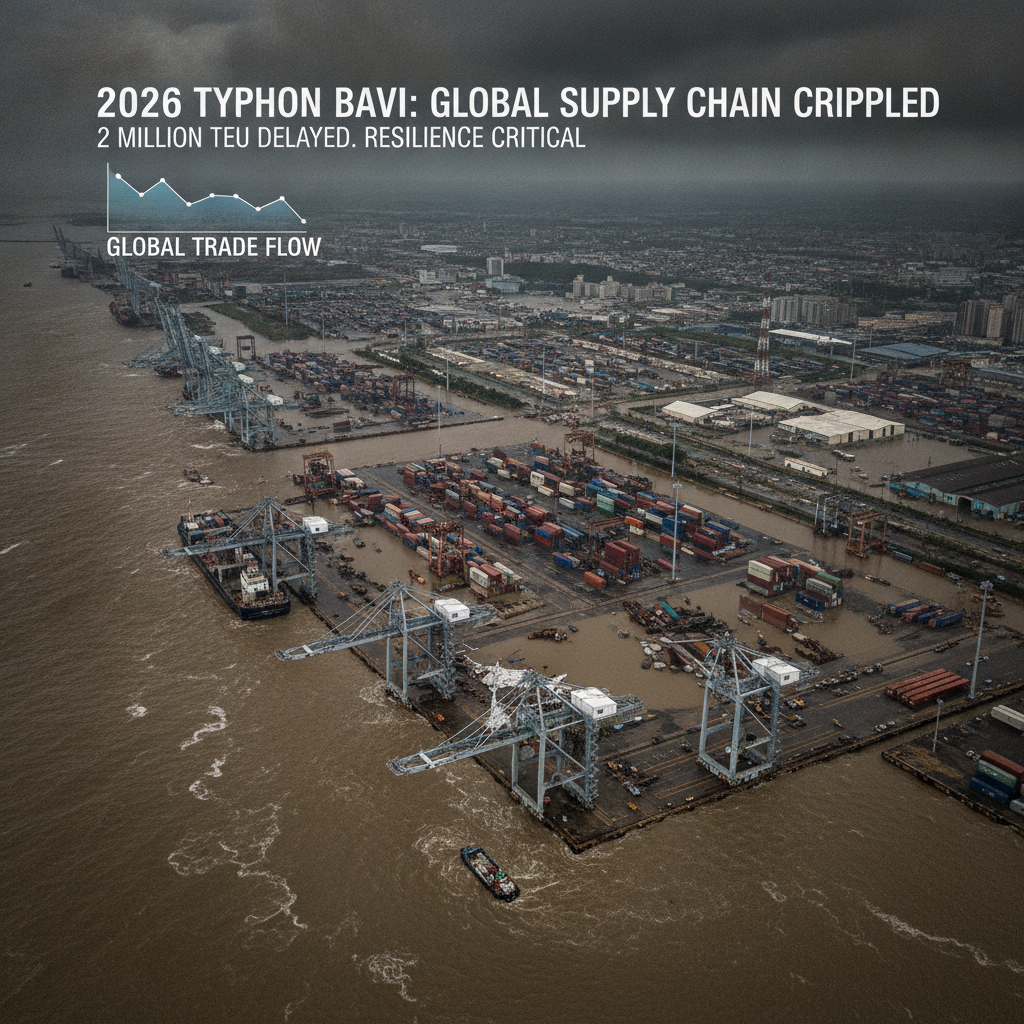
The global logistics sector is facing unprecedented challenges following the devastating impact of the Category 5-equivalent storm in mid-July 2026. The resulting Typhoon Bavi supply chain disruptions have severely impacted operations across East Asia, exposing critical vulnerabilities in maritime freight networks.
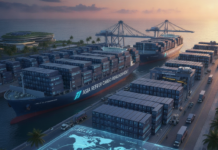
As the storm swept across eastern China, the world’s first and third busiest container ports, Shanghai and Ningbo, were forced into emergency closures. Recent industry assessments indicate that approximately 2 million TEU of vessel capacity is currently bottlenecked across Northeast Asia. This massive accumulation has drastically increased vessel waiting times, with ships facing delays between 72 and 144 hours around the Shanghai hub alone.
The immediate impacts of the Typhoon Bavi supply chain disruptions extend far beyond temporary terminal closures. Logistics experts warn that freight forwarders must prepare for extended operational adjustments. Key consequences include:
- Widespread port omissions and alternative vessel routings.
- Critical shortages of container equipment and available shipping space.
- Prolonged inland transit delays affecting connecting rail and road transport.
Future Strategic Outlook
Although port terminals have gradually resumed operations, clearing the extensive maritime backlog is expected to take several weeks. Organizations must integrate proactive severe weather forecasting into their planning to mitigate future risks. References: Metro Shipping, July 22, 2026. NVO Worldwide, July 16, 2026. Cory Brothers, July 10, 2026. Metro Shipping Platform, 2026. Weathernews Operations, July 17, 2026.