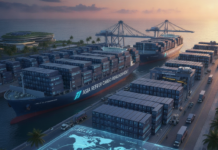


The global maritime sector is witnessing a transformative era as Chinese shipyard capacity expansion accelerates at an unprecedented pace. For logistics and shipping experts, understanding this shift is critical for future supply chain planning.
Recent data highlights that shipbuilders secured 107.82 million deadweight tonnes (DWT) in new orders during 2025, capturing an astounding 69% of the global market. Furthermore, completed vessel output reached 53.69 million DWT, representing 56.1% of worldwide production. This Chinese shipyard capacity expansion is not just about volume; it marks a strategic pivot toward technologically advanced vessels, including LNG carriers and large container ships.
The massive influx of capital and infrastructure development has significant implications for global freight capacities. Key developments reflect a rapidly changing environment for global shipping operations.
- Extended Orderbooks: Outstanding orders reached 274.42 million DWT by the end of 2025, ensuring production schedules remain at full capacity for the next three to four years.
- Industry Consolidation: Mega-mergers, such as the 16 billion dollar consolidation of state-owned giants into the China State Shipbuilding Corporation (CSSC), have streamlined production and expanded market share.
- Supply Chain Bottlenecks: With delivery slots for specialized vessels sold out until the end of the decade, logistics providers must adapt to prolonged lead times.
While the ongoing Chinese shipyard capacity expansion offers increased tonnage for global trade, it also introduces risks of market monopolization. Logistics experts must proactively secure vessel charters and diversify maritime partnerships to navigate this evolving landscape.
References
- Marine & Industrial Report (July 2026): Chinese shipyards extend global lead.
- Ministry of Industry and Information Technology Data (Feb 2026).
- Thinkers360: China’s Shipbuilding Boom vs. America’s Decline (Sept 2025).
- South China Morning Post (Feb 2026).
- PortNews: China shipbuilders extend global dominance in 2025 (Feb 2026).