
For logistics and shipping experts navigating persistent geopolitical and environmental volatility, the mandate for 2026 is clear: adapt or face severe disruptions. Global Value Chain Agility has transitioned from a theoretical concept to an operational necessity. According to recent 2026 data, 72% of supply chain executives now consider automated mitigation strategies mandatory for managing modern disruptions. Furthermore, a 2025 index revealed that 56% of organizations report high AI readiness, aggressively investing in real-time data-sharing to bolster their agility.
To achieve genuine Global Value Chain Agility, industry leaders are moving beyond traditional cost-cutting models. The focus has shifted toward building resilient, intelligent frameworks capable of proactive adjustments.
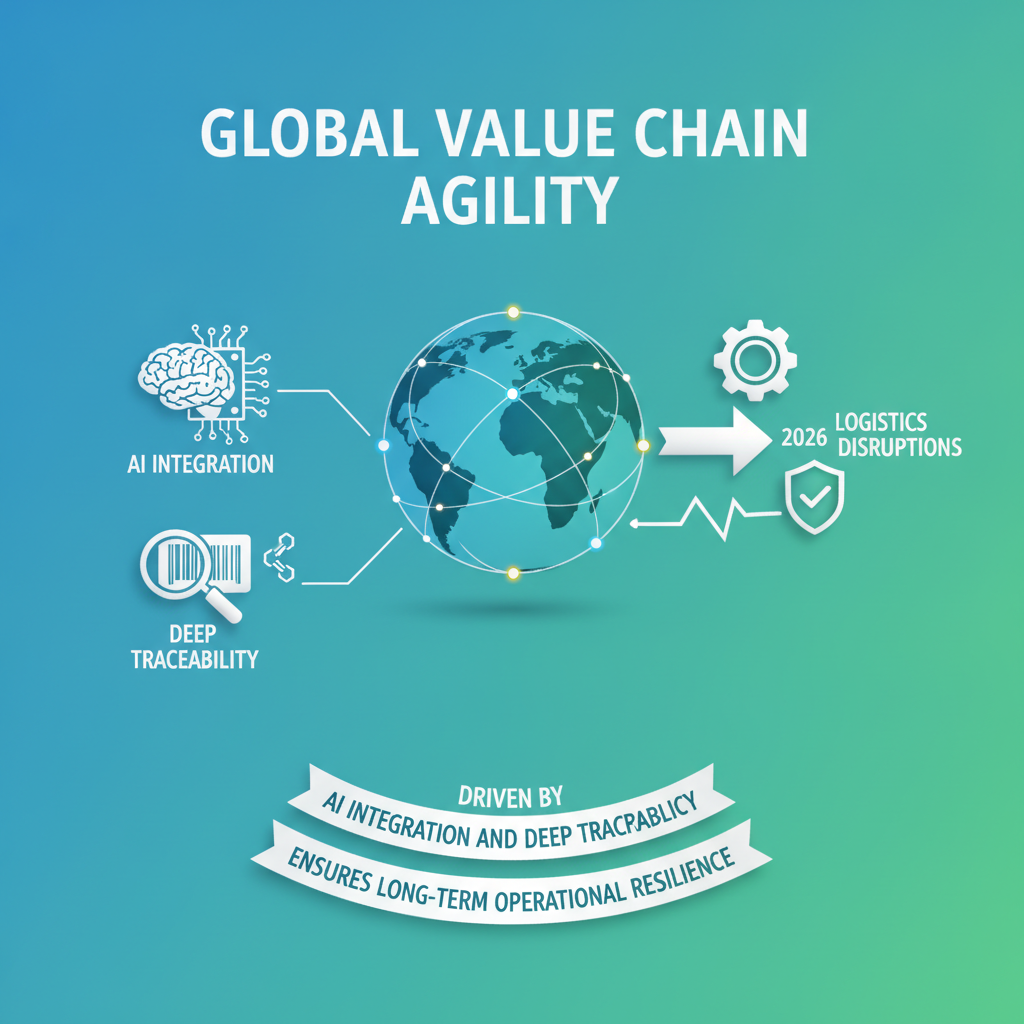
- Agentic AI Integration: Advanced artificial intelligence is driving multimodal supply chain orchestration, enabling dynamic planning across logistics hubs based on real-time disruption data.
- Deep Tier Traceability: While 93% of executives claim high confidence in oversight, only 56% can trace material origins to Tier-3 or Tier-4 sources, highlighting a critical gap in agility preparation.
- Tariff Management: With 73% of leaders expecting to hit a tariff absorption wall by late 2026, agile organizations utilize AI simulators to test network shifts.
The transition toward sustainable global value chains requires substantial investment in digital capabilities. Maintaining a high modal agility score—the ability to swiftly switch transport modes during crises—will distinguish industry masters from laggards. Ultimately, cultivating Global Value Chain Agility is the only proven defense against systemic supply chain shocks.
References
KPMG: Key trends impacting supply chains in 2026. Nucleus Research: 2025 Supply Chain Agility Index. Tradeverifyd: 79 Supply Chain Statistics To Know in 2026.