
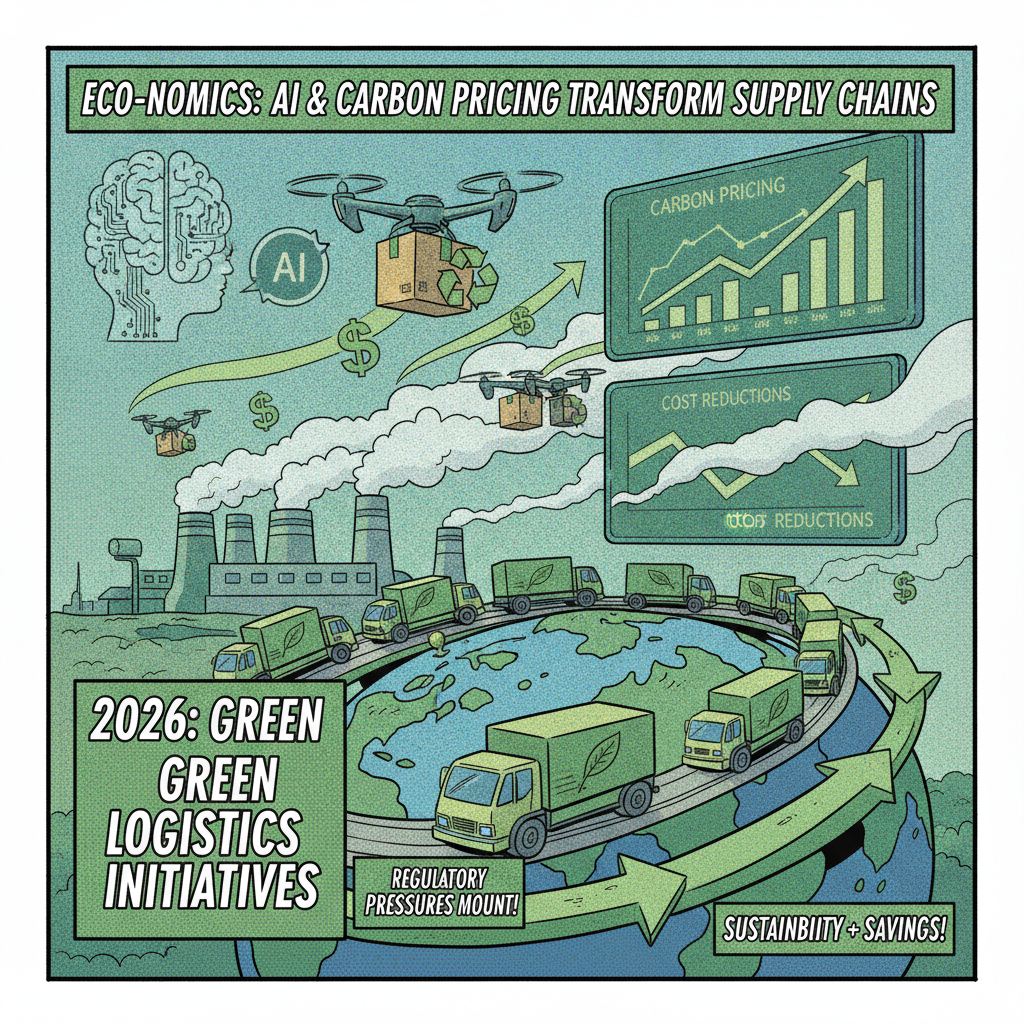
As the global supply chain faces escalating regulatory pressures, Green Logistics Initiatives have evolved from optional sustainability goals to critical operational mandates. In 2026, sustainability directly impacts corporate balance sheets, driven by sweeping industry compliance requirements and customer demand. Approximately 70% of logistics companies are now actively investing in sustainable transportation technologies to reduce their environmental footprint.
The financial dynamic of freight transport has fundamentally shifted. The European Union’s Emissions Trading System (EU ETS) now fully applies to maritime shipping in 2026, transforming carbon emissions into a direct operating cost. This regulatory pressure has spurred rapid development in the sector, leading to 84 active green shipping corridors worldwide, with emerging economies like China, India, and Brazil launching new routes. Organizations implementing robust Green Logistics Initiatives are not just ensuring compliance; they are reporting operational cost reductions of 20% to 30% through improved energy efficiency and optimized supply chain processes.
Modern sustainability strategies rely heavily on technological innovation and infrastructural overhauls. Industry leaders are focusing on several core areas to meet their net-zero targets:
- Alternative Fuel Adoption: The industry is shifting toward bio-LNG, green methanol, and ammonia to decarbonize maritime trade.
- Fleet Electrification: The adoption of electric delivery vehicles has surged by 35% over the past five years, significantly reducing reliance on fossil fuels.
- AI-Driven Route Optimization: Artificial intelligence is actively reducing empty miles and fuel consumption through predictive analytics and real-time network adjustments.
Ultimately, Green Logistics Initiatives are proving that environmental responsibility and economic profitability can coexist. As global trade continues to expand, integrating these sustainable practices will be the defining factor for competitive advantage in the logistics sector.
References
- Cervicorn Consulting: Green Logistics Market Size to Hit USD 3.98 Trillion by 2035.
- MLA College: Green shipping: The future of sustainable maritime industry.
- Fetche: Green Logistics in 2026.
- Strategic Roadmap for Maritime Decarbonization in 2026.
- S&P Global: Series of new green shipping corridors emerge.