
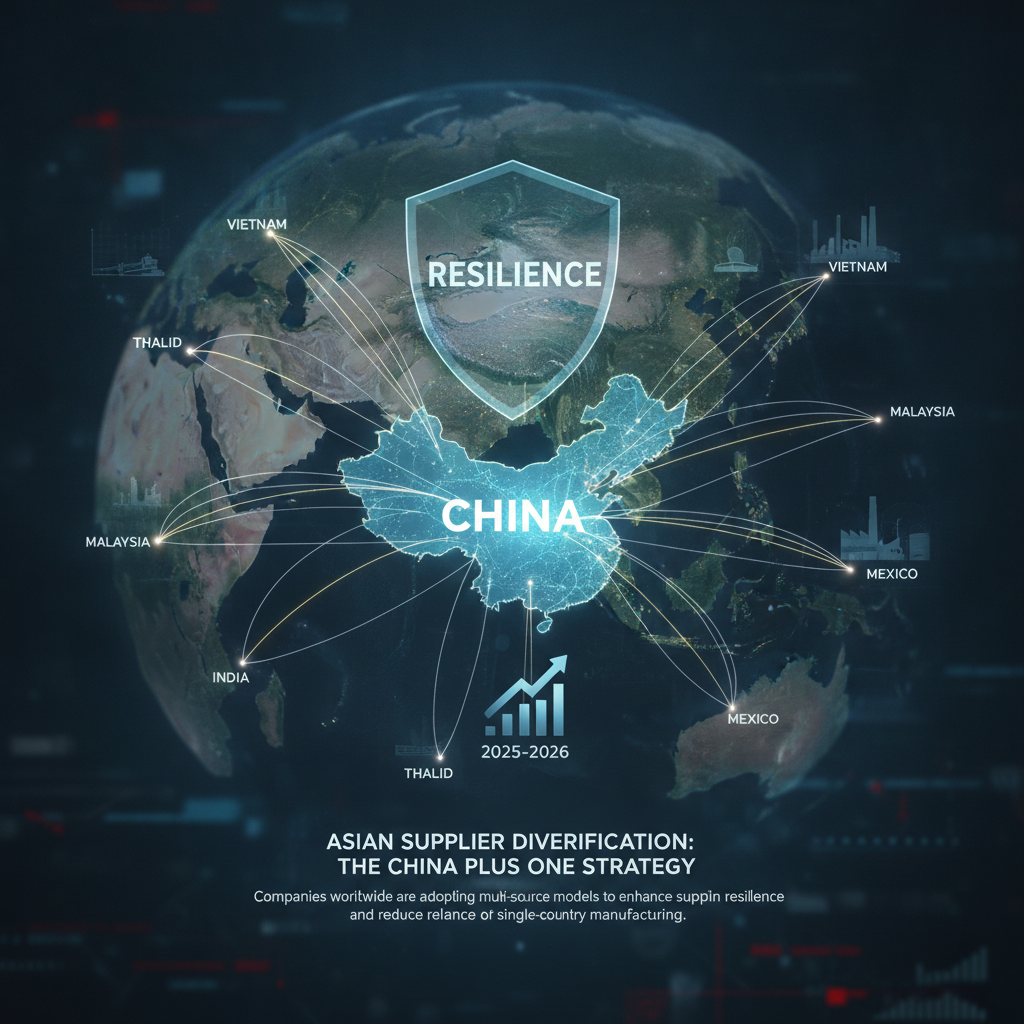
The landscape of global sourcing is undergoing a seismic shift. In 2026, Asian supplier diversification trends are no longer just optional risk management tactics; they have become foundational strategies for logistics survival. Rising tariffs, which average 30% to 34% on Chinese goods, have driven China’s share of the U.S. import market down to a historic low of 9% in 2025. This economic pressure is forcing supply chain professionals to rapidly embrace the China Plus One or China Plus Many frameworks.
Modern logistics decisions prioritize resilience over pure cost savings. The latest Asian supplier diversification trends show companies actively decentralizing production. Manufacturers are retaining their highly efficient Chinese manufacturing bases while establishing backup capacities in emerging markets like Vietnam, India, and Indonesia. Key drivers for this shift include severe geopolitical friction, the need for agile country-of-origin compliance, and unpredictable supply chain bottlenecks. Notably, major automotive and electronics manufacturers have recently injected billions into Southeast Asian infrastructure to build localized production ecosystems.
Despite the massive momentum, executing these Asian supplier diversification trends presents unique logistical hurdles. Expanding into new ASEAN markets requires overcoming several complex challenges:
- Component Reliance: As of 2025, approximately 65% of Vietnamese manufacturing still heavily relies on imported raw materials, primarily from China.
- Regulatory Navigation: Adapting to new local content thresholds, such as a 30% minimum in certain regions, demands rigorous customs compliance.
- Infrastructure Readiness: Finding reliable transport networks and factory setups typically takes one to two years of active development.
To successfully navigate this new era of global logistics, businesses must proactively build tiered, multi-country networks rather than merely chasing the cheapest factory alternatives.
References
Kingstec, China Plus One: What It Actually Means for Your Supply Chain, April 2026. SVI Global, China Plus One Strategy: Reduce Risk and Diversify Supply, April 2026. PONGO, How to Implement a China +1 Supplier Strategy in 2025, April 2025.