
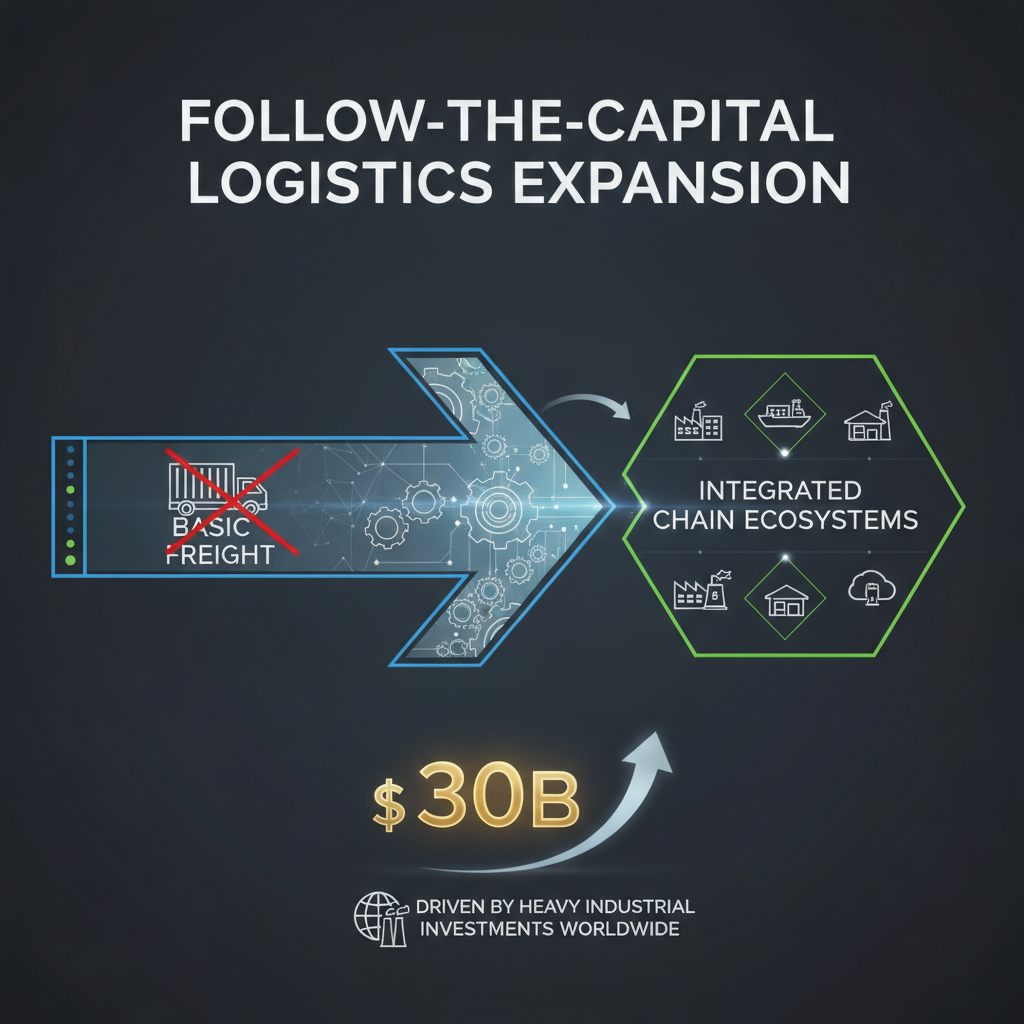
The global supply chain is undergoing a massive structural shift in 2026, driven by a phenomenon known as the follow-the-capital logistics expansion. Rather than simply moving freight from point A to point B, modern logistics providers are now exporting entire supply chain ecosystems overseas. As massive capital investments flow into foreign manufacturing—particularly from electric vehicle and battery giants building plants in Europe—logistics firms are forced to evolve. This follow-the-capital logistics expansion shifts the industry’s focus from transactional shipping to complex, end-to-end supply chain management.
Recent market analytics reveal staggering growth for this integrated hybrid model. As of 2026, the market size for these specialized logistics solutions is estimated to reach $30 billion, representing a significant jump from $22 billion in 2025. This surge is heavily driven by industrial overseas investments. Key indicators of this growth include:
- Total sector investment hitting $25 billion in 2026, marking a 213% increase from historic baselines.
- A dramatic rise in market players, expanding from 80 core providers in 2024 to over 180 in 2026.
- A shift toward hybrid models combining overseas warehousing, dedicated lines, and localized delivery networks.
The core of the follow-the-capital logistics expansion is the rapid localization of sophisticated industrial operations. Facilities demand precise production-line feeding, integrated inventory management, and expansive after-sales service networks. For global shipping experts, adapting to this trend is no longer optional. Providers must bridge the localization gap by navigating complex foreign labor laws, varying business paces, and distinct digital infrastructures. In this new era, following the capital means designing an architecture capable of sustaining heavy industry anywhere on the globe.
References
China Logistics and Supply Chain 2026: Strategic Implications for European Stakeholders.
Navigating China’s Logistics Evolution in 2026: Supply Chain Resilience, Hybrid Models, and the Global Ecosystem Shift – China Industry Intel.