
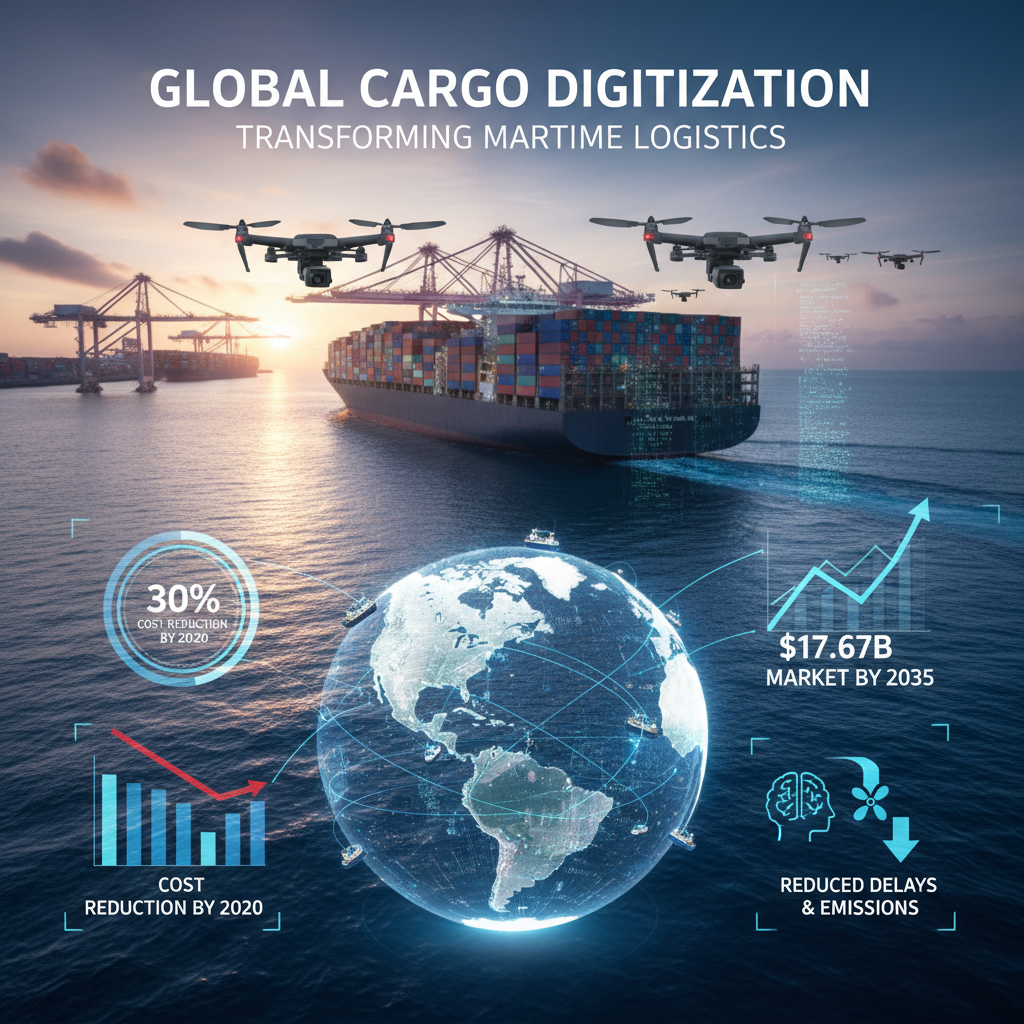
As global trade hit $32 trillion recently with 90% moving by sea, the industry is aggressively embracing Global Cargo Digitization. By 2025, digital platforms have transitioned from experimental technologies to foundational infrastructure. The transition toward automated bookings has reached unprecedented levels. Freightos recorded over one million digitized freight transactions in a single year. Furthermore, the Digital Container Shipping Association (DCSA) projects that by 2030, 100% of shipping documents will be digital, potentially reducing operational costs by 30%.
Logistics experts are leveraging digital tools to resolve supply chain pain points. Recent 2025 data highlights several critical advantages accelerating Global Cargo Digitization:
- Cost Reduction: AI-driven rate optimization delivers 20% to 30% direct cost savings.
- Efficiency: Digital platforms cut manual processing delays by 50% and reduce port dwell times by 40%.
- Sustainability: Route optimization contributes to a 15% reduction in emissions, essential for 2025 IMO compliance.
The digital transformation of the maritime freight market is projected to reach a valuation of $17.67 billion by 2035, growing at a 13.34% CAGR from 2025. Global Cargo Digitization is no longer optional; stakeholders who fail to integrate AI forecasting and automated filings risk obsolescence.
References
- Freightos Industry Roadmap
- Maritime Transport Trends in 2025
- Revolutionizing Ocean Freight
- Maritime Freight Market Size 2035