
In the face of persistent labor shortages and surging global supply chain demands, logistics executives are rethinking their inbound dock operations. At the forefront of this transformation is Robotic container unloading automation, which has rapidly shifted from an experimental concept to a competitive necessity. Current data from early 2026 reveals that the global loading and unloading robot market, valued at USD 1.85 billion in 2025, is projected to reach USD 2.12 billion in 2026, exhibiting a steady 9.3% CAGR. This market expansion highlights a massive industrial pivot toward high-efficiency, technology-driven dock operations.
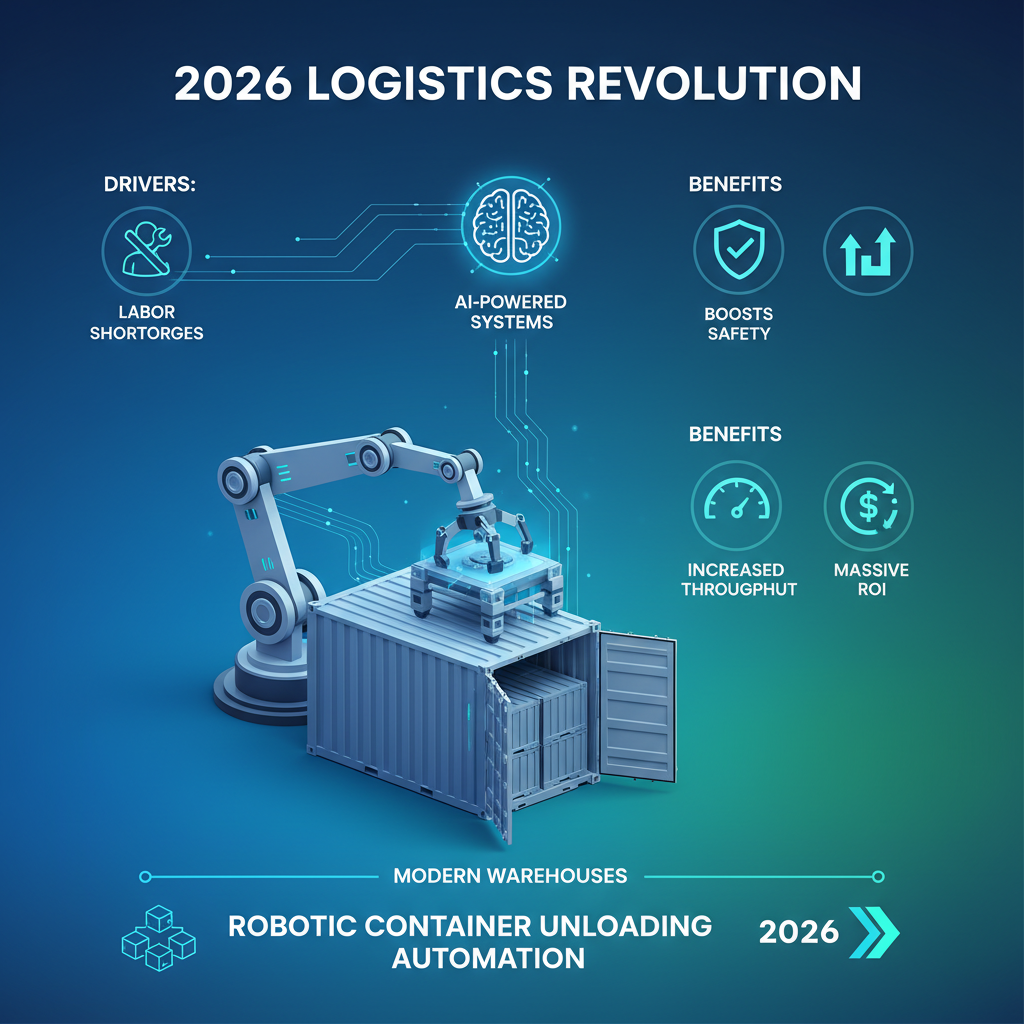
The aggressive transition toward autonomous unloading solutions is driven by measurable operational improvements and critical risk mitigation strategies.
- Labor Optimization: With workforce availability declining, over 68% of warehouse facilities planned to implement robotic handling solutions by the end of 2025 to maintain continuous throughput.
- Workplace Safety: Replacing manual heavy-lifting and repetitive processes with automated systems reduces workplace injuries by up to 45% in early adopter facilities.
- Enhanced Throughput: Modern AI-integrated arms, multi-joint robots, and collaborative robotics allow for continuous container clearing, adapting dynamically to varied cargo sizes.
While the initial capital requirements for Robotic container unloading automation remain substantial, the long-term ROI is compelling for high-volume distributors. As established automation leaders continue to innovate, facilities that proactively integrate these intelligent systems will drastically outpace their competitors in turnaround speeds and cost-per-pick metrics.
References
Intel Market Research (2026). Loading Unloading Robot Market Outlook 2026-2034. Retrieved from intelmarketresearch.com