
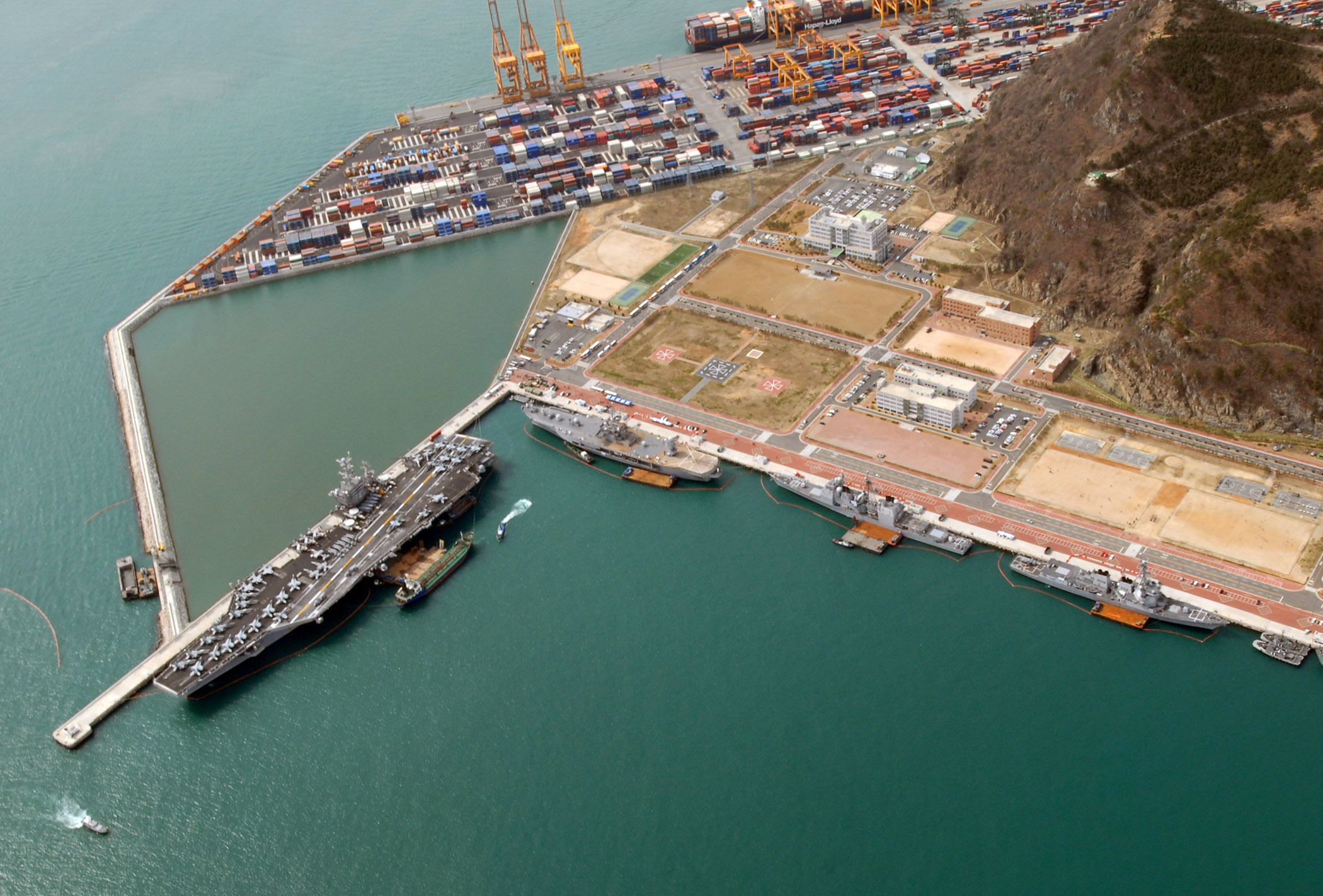
South Korea’s Busan port handled a record 24.8 million TEU of container traffic last year, marking its third consecutive annual increase despite global trade uncertainty, reports London’s Lloyd’s List.
Busan Port Authority said throughput rose 2 per cent compared with 2024, driven by transshipment cargo which accounted for 57 per cent of the total. Volumes climbed 4.4 per cent to 14.1 million TEU, reinforcing Busan’s position as the world’s second-largest transshipment hub after Singapore.
Roughly 80 per cent of transshipment cargo was moved by foreign carriers, with domestic operators handling the remainder. The authority said digitalisation, including its Transshipment Shuttle System, cut truck waiting times by more than half and tripled backhaul rates.
Alliances are increasingly routing cargo through Busan, with the Gemini Alliance shifting northern China traffic and the Premier Alliance planning new services from April. The port has set a target of 25.4 million TEU throughput this year.
Busan Port Authority said stable growth in import and export volumes remains uncertain due to tariff policies and supply chain reshuffling, but pledged to pursue digital innovation to become the world’s leading transshipment hub.