

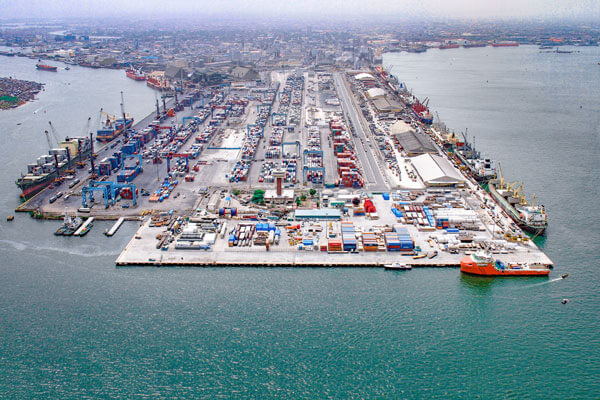
The global shipping landscape is witnessing a dynamic shift, with renewed interest in the Cape of Good Hope route as a vital artery for international trade. This resurgence is driven by geopolitical instabilities impacting traditional maritime passages, alongside Africa’s burgeoning economic potential. Logistics and shipping experts are keenly examining the readiness of key African ports—Mombasa, Dar es Salaam, Beira, Durban, Windhoek, Luanda, Pointe Noire, Cotonou (Benin), Lagos, Tema, and Abidjan—to capitalize on this trend, particularly in the context of China’s extensive Belt and Road Initiative (BRI) infrastructure investments across the continent.
Africa’s maritime trade is experiencing significant growth, with port calls by container ships increasing by approximately 20% from the first half of 2018 to the first half of 2023, and container throughput growing nearly 50% between 2011 and 2021. The continent remains heavily reliant on seaborne trade, with about 90% of its goods transported by sea, making efficient port infrastructure crucial for economic performance. The World Trade Organization forecasts Africa as the second-fastest region for export volume growth at 5.3% and the fastest for import growth at 11.8%. By 2040, experts predict African ports could handle over 2 billion tons of cargo annually.
The Resurgence of the Cape Route: A Global Shift
Recent disruptions in traditional shipping lanes, such as those in the Red Sea and Suez Canal, have led major carriers like CMA CGM to revert to the longer Cape of Good Hope route for Asia-Europe services. This shift is not merely a temporary measure but highlights the strategic importance of the Cape route and the African ports that lie along its path. While offering an alternative, the diversions also underscore the need for enhanced capacity and efficiency in African ports to handle increased traffic and larger vessels.
Key African Ports and Their Strategic Relevance
The listed African ports possess unique strategic importance along the Cape route. East African ports like Mombasa (Kenya) and Dar es Salaam (Tanzania) are critical gateways for the East African hinterland, with significant investments aimed at improving their capacity and connectivity. Egypt, for example, plans new shipping lines linking Alexandria to Mombasa and Dar es Salaam by early 2027, aiming to boost cargo volumes significantly. Mombasa’s Standard Gauge Railway (SGR), a BRI project, has already dramatically reduced freight times to Nairobi, injecting vitality into the local economy.
In Southern Africa, Beira (Mozambique) and Durban (South Africa) are vital. Durban remains the busiest container hub in Sub-Saharan Africa, undergoing its largest upgrade cycle in years to increase annual capacity from 2 million to 2.8 million TEUs. South African ports collectively handled 4.473 million twenty-foot equivalent units (TEUs) in 2025, a 3.2% increase year-on-year, driven by logistics reforms. However, some South African ports experienced a substantial decrease in cargo handled in December 2025 compared to 2024. The Port of Maputo, Mozambique, handled 32 million tonnes of cargo in 2025, an increase of 3.4% from 2024.
On the southwest coast, Windhoek (Namibia), through its port of Walvis Bay, is poised for growth. Namibia’s geographical position makes it a crucial pipeline to global trade. Angola’s Luanda port also plays a role in regional trade. West African ports such as Pointe Noire (Republic of Congo), Cotonou (Benin), Lagos (Nigeria), Tema (Ghana), and Abidjan (Côte d’Ivoire) are increasingly significant. West Africa has emerged as a credible destination for ultra-large containerships, with container volumes surging by approximately 30% in the first half of 2025 compared to the same period last year. The Port of Tema in Ghana is expanding its capacity significantly by September 2025. Nigeria’s Lekki Deep Sea Port, a BRI project, is set to transform Nigeria into a regional trade hub. Abidjan’s enhanced terminal also directly contributes to trade volumes.
China’s Belt and Road Initiative: Infrastructure Utilization
China’s Belt and Road Initiative (BRI) has profoundly impacted African port infrastructure. With over $155 billion in investments across the continent, BRI projects prioritize ports, railways, roads, and energy. China has either built, financed, or operates at least 46 African ports, and as of 2023, has maintained a presence in at least 61 African ports, with 55 constructed by China. Africa was the largest recipient of Chinese BRI engagement in 2023, with its engagement reaching USD 61.2 billion in 2025, a 283% increase. China’s energy-related engagement in 2025 also reached a record high of USD 93.9 billion.
BRI’s Tangible Impact on Port Development
The utilization of BRI-laid infrastructure is evident across the continent. In East Africa, investments in ports like Mombasa and Dar es Salaam are explicitly linked to railway development connecting to inland areas and mineral resources, facilitating new trade opportunities. The Mombasa-Nairobi SGR, for instance, is a $4.7 billion project funded and constructed by China, dramatically enhancing freight and travel times. China’s strategic efforts in countries like Kenya aim to secure supply routes for raw materials from the hinterland to the African coast and onward to China.
In West Africa, the Lekki Deep Sea Port in Nigeria, developed under BRI, aims to position the country as a regional trade hub. Chinese firms are also instrumental in expanding internet access and building 5G networks in countries like South Africa and Kenya, bolstering digital infrastructure that is crucial for modern logistics. These investments streamline transport networks, reduce shipping costs, and expand market access for emerging economies.
Bridging Gaps: Connectivity and Capacity
BRI investments extend beyond ports to crucial inland transport networks. Projects like the Addis Ababa-Djibouti Railway have revitalized logistics for landlocked Ethiopia, connecting it to the port of Djibouti. Such connectivity is vital for the African Continental Free Trade Area (AfCFTA), which seeks to create a single market across the continent. By bridging infrastructure gaps, BRI provides a physical foundation for AfCFTA to thrive, potentially unlocking a $3.4 trillion market. However, despite these developments, many African ports still operate beyond their designed capacity, leading to congestion and delays.
Prospects and Challenges for African Trade
The prospects for Cape route trade with these African ports are significant, especially with ongoing infrastructure improvements and increasing global trade volumes. Demand for container shipping in Sub-Saharan Africa is projected to reach USD 9.79 billion by 2030, growing at a CAGR of 5.5% from USD 7.46 billion in 2025. Increased direct calls to West Africa, enabled by infrastructure upgrades, are reducing reliance on Mediterranean transhipment hubs.
Opportunities in Enhanced Connectivity
Enhanced port and hinterland connectivity, partly driven by BRI, positions African nations to benefit from increased trade flows. These developments are not just about handling more cargo but also about fostering regional integration and making African exports more competitive globally. African governments are also securing partnerships with global operators to improve port efficiency, exemplified by DP World’s plan to invest $3 billion in new port and logistics infrastructure across Africa over the next few years. South African ports are also undergoing significant logistics reforms and increased private sector collaboration.
Navigating Geopolitical and Economic Headwinds
Despite the opportunities, challenges persist. Many African ports struggle with outdated equipment, insufficient storage, and a shortage of skilled labor. Corruption, bureaucratic delays, and inconsistent regulatory frameworks exacerbate inefficiencies. Furthermore, while BRI offers infrastructure development, concerns about debt sustainability and potential geopolitical leverage remain. The “small and beautiful” model of BRI investment, established in 2021, focuses on smaller, greener, and less financially risky projects to mitigate some of these concerns. The long-term success of BRI in Africa hinges on transparent governance and prudent financial management.